- Web Desk
- 36 Minutes ago
Europe on high alert as deadly heatwave spreads
-

- Reuters
- 1 Minute ago
PARIS/AMSTERDAM/BERLIN: Europe remained on high alert on Friday as a deadly heatwave tightened its grip across the continent, with health authorities warning of further casualties after at least 55 people died in France and temperatures climbed to record levels.
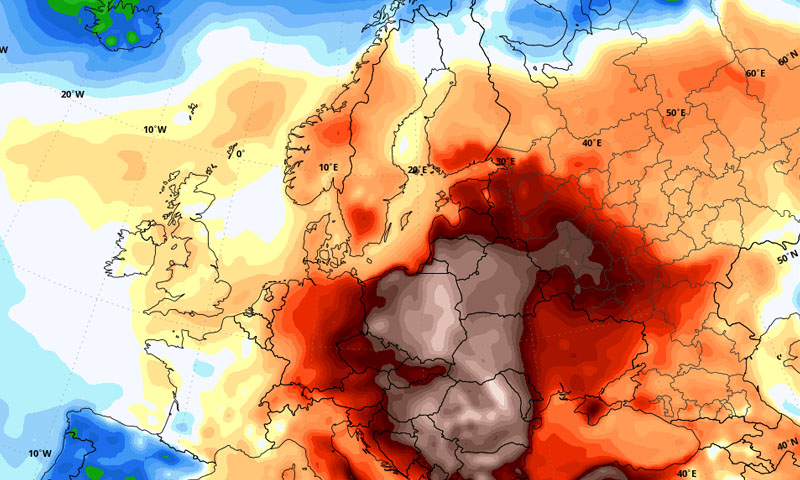
From Britain and France to Germany, Italy, Austria and Serbia, millions of people faced extreme heat as a large mass of hot air covered much of Europe. Scientists said it was the worst heatwave ever recorded in the region, where climate change is happening faster than in many other parts of the world.
Although temperatures were expected to fall slightly in France and Britain after breaking June records, Italy was forecast to become even hotter over the weekend, with temperatures likely to reach 40°C for the first time this summer.
France has reported at least 55 deaths linked to the heatwave after temperatures in Paris reached 40.9°C on Wednesday. Authorities warned that the death toll could rise as people can continue to suffer heat-related illnesses even after temperatures begin to fall.
The extreme heat has disrupted daily life across Europe. Police in Paris urged organisers of major outdoor events, including the Solidays music festival, to cancel activities, while organisers of the city’s Pride celebrations said the event would be postponed.
Germany also experienced significant disruption after extreme heat caused the surface of the A2 motorway to buckle and crack across several lanes, damaging around 30 vehicles, injuring two people and forcing the road to close.
Britain’s Met Office extended its rare red heat alert for southern England into a third consecutive day, while the Netherlands issued a nationwide code red warning as temperatures approached 40°C. Many Dutch schools remained closed because of the dangerous conditions.
In Serbia, officials issued an amber weather alert as temperatures approached 36°C, advising residents to remain indoors during the hottest part of the day and drink plenty of water.
The heatwave has also driven up demand for cooling equipment, with fans selling out in Britain and Asian manufacturers reporting a sharp increase in European air-conditioning sales. In France, state-owned utility EDF pledged to invest €80 million in cooling systems for schools, nurseries and childcare centres.
According to the latest data from the International Energy Agency, published in July 2025, only around one in five European households has air conditioning, leaving many residents exposed during prolonged periods of extreme heat.
Climate change fuels unprecedented heat
Scientists said the extreme temperatures were being intensified by an atmospheric weather pattern known as an “Omega block”, which traps a large mass of hot air over the same region for extended periods while cooler weather circulates around its edges.
The heatwave has pushed temperatures as much as 18°C above seasonal averages, according to the Reuters Climate Monitor.
Researchers from the World Weather Attribution group concluded that the current heatwave would have been “virtually impossible” without human-induced climate change. They said climate change has made the exceptionally hot nights experienced this week around 100 times more likely than they would have been just two decades ago.
The group described the ongoing event as the most severe heatwave ever recorded in the region covered by its analysis.
Hospitals struggle as emergency cases rise
Healthcare systems across France are coming under increasing pressure as hospitals report a surge in emergency admissions linked to heat-related illnesses.
French authorities also imposed a temporary ban on drinking alcohol in public on Friday ahead of France’s Women’s World Cup football match against Norway in Boston, saying the measure was intended to reduce health risks during the extreme temperatures.
Wilfrid Samut, spokesperson for the Association of Emergency Room Doctors of France, warned that hospitals were struggling to cope with the growing number of patients.
“The impact on the mental health of healthcare workers is enormous,” he said. “It’s apocalyptic.”
The heatwave has also affected major sporting events. At Wimbledon, players will use showers and kitchen facilities partly powered by solar energy as the All England Lawn Tennis Club continues efforts to reduce fossil fuel use while coping with the extreme weather.
Scientists have repeatedly warned that climate change is increasing both the frequency and intensity of heatwaves, making prolonged periods of extreme heat an increasingly common feature of European summers.
You May Also Like