Govt to end blue-passport facility for ex-bureaucrats’ children, Senate told
-

- Muhammad Zareef
- October 19, 2026
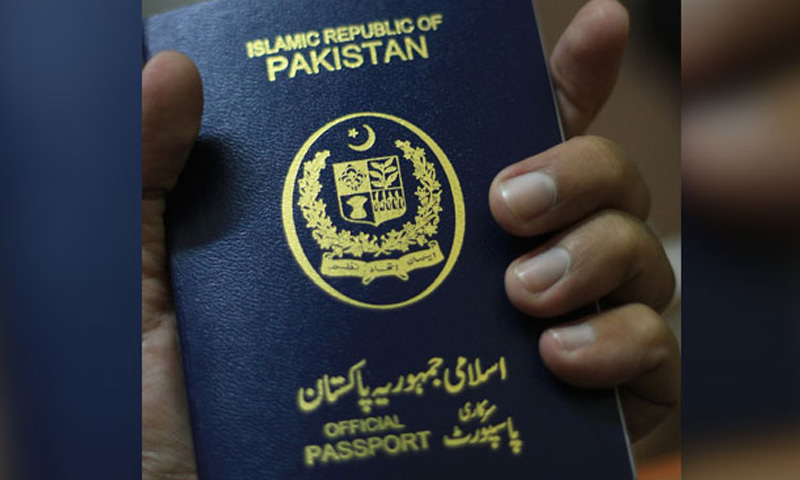

ISLAMABAD: The Senate on Monday unanimously passed the Passports (Amendment) Bill 2026 amid a debate over the issuance of official blue passports to lawmakers and government officials’ families, as the government announced plans to introduce fresh legislation to withdraw the facility for children of former bureaucrats.
Minister of State for Interior Talal Chaudhry told the upper house, chaired by Chairman Yousuf Raza Gilani, that the government would bring a new bill to end the facility for families of retired bureaucrats, while arguing that the number of blue passports needed to be regulated to protect Pakistan’s international standing.
The government had reduced the number of blue passports from 75,000 to 45,000, cancelling around 30,000 unnecessary or inactive documents, Chaudhry said.
He said that European countries and Canada had expressed reservations over the use of official passports.
“Passport security and its dignity are a matter of the dignity of the people of Pakistan,” he said, adding that the number of official passports could affect the country’s international passport ranking and prospects for visa-free travel arrangements.
Chaudhry said the government had no objection to facilitating parliamentarians but had concerns about extending the privilege to their families. He opposed the issuance of blue passports to children of Grade-22 officers who had retired from government service.
The minister also asked lawmakers to withdraw the proposed legislation concerning family entitlements, saying the government would introduce a fresh bill to address the issue.
The debate followed a proposal by independet Senator Mohammad Abdul Qadir concerning official passports for parliamentarians.
Abdul Qadir argued that members of the National Assembly could receive blue passports even after serving for a year, whereas senators could complete three or five years in office without receiving the same facility.
Pakistan Tehreek-e-Insaf Senator Faisal Saleem Rahman said the matter had repeatedly been discussed in committee meetings.
He argued that the Senate deputy chairman, being a constitutional office-holder, should also be entitled to a diplomatic passport, as was the case with the National Assembly speaker and deputy speaker.
He said the committee had recommended extending the blue-passport facility to children of serving senators but not to those of retired senators. He also raised concerns about parliamentarians being required to obtain no-objection certificates for passports despite the absence of an explicit requirement in the law.
Law Minister Azam Nazeer Tarar said official blue passports were intended for government business and that their numbers needed to be regulated.
“Let the children build their own careers,” he said, arguing that possession of a blue passport did not confer dignity or status.
The Senate’s passage of the Passports (Amendment) Bill 2026 was separate from the government’s proposed legislation concerning passport entitlements for families of former bureaucrats.
Govt defends emergency and governor’s rule in KP
The Senate also witnessed a heated exchange over the federal government’s imposition of emergency and governor’s rule in Khyber Pakhtunkhwa.
Minister for Parliamentary Affairs Tariq Fazal Chaudhry defended the measures, saying they had been imposed through presidential proclamations under Articles 232 and 234 of the Constitution and subsequently endorsed by the Senate, National Assembly and a joint sitting of parliament.
He said the federal government was determined to restore peace and stability in the province, adding that an advisory council had been formed with specialists from different fields to help administer its affairs.
The government would also scrutinise mining licences issued in Khyber Pakhtunkhwa, he said, adding that the measures had been taken in the national interest.
Chaudhry also said Pakistan had not committed aggression against any country and referred to the defence agreement with Saudi Arabia, saying the relevant resolutions had been approved by parliament.
President Asif Ali Zardari promulgated emergency and governor’s rule in Khyber Pakhtunkhwa on October 11, with the federal government citing the security situation and alleged disengagement by the provincial administration from counterterrorism efforts. The measures were subsequently endorsed by both houses and a joint sitting of parliament.
Senate Opposition Leader Allama Raja Nasir Abbas strongly criticised the decision, accusing the federal government of undermining the public mandate and imposing its preferred administration on the province.
He said the events in Khyber Pakhtunkhwa amounted to injustice and warned that imposing decisions on people without their consent would not resolve the province’s problems.
Drawing a parallel with the separation of East Pakistan, Abbas said the country’s political leadership should learn from history and avoid pushing communities and political groups into isolation.
He also criticised the use of emergency powers, saying the government had imposed emergency measures in 12 districts and governor’s rule elsewhere in the province, while establishing committees dominated by selected individuals.
Abbas alleged that elected representatives were being picked up and said the country was increasingly becoming a place where political dissent was suppressed. He questioned why politicians would accept the humiliation of other politicians and warned that the misuse of laws could further deepen the political crisis.
He also expressed concern over the regional security situation, saying the region was again facing the prospect of war.
Referring to Yemen, Abbas questioned Pakistan’s involvement in the conflict and recalled that parliament had passed a resolution in 2015 against joining the Saudi-led military campaign. He called for a briefing to parliament on the matter and said he had written to the prime minister and foreign minister urging them to pursue mediation rather than participation in another war.
He warned that Pakistan’s economic difficulties made involvement in another regional conflict particularly dangerous.
Senate debates bill on honour killings
The upper house also took up the Criminal Laws (Amendment) (Honour Killings Prevention) Bill 2026, introduced by Balochistan Awami Party Senator Samina Mumtaz Zehri, prompting a debate between lawmakers and the government over the proposed amendments.
Zehri argued that the legislation was needed to strengthen protections against honour killings and said the proposed changes did not justify the government’s opposition.
She referred to cases in which people accused of dishonour-related offences were later found to be innocent, and criticised the government for delaying legislative action until after deaths had occurred.
Zehri also questioned whether repeated amendments to rape laws had resulted in a reduction in such crimes.
Nazeer Tarar opposed the bill in its current form, saying the amendments could complicate existing law. He said legislation needed to be drafted carefully and argued that weaknesses in investigation and the recording of evidence, rather than an absence of laws alone, often contributed to offenders escaping punishment.
He said the government was willing to discuss the proposed amendments with the Law Ministry to address any shortcomings.
State Minister Talal Chaudhry also suggested consultations with the relevant ministry before the legislation proceeded further.
The bill was introduced for consideration and was not reported as having been passed by the Senate during Monday’s sitting.
Several bills referred to standing committees
The Senate also referred a number of private members’ bills to the relevant standing committees for further consideration.
These included the Family Courts (Amendment) Bill 2026, introduced by Senator Sarmad Ali; the National Protection of Trees and Environmental Justice Bill 2026, introduced by Senator Zarqa Suharwardy; and the Federal Prosecution Service (Amendment) Bill 2026, introduced by Senator Khalil Tahir.
The Pakistan Telecommunication Organisation (Reorganisation) (Amendment) Bill 2026 was introduced by Senator Samina Mumtaz Zehri and referred to the relevant committee.
The house also referred the Muslim Family Laws (Amendment) Bill 2026, the Private Security Guards Protection, Rights and Welfare Bill 2026, the Islamabad Regulation and Prevention of Disposable Syringes Bill 2026, and the Policy Continuity, Economic Forecasting and National Planning Framework Bill 2026 to their respective committees.
The bills will undergo further scrutiny before any decision on their passage.
The Senate session was chaired by Chairman Yousuf Raza Gilani.
You May Also Like
- Muhammad Faizan Khan
- October 19, 2026
Power-sector circular debt hits Rs1.675 trillion

- AFP
- October 19, 2026