
- WEB DESK
- November 18, 2026
‘He who claims equity must come with clean hands’: Asif tells Bilawal
-

- WEB DESK
- November 18, 2026
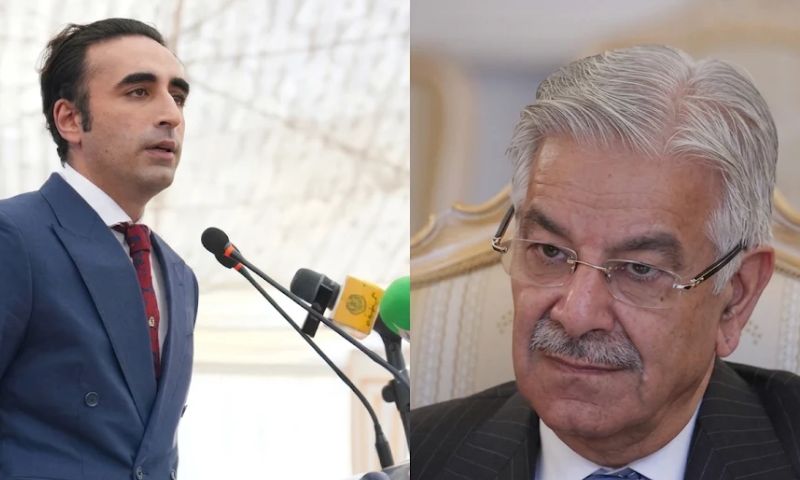
ISLAMABAD: Defence Minister Khawaja Asif has hit back at Pakistan Peoples Party (PPP) Chairman Bilawal Bhutto Zardari over his criticism of the political system, saying those demanding equity must first ensure they have “clean hands”.
“If someone claims equity, he must come with clean hands,” Asif said on social media platform X, responding to Bilawal’s remarks about the creation of new provinces, as tensions between coalition partners the Pakistan Muslim League-Nawaz and the PPP appeared to escalate.
Addressing a ‘Meet the Press’ session at the Karachi Press Club on Tuesday, Bilawal questioned why the system had collapsed, saying it had not happened on its own but had been deliberately brought to this state.
Bilawal called for a political reset, arguing that politicians, as representatives of the people, must play a central role in addressing the country’s governance and economic challenges.
“Nobody objects that the system has collapsed, but there is no discussion and debate on why it collapsed,” Bilawal said, questioning whether the proposed solutions addressed the underlying problems of poverty, unemployment and inflation.
His remarks came amid a debate sparked by Interior Minister Mohsin Naqvi, who had described the existing governance system as having collapsed and called for a reset.
Naqvi had also floated the idea of creating new administrative units, including through a referendum, to address governance challenges.
Bilawal opposed the proposal, saying a referendum in Pakistan’s history had been used for undemocratic purposes rather than democratic decisions.
The PPP chairman warned that any attempt to divide Sindh forcibly would lead to bloodshed, saying his party would resist moves imposed against the wishes of the province’s people.
He also questioned the rationale for a referendum, arguing that neither the prime minister nor any provincial representative had formally raised the matter with him or President Asif Ali Zardari.
Bilawal also criticised the passage of the 27th Constitutional Amendment, saying it had been approved through a “brute majority” rather than political consensus or a bilateral agreement. He acknowledged his own role in past political decisions, saying everyone made mistakes but eventually had to correct them.
Responding to Bilawal’s criticism, Asif said no system could be reset without public support, adding that all those associated with the existing system needed to examine their responsibilities.
He pointed out that the PPP had governed Sindh for 18 years and had been a partner in the federal coalition with the PML-N since 2022.
Asif said politicians’ accountability was neither new in Pakistan nor could anyone claim exemption from it. He argued that public opinion and parliamentary debate could go hand in hand, adding that seeking the people’s views alongside parliament would provide greater legitimacy to decisions about governance.
Earlier, Information Minister Attaullah Tarar also responded to Bilawal, reminding him that the PPP and PML-N were part of the same coalition government and urging the PPP chairman to engage with the government rather than publicly distance himself from the system.
“We are part of the same government. Come and sit down so we can make decisions for the betterment of the people and the country,” Tarar said.
He argued that political parties which had been part of the governing system for decades could not disassociate themselves from its shortcomings.
Defending the proposed referendum, Tarar said public debate on administrative reforms should not be suppressed and that people should have the right to express their views on the creation of new provinces.
“The people are the ultimate decision-makers. If the people of Pakistan and Sindh want more provinces, then make them; otherwise, don’t,” he said.
The exchange has exposed growing differences between the two coalition partners over governance reforms, the possible creation of new provinces and the political direction of the federal government.
You May Also Like
- AFP
- November 18, 2026
Trump arrives in China’s Shenzhen for APEC meeting
- AFP
- November 18, 2026
