- WEB DESK
- November 12, 2026
Imran’s meeting with PTI lawyers may be linked to new provinces, says Saad Rafique
-

- WEB DESK
- November 12, 2026
Pakistan Muslim League-Nawaz (PML-N) senior leader Khawaja Saad Rafique on Thursday suggested that recent meetings between incarcerated Pakistan Tehreek-e-Insaf (PTI) founder Imran Khan, his wife and his party’s lawyers could be linked to discussions on the reported 28th Constitutional Amendment, the creation of new provinces and political developments in Khyber Pakhtunkhwa.
In a social media post, the former federal minister welcomed the meetings at Adiala jail but said he had no confirmed information about their purpose. He outlined what he believed could be the political considerations behind them.
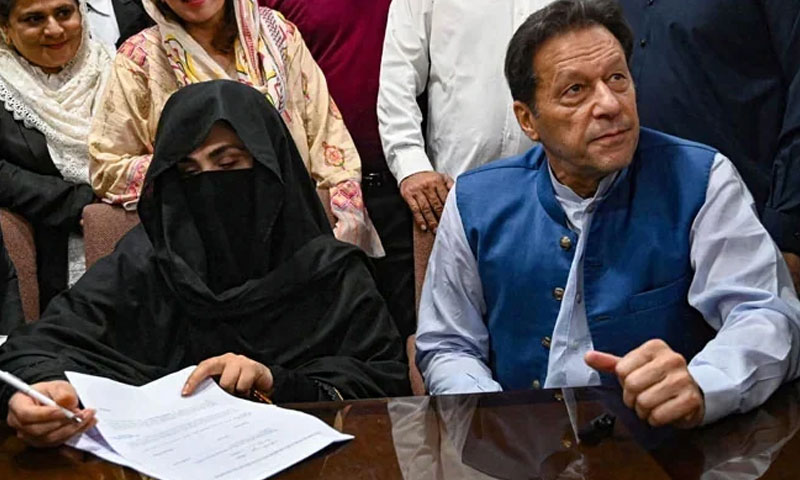
His remarks came a day after authorities allowed PTI lawyers Latif Khosa and Salman Safdar to meet Imran and his wife, Bushra Bibi, at the Rawalpindi prison.
Khosa said he and his fellow lawyer had held a meeting lasting nearly four hours with the couple, during which they discussed the 28th Amendment. He did not disclose details of the conversation.
There has been no official confirmation that the government is preparing a 28th Constitutional Amendment. However, possible constitutional changes, including those that could pave the way for new provinces or administrative units, have featured in discussions among major political parties.
The meeting followed an Islamabad High Court order issued on Tuesday during the hearing of appeals filed by Imran and Bushra against their convictions in the £190 million Al-Qadir Trust case. Their lawyers had told the court they were being denied access to their clients and needed to meet them to prepare for the appeals.
Possible political deal
Rafique suggested the government might be seeking the support of the main opposition party to secure a two-thirds majority in Parliament after the Pakistan Peoples Party (PPP) refused to back a proposal concerning the “division of Sindh.”
“It is possible that, following the PPP’s refusal to accept the division of Sindh, a proposal is now being put before Imran Khan to secure a two-thirds majority in Parliament. In return for his support, the establishment could provide relief to the PTI,” he wrote.
Rafique also speculated that a proposal might have been made to end governor’s rule in Khyber Pakhtunkhwa in exchange for the PTI’s cooperation with the federal government on counterterrorism and an assurance that it would not march on Islamabad again.
He stressed that cooperation between the federal and provincial governments was essential to eliminate terrorism and that all possible efforts should be made to achieve this objective.
The federal government had previously accused the PTI-led provincial administration under dysfunctional KP CM Sohail Afridi of refusing to cooperate with the Centre on counterterrorism.
It cited the security situation and lack of cooperation as reasons for imposing emergency measures and governor’s rule in the province.
Debate over new provinces
The former federal minister described the creation of new provinces as an extremely sensitive issue, acknowledging that demands for smaller provinces had existed in different parts of the country for a long time and that the need for them was genuinely felt.
However, he cautioned against pursuing the matter through political deals or arrangements that excluded representative political forces.
Rafique said creating smaller provinces by isolating the PPP, a key coalition partner of the PML-N government, and the people of Sindh, or offering concessions to incarcerated political leaders in exchange for their support, could further complicate the issue and undermine its purpose.
He argued that all political parties represented in Parliament should be allowed to sit together in a free and conducive environment, regardless of their parliamentary strength, to build consensus on the formation of smaller provinces.
Without such an environment, he warned, a future Parliament could reverse constitutional amendments introduced by the current legislature.
The debate over creating new provinces gained momentum after Interior Minister Mohsin Naqvi called in July for serious consideration of new administrative units following the “collapse of the existing system”.
On the other hand, PML-N leader and State Minister for Law and Justice Barrister Aqeel Malik dismissed speculation about the reported 28th Constitutional Amendment.
Speaking on Hum News programme Faisla Aap Ka on Wednesday night, Malik said the government had not started work on any constitutional amendment.
Calls for a new political charter
Rafique further argued that the country’s political forces, the establishment and the judiciary needed to work together without pressure to determine the country’s future direction.
He called for all institutions to remain within their constitutional limits and respect one another’s rights, saying a new Charter of Pakistan was urgently needed to build a progressive, stable, democratic and united country.
The former railways minister also called for an end to Imran’s solitary confinement and urged all stakeholders to move beyond past bitterness to create an environment in which the PTI could pursue peaceful politics.
‘Referendum may pave way for new provinces’
Separately, former PTI leader Fawad Chaudhry claimed that the process surrounding the reported 28th Constitutional Amendment could be completed before January 15, 2027, suggesting that a referendum on the creation of new provinces may precede constitutional changes.
Speaking on ARY News programme The Reporters, Fawad said one proposal under discussion was to hold a referendum first, with its outcome potentially paving the way for Parliament to introduce the necessary constitutional amendments.
He asserted that the reported 28th Amendment would be approved by January 15, 2027, adding that his conversations with people familiar with the discussions suggested the entire process was expected to conclude before that date.
Fawad said a referendum had emerged as one possible option, although constitutional amendments could otherwise be brought directly before Parliament. He also suggested that the matter could eventually be referred to the Federal Constitutional Court (FCC).
The former PTI leader maintained that neither the PML-N nor the PPP appeared willing to support the creation of new provinces, although he believed the issue was primarily a concern for the latter.
Describing the proposed changes as part of a broader governance reset, Fawad questioned whether the establishment would succeed in implementing the plan or encounter resistance similar to that faced by the proposed canals project.
You May Also Like