
- WEB DESK
- September 13, 2026
Indian NSA’s Riyadh trip raises spy plane questions
-

- Sadia Basharat
- April 20, 2026
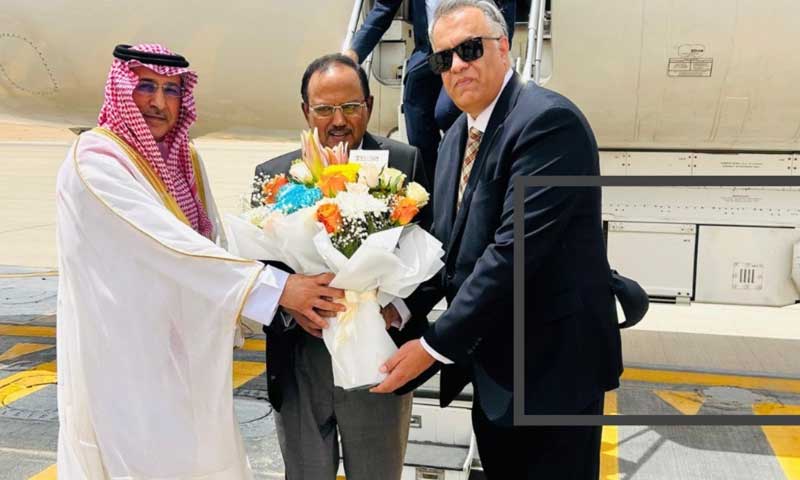
WEB DESK: India’s National Security Advisor, Ajit Doval, landed in Riyadh on 19 April for high-level strategic talks with the Saudi leadership, a move closely watched by regional observers, according to Arab News.
While the official agenda focused on bolstering security ties and counter-terrorism, the optics of the visit have raised eyebrows in defence circles.
Rather than the customary executive jet, reports indicate that Doval arrived aboard a specialised Signals Intelligence (SIGINT) aircraft a platform designed for electronic snooping rather than standard diplomatic comfort.
A dual-purpose mission?
The arrival of India’s top security czar in a surveillance-heavy aircraft has led to intense speculation regarding the true nature of the mission.
In the world of intelligence, SIGINT platforms are the eyes and ears of the sky, capable of vacuuming up electronic data and intercepting sensitive communications.
By opting for such a “flying laboratory” for a routine diplomatic trip, New Delhi appears to be projecting a posture of constant vigilance.
Observers in Islamabad suggest that the flight likely served a dual purpose: ensuring the NSA remained in a completely secure electronic bubble while potentially harvesting data on the regional electromagnetic environment during the long transit over sensitive corridors.
Shifting sands in regional security
The visit comes at a time when the Middle East is navigating a complex web of realignments, and India is keen to cement its role as a self-styled regional policeman.
Doval’s discussions with his Saudi counterparts are believed to have touched upon maritime security and the expanding defence partnership between the two nations.
However, the use of an intelligence-gathering asset for a diplomatic visit signals a shift towards a more “muscular” and intrusive form of statecraft.
For Pakistan, this development underscores the need for a watchful eye on the growing military-technological cooperation between New Delhi and Gulf capitals, which increasingly blurs the line between traditional diplomacy and active electronic surveillance.
You May Also Like




- Reuters
- September 13, 2026
