
- WEB DESK
- September 13, 2026
Iran rejects second round US talks invitation
-

- Sadia Basharat
- April 20, 2026
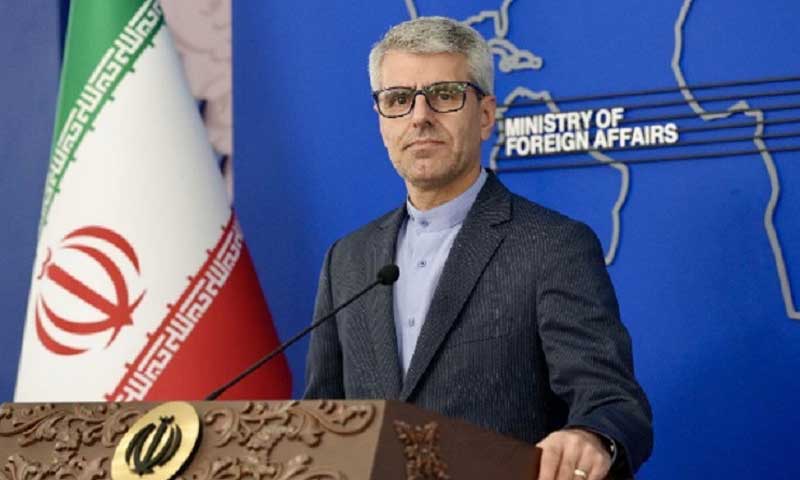
WEB DESK: Iran has declined an invitation to participate in a second round of high-level talks with the United States, its foreign ministry said on Monday, dealing a setback to efforts aimed at easing tensions in the Middle East.
Foreign Ministry spokesman Esmail Baghaei said that conditions were “not conducive” to further dialogue, without providing further details.
Speaking at a press conference, Baghaei said that Tehran would not accept pressure in pursuing its interests, adding that the Islamic Republic “does not recognize any deadlines or ultimatums” in securing its national priorities.
He said Iran would continue to safeguard its interests “for as long as necessary” and warned that any new “adventurism” by the United States or Israel would draw a decisive response from its armed forces.
A first round of discussions held last month in a neutral European capital had been described by observers as a tentative step towards de-escalation, though no major breakthroughs were announced.
Iran’s latest stance highlights persistent gaps between the two sides, amid heightened regional tensions and deep scepticism within Tehran over engagement with Washington.
There was no immediate response from US officials.
The refusal comes amid heightened regional tensions and a domestic political landscape in Iran that remains deeply skeptical of Western overtures.
A breakdown in mutual trust
The primary catalyst for the rejection appears to be a disagreement over the sequencing of sanctions relief. Iranian officials have consistently maintained that any meaningful engagement is predicated on the immediate lifting of economic restrictions, a move the White House has thus far resisted.
According to senior diplomatic sources, Tehran views the proposed second round as a “stalling tactic” rather than a genuine effort to address core grievances.
The Iranian leadership highlighted the lack of “tangible progress” following the initial meeting, suggesting that further talks without a clear roadmap for economic concessions would be “futile and performative.”
Regional implications and next steps
The international community has reacted with caution to the news. While European mediators have urged both sides to remain at the negotiating table, the breakdown in communication raises fears of a return to “maximum pressure” tactics and retaliatory maneuvers in the Persian Gulf.
Analysts suggest that Iran’s refusal may be a strategic play to gain leverage, though it carries the risk of further isolating the country from the global financial system.
For now, the diplomatic channel remains cold, leaving the future of the regional security framework in a state of precarious uncertainty as both Washington and Tehran retreat to their respective red lines.
You May Also Like


- Reuters
- September 13, 2026
