
- WEB DESK
- September 14, 2026
Iranian, Saudi, and Qatari foreign ministers held talks aimed at de-escalating regional tensions
-

- Sadia Basharat
- April 27, 2026
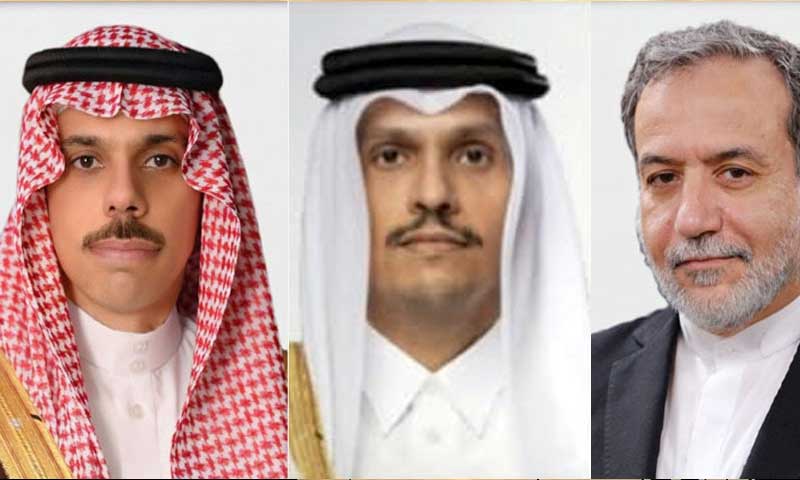
WEB DESK: The Middle Eastern diplomatic landscape has witnessed a flurry of high-level activity as the Foreign Ministers of Saudi Arabia, Iran, and Qatar engaged in urgent discussions aimed at cooling regional temperatures.
Amidst mounting concerns over the broadening scope of conflict, the telephone exchanges underscore a concerted effort by regional heavyweights to find a diplomatic exit ramp.
Riyadh and Tehran seek common ground
Saudi Foreign Minister Prince Faisal bin Farhan and his Iranian counterpart, Abbas Araghchi, held a pivotal telephonic conversation focused on the immediate necessity of de-escalation.
During the exchange, Araghchi briefed Prince Faisal on Tehran’s latest diplomatic initiatives intended to bring an end to active hostilities.
Both ministers emphasised that sustained communication remains vital to ensuring regional stability.
The dialogue reflects a continued easing of tensions between the two long-standing rivals, with both sides appearing increasingly aligned in their efforts to prevent the current crisis from escalating into a wider conflict.
The discussions focused on recent security developments across the region, coordination of diplomatic efforts to reduce friction, and the exploration of potential long-term frameworks for peace-building.
Doha reinforces mediation efforts
In a separate but equally significant exchange, Qatari Prime Minister and Foreign Minister Sheikh Mohammed bin Abdulrahman Al-Thani spoke with Araghchi to assess the progress of ongoing mediation.
Doha, which has long acted as a central hub for regional negotiations, reiterated the importance of a unified approach to security.
The two leaders stressed that all involved parties must engage meaningfully with mediation efforts to address the “root causes” of the prevailing crisis.
According to official statements, the Qatari side remains committed to enhancing regional security through dialogue rather than military posturing.
This latest round of telephone diplomacy signals a growing consensus among Gulf powers that a structured, multi-lateral response is the only viable path toward enduring stability in the Middle East.