- Monis Siraj
- August 21, 2026
Islamabad to host high-level quadrilateral summit as Middle East tensions mount
-

- Sadia Basharat
- March 28, 2026
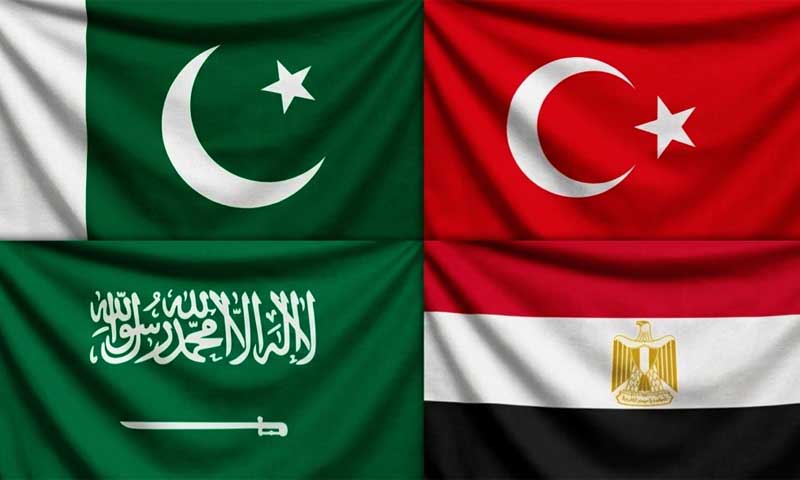
WEB DESK: Pakistan is set to host a high-stakes quadrilateral summit on Monday, as the South Asian nation emerges as a central arbiter in the rapidly deteriorating Middle East crisis.
Foreign ministers from Türkiye, Egypt, and Saudi Arabia are expected to descend on the capital for talks aimed at forestalling a wider regional conflagration following the dramatic escalation of hostilities between the United States, Israel, and Iran.
A diplomatic ‘Green Shield’
The summit, chaired by Pakistani Deputy Prime Minister and Foreign Minister Mohammad Ishaq Dar, follows a preliminary consultative meeting recently held in Riyadh.
Diplomatic sources suggest the four nations are exploring a “quadruple alliance” informally dubbed a ‘Green NATO’ by some analysts designed to provide a home-grown security framework and reduce the region’s historical dependence on Western military umbrellas.
This collective push aims to unify the visions of the four influential Muslim-majority powers to ensure that regional stability is maintained through local deterrence and coordinated diplomacy rather than external intervention.
Islamabad as the neutral arbiter
The choice of Islamabad as the venue underscores Pakistan’s unique position as a bridge between Tehran and the West.
Reports indicate that the Pakistani leadership has been facilitating intense back-channel messaging between the Trump administration and Iranian officials, including relayed communications to high-level figures such as Jared Kushner.
Prime Minister Shehbaz Sharif recently reaffirmed that Pakistan stands “ready and honoured” to facilitate meaningful talks, positioning the country as a neutral ground where the warring parties might find a diplomatic off-ramp.
Navigating economic and border volatility
The urgency of the summit is underscored by the severe domestic pressures facing the host nation. With a 1,000-kilometre border with Iran, Islamabad is acutely vulnerable to the spillover effects of the conflict, ranging from a potential refugee influx to critical energy shortages caused by disruptions in the Strait of Hormuz.
Following a high-level briefing involving Field Marshal Asim Munir, the government has pivoted towards a “coordinated national response,” balancing its ambitious mediation efforts with the grim reality of soaring fuel prices and the need for stringent security at home.