
- WEB DESK
- August 24, 2026
Karachi’s traffic sees improvement as e-challan system changes driver behaviour
-

- WEB DESK
- November 4, 2025
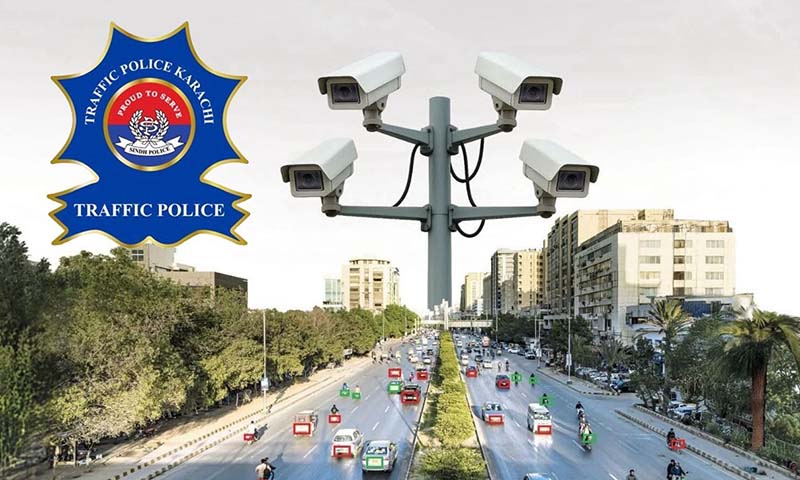
Karachi’s streets are gradually becoming calmer, with motorists showing greater discipline at signals and respecting zebra crossings.
Much of this change is being credited to the city’s new e-challan system, which has introduced an era of accountability and responsibility for road users.
Digital monitoring reshapes driving habits
Deputy Superintendent of Police (DSP) Karachi Traffic Police explained that the system is part of the Karachi Safe City Project. “The e-challan is built on the principles of fear, responsibility, and accountability. Drivers are aware that violations are captured by cameras, that they are responsible for their actions, and that fines will be issued automatically,” he said.
Since its recent launch, the system has already issued over 5,500 challans to traffic violators. The first phase saw 1,076 high-definition cameras installed along main roads, while future phases aim to expand coverage to nearly 12,000 cameras across Karachi, including toll plazas.
Once a challan is generated, it is sent via Pakistan Post to the address linked with the vehicle’s number plate by the Sindh Excise and Taxation Department. Violators have 21 days to pay, with a 50 percent discount offered if payment is made within the first 14 days. If the fine remains unpaid beyond 21 days, the amount doubles.
To encourage timely compliance, the Karachi Traffic Police recently introduced concessions. First-time offenders can submit a written apology to avoid paying a fine. Repeat violators who settle their fines within 14 days enjoy a 50 percent discount. For example, a Rs5,000 fine for jumping a signal could be reduced to Rs2,500 if paid promptly.
Fairness and transparency for all motorists
The initiative has also reduced the need for direct interaction between traffic police and motorists, a move welcomed by many citizens. Karachi’s traffic officers, who often endured long hours under harsh conditions, previously relied on fines collected on the spot as a source of income. The e-challan system now streamlines enforcement, limiting opportunities for unofficial payments.
Deputy Inspector General (DIG) Traffic Police Pir Muhammad Shah noted that inter-departmental transfers of traffic staff had increased since the system’s launch, but the inspector general of Sindh has temporarily suspended these transfers to maintain stability. “This system could become a milestone for professional policing,” DIG Shah said, highlighting that digital monitoring has significantly reduced corrupt practices.
The system also offers protection to motorists. If a challan is issued to the wrong vehicle or involves a cloned number plate, vehicle owners can request video verification at their nearest traffic police station. Verified errors are promptly dismissed, ensuring fairness and transparency.
Karachi’s initiative mirrors similar efforts in Lahore, where the Punjab Safe City Authority manages e-challans. Both systems rely on smart cameras to record violations, notify vehicle owners, and provide online access for checking fines. Payments can be made through ATMs, mobile apps, or bank branches, simplifying the process for motorists.
As Karachi residents adjust to this new system, early signs suggest a positive shift in driving habits. Drivers are stopping at red lights, waiting patiently behind zebra crossings, and adhering more closely to traffic rules. With the e-challan system now actively promoting accountability, the city is taking a step towards safer, smoother, and more orderly roads.
You May Also Like


- WEB DESK
- August 24, 2026