- WEB DESK
- September 4, 2026
Karachi’s Karsaz father-daughter death case: Accused Natasha acquitted in drugs charge
-

- Sajid Awan
- September 4, 2026
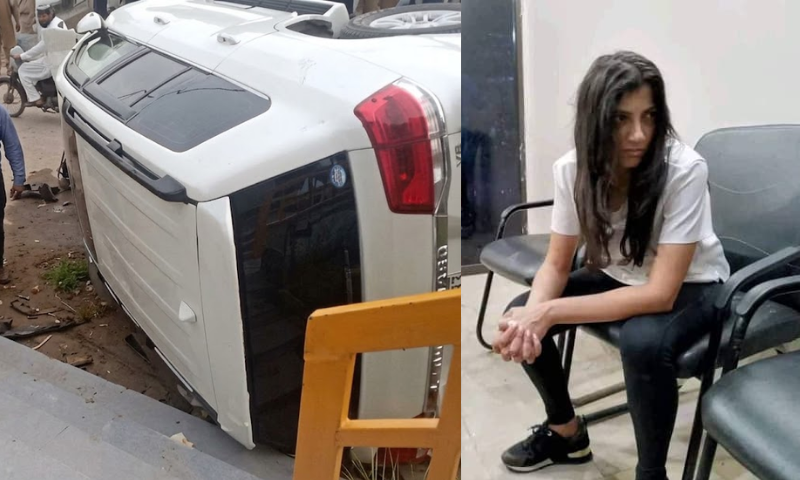
KARACHI: A judicial magistrate in East Karachi on Friday acquitted Natasha Danish in a narcotics case linked to the Karsaz father-daughter car accident, after the prosecution failed to prove the charges against her.
The court cited lack of evidence in acquitting the accused. Her lawyer, Fawad Ali Kutchi, told the court that the chemical examiner’s report and blood test had found no trace of ice (crystal methamphetamine) in her blood, alleging that the samples taken from her by police had been tampered with and that the case’s investigating officer had concealed the blood test report.
The accident
On August 19, 2024, Danish was driving her SUV at high speed along a service lane on Karsaz Road when she struck three motorcycles and another vehicle. The crash killed 60-year-old Imran Arif and his 22-year-old daughter Amna, and left three others injured. CCTV footage from the scene showed the SUV moving at speed through the narrow lane moments before the collision.
Danish was arrested at the scene and charged with manslaughter. Sindh’s Inspector General of Police, Ghulam Nabi Memon, later said a medical report, ordered at the request of the victims’ legal counsel, found that Danish had been under the influence of crystal meth at the time of the crash. Police subsequently filed a separate FIR against her under Section 11 of the Prohibition (Enforcement of Hadd) Order 1979, which covers intoxication liable to ta’zir, in addition to cases registered at the Bahadurabad police station. Ta’zir crimes refer to offenses that are prohibited but for which no specific punishment has been given in the religion.
Bail proceedings and acquittal in the main case
On September 6, 2024, a sessions court granted Danish bail in the murder case after the victims’ family pardoned her “without any blood money,” a right available to them under Pakistan’s qisas and diyat laws, which allow victims’ families to pardon an accused with or without financial compensation. Her lawyer described the pardon as ‘unexpected’.
That same month, however, both a judicial magistrate and a sessions court rejected her bail applications in the separate drug case. Judicial Magistrate (East) Muhammad Raza Ansari found no basis to her lawyer’s claim that her blood and urine samples had been tampered with, while state prosecutor Syed Khursheed Abbas Bukhari opposed her bail application before the sessions court on the grounds that the final charge sheet had not yet been submitted.
Danish then moved the Sindh High Court, where Justice Muhammad Karim Khan Agha granted her bail in the drug case after hearing both sides. Two days before that hearing, police had already submitted a charge sheet against her in the same case before a judicial magistrate.
On October 31, 2024, a district and sessions court acquitted Danish of the murder charge, after accepting a compromise application filed in the case, according to her lawyer.
The case drew significant public criticism at the time, with many questioning how wealthy or influential individuals are able to navigate the legal system with relative ease.
You May Also Like

- WEB DESK
- September 4, 2026