
- Reuters
- September 15, 2026
LHCBA moves Supreme Court against IHC judges’ transfer
-

- Zafar Ali
- April 30, 2026
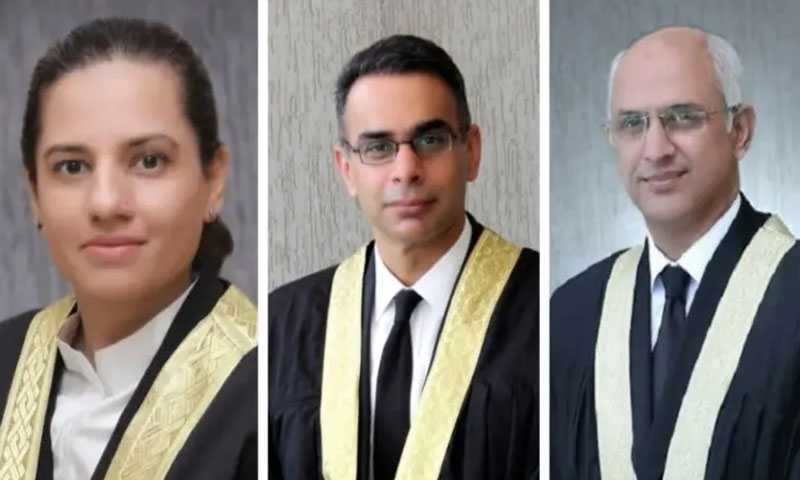
ISLAMABAD: The Lahore High Court Bar Association (LHCBA) has challenged the transfer of three judges of the Islamabad High Court to provincial high courts, filing a petition in the Supreme Court and raising constitutional and transparency concerns.
The LHCBA, through senior lawyer Hamid Khan, has taken the plea that the transfers violate Article 2A of the Constitution and lack transparency, stating that no reasons were provided for the move. The federation and the Judicial Commission of Pakistan have been named as respondents in the petition.
Filed under Article 184(3), the petition also contests the legality of the 27th Constitutional Amendment, arguing that changes made to Articles 184(3) and 175(2) are unconstitutional.
It further maintained that transferring three Islamabad High Court judges to other high courts is not in line with the Constitution.
The petition contends that the Supreme Court’s jurisdiction cannot be transferred to a federal constitutional court and argues that such a court, established under the 27th Amendment, does not have the authority to hear the case. It also states that the transfers were carried out after amendments to Article 200 introduced through the same amendment.
The development follows a decision by the Judicial Commission of Pakistan (JCP), chaired by Chief Justice Yahya Afridi, which approved by majority vote the transfer of three IHC judges to provincial high courts.
Under the decision, Justice Mohsin Akhtar Kiani was transferred to the Lahore High Court, Justice Babar Sattar to the Peshawar High Court and Justice Saman Rafat Imtiaz to the Sindh High Court.
The commission also decided that any vacancies arising from these transfers would be filled through further transfers rather than treated as fresh vacancies for new appointments.
Chief Justice Afridi had earlier expressed reservations over the proposed transfers, warning they could raise constitutional concerns and potentially affect judicial independence and federal balance.
He also noted that allegations against judges should be addressed through constitutional mechanisms, particularly via the Supreme Judicial Council under Article 209, rather than through transfers.
The transfers come after recent amendments to Article 200, which now allow the Judicial Commission to recommend inter-high court transfers without requiring the consent of the judges concerned. Previously, such consent was mandatory.
You May Also Like

- WEB DESK
- September 15, 2026
Petrol price rises by Rs4.10, diesel by Rs6.41 per litre
- Reuters
- September 15, 2026
Samson, Reddy lead India to series-clinching win over Afghanistan

- WEB DESK
- September 15, 2026