- Muhammad Faizan Khan
- October 28, 2026
‘No more state money or jobs for you,’ Mohsin Naqvi hits out at Fazl
-

- WEB DESK
- October 29, 2026
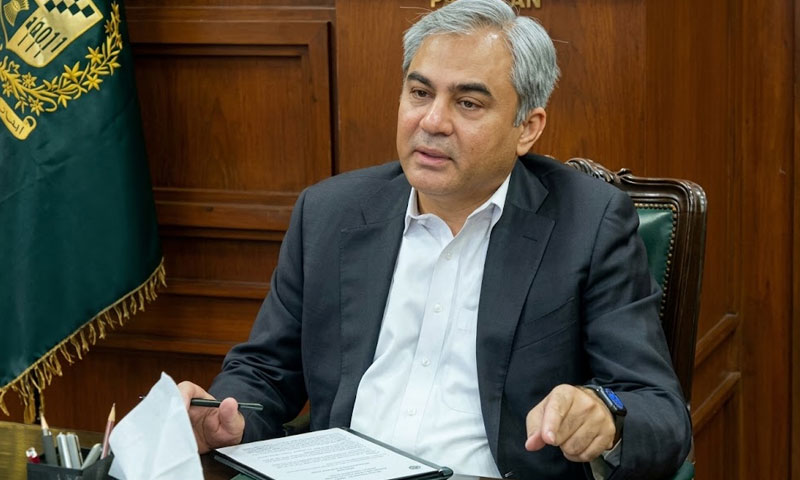
ISLAMABAD: Interior Minister Mohsin Naqvi on Thursday accused Jamiat Ulema-e-Islam-Fazl (JUI-F) chief Maulana Fazlur Rehman of using Islam for political and financial gain, as his address in the Senate was repeatedly interrupted by opposition lawmakers amid an escalating row over Pakistan’s diplomatic engagement in Tehran.
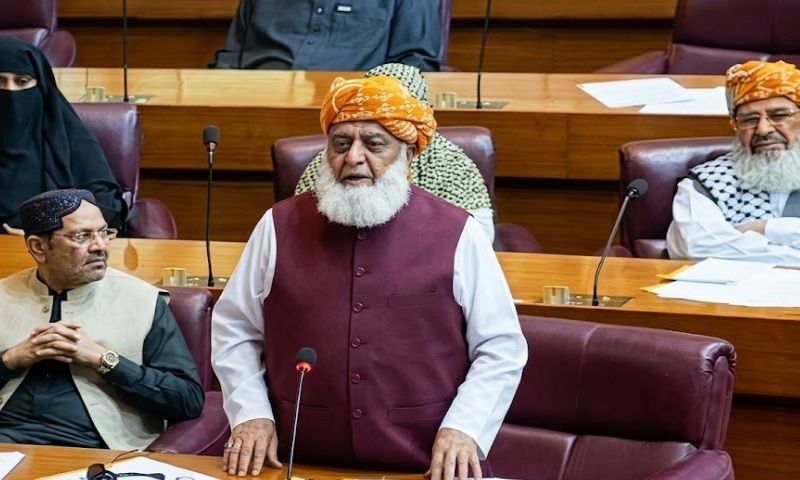
Naqvi strongly criticised the JUI-F chief over his speech in the National Assembly a day earlier, saying he would no longer receive state jobs after making anti-state remarks. Naqvi said he had personally held Fazl in high regard, but his remarks about the state had left no room for respect in his heart for the JUI-F chief.
Naqvi defended his participation in recent talks in the Iranian capital, saying Prime Minister Shehbaz Sharif had specifically assigned him responsibilities relating to the ongoing regional crisis.
He rejected the impression that the meeting was intended to negotiate a defence agreement and accused Fazlur Rehman of misrepresenting its purpose.
The exchange followed the JUI-F chief’s criticism of Defence Minister Khawaja Asif and Foreign Minister and Deputy Prime Minister Ishaq Dar in the National Assembly on Wednesday.
Maulana Fazl had questioned why Asif did not attend the Tehran discussions despite his portfolio, while Naqvi and Chief of Defence Forces Field Marshal Syed Asim Munir were involved in the diplomatic engagement.
Taking a swipe at Asif, Maulana Fazlur had repeated the defence minister’s widely quoted remark, “Koi sharam hoti hai, koi haya hoti hai” (Have some shame, have some decency), drawing laughter in the House.
The talks in Tehran brought together Field Marshal Munir, Saudi Defence Minister Prince Khalid bin Salman and Turkish intelligence chief Ibrahim Kalin with senior Iranian officials. The participants discussed regional peace and security and agreed to continue dialogue among the countries involved.
Responding to the criticism in the National Assembly on Thursday, Asif said no new defence agreement was being negotiated in Tehran and that the discussions did not fall within the Defence Ministry’s mandate.
He described Field Marshal Munir’s role as facilitating dialogue and promoting regional peace, saying the Pakistani military chief had helped create conditions for negotiations following the conflict of the past year and a half.
Asif also said Pakistan had already signed two defence agreements, one involving Pakistan, Saudi Arabia and Turkiye and another involving Pakistan, Qatar, Turkiye and Indonesia. He said he had attended the signing of both agreements in his capacity as defence minister.
The defence minister urged political parties to recognise Pakistan’s role in regional diplomacy despite domestic political differences. He also criticised Fazlur Rehman’s political record, referring to his past political alliances and his decade-long tenure as chairman of the parliamentary Kashmir Committee.
Naqvi defends his role in Tehran
Addressing the Senate, Naqvi said he had not travelled to Iran out of personal choice but in response to responsibilities assigned to him by the prime minister.
“I do not go there out of choice,” he said, adding that Shehbaz had specifically tasked him with handling certain matters relating to the current crisis and conflict.
Naqvi said the Tehran discussions were aimed at managing the regional situation rather than negotiating a defence pact.
“We had gone to Iran to deal with the current crisis and manage it,” he said, rejecting what he described as a misleading impression that the visit was related to a defence agreement.
He accused Maulana Fazlur Rehman of misrepresenting the purpose of the meeting and said the JUI-F chief had been criticising him for several weeks.
“You can disagree a hundred per cent. You can engage in as much politics as you want. But there are certain things that do not become a politician,” Naqvi said.
He then referred to what he described as Fazlur Rehman’s earlier statements about state institutions, prompting opposition lawmakers to demand that his remarks be expunged from the record.
Some members accused the interior minister of pursuing a personal agenda. Naqvi rejected the objection and asked the lawmakers to listen to his response before challenging him.
‘They use Islam for business and politics’
As the exchange intensified, Naqvi accused the JUI-F leadership of treating the state favourably when it served its interests and turning against it when it did not receive a share in government.
“For them, the state is like a mother only until they can extract something from it,” he said.
“As long as they get money from the state, the state is very good. But when they do not get a share in the state or the government, they spit on the state. Now onwards, there will be no money and no jobs from the state.”
Opposition lawmakers shouted back that Naqvi himself had used such language, while the presiding officer repeatedly asked members to stop interrupting the proceedings.
The minister then asked the presiding officer to question the JUI-F leadership over what he alleged was the use of religion for personal and political benefit.
“They use Islam for business. They use Islam for politics,” Naqvi said.
He also alleged that some opposition politicians had privately sought the imposition of governor’s rule in Khyber Pakhtunkhwa before opposing the move publicly.
Addressing PTI Senator Ali Zafar, Naqvi claimed that the same politicians who now sat alongside the opposition had previously approached the government and asked it to impose governor’s rule to get rid of their political rivals.
“These people who sit with you in the opposition wanted governor’s rule,” he said, adding that he would provide evidence for his claim.
The allegations were not substantiated during the speech.
Naqvi also warned that politicians who criticised the state should be prepared to hear a response. He said those who crossed the line would be answered and declared that they would no longer receive jobs, money or political tickets from the state.
“I will only say that they have crossed the line,” he said, adding that they would receive a response if they continued to do so.
JUI-F lawmaker interrupts speech
Naqvi’s address was repeatedly disrupted by cross-talk, with JUI-F Senator Kamran Murtaza among the lawmakers objecting to his remarks.
The presiding officer urged Murtaza and other members to remain seated and allow the minister to complete his speech.
He reminded lawmakers that Naqvi was also a senator and a member of the House, while asking the interior minister to choose his words carefully.
Naqvi insisted that those who criticised him should have the courage to listen to his response.
“If they criticise, they should have the courage to stand by what they say and listen to the response as well,” he said.
The presiding officer asked Naqvi to address the Chair and attempted to restore order as members continued to exchange remarks. He also indicated that Murtaza would be given an opportunity to respond after the minister had been heard.
Naqvi continued his criticism of the JUI-F leadership, reiterating his allegation that it used Islam for political purposes. As the uproar persisted, the presiding officer asked him to conclude his remarks.
Naqvi cut short his speech and took his seat after repeated interruptions by opposition lawmakers, despite the presiding officer’s attempts to restore order and allow him to complete his remarks.
You May Also Like