
- WEB DESK
- September 14, 2026
OPEC+ establised in 1960: How the bloc affects oil prices?
-

- Sadiq Khan
- April 28, 2026
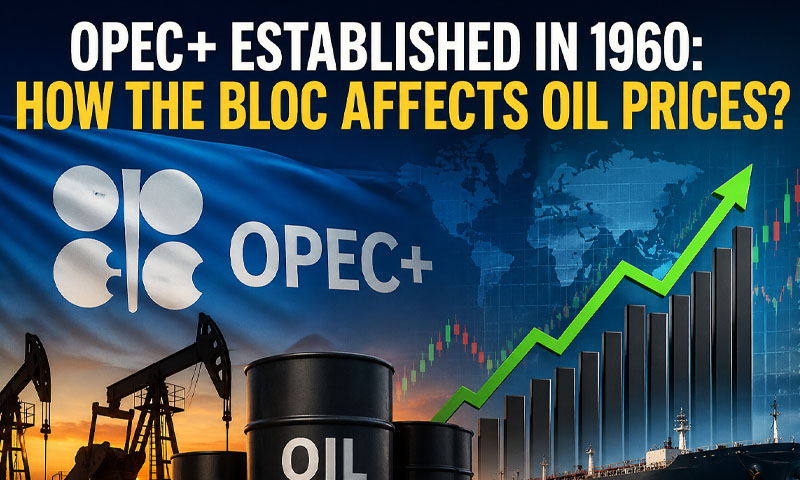
ABU DHABI: OPEC+, established in 1960, is a powerful global oil alliance that plays a key role in influencing international oil prices by controlling production levels among member countries.
The bloc was originally formed as the Organization of the Petroleum Exporting Countries (OPEC) in Baghdad in 1960 by Iraq, Iran, Kuwait, Venezuela, and Saudi Arabia to coordinate oil policies and ensure stable and fair prices. Today, it includes 12 member countries, mainly from the Middle East, with the United Arab Emirates joining in 1967.
In 2016, OPEC expanded its influence by forming an alliance with non-member oil-producing countries, including Russia, creating what is now known as OPEC+. Together, the group accounts for nearly half of global oil production, giving it major control over supply levels in the international market, according to Reuters.
Over the years, several countries have left the bloc, including Qatar in 2019, Ecuador in 2020, and Angola in 2024. Recently, Reuters says, the UAE announced it will exit OPEC on May 1, marking another major change in the group’s structure.
OPEC+ has historically influenced oil prices by adjusting production, either cutting or increasing output, to stabilise the global market. Critics, however, argue that the group indirectly manipulates prices, a claim OPEC has consistently denied.
The bloc’s influence became especially clear during major global events, such as the 1973 oil embargo, which led to a sharp rise in oil prices and fuel shortages in several countries, including the United States.
Today, OPEC+ continues to play a dominant role in the global energy market, though its share has been challenged by rising production from countries like the United States. Despite this, it still accounts for a significant portion of global crude exports and remains a key factor in determining oil prices worldwide.