- Farah Mehjabeen
- October 26, 2026
Pakistan adds 5.8m people annually as population growth becomes national security issue: Mustafa Kamal
-

- WEB DESK
- July 15, 2026
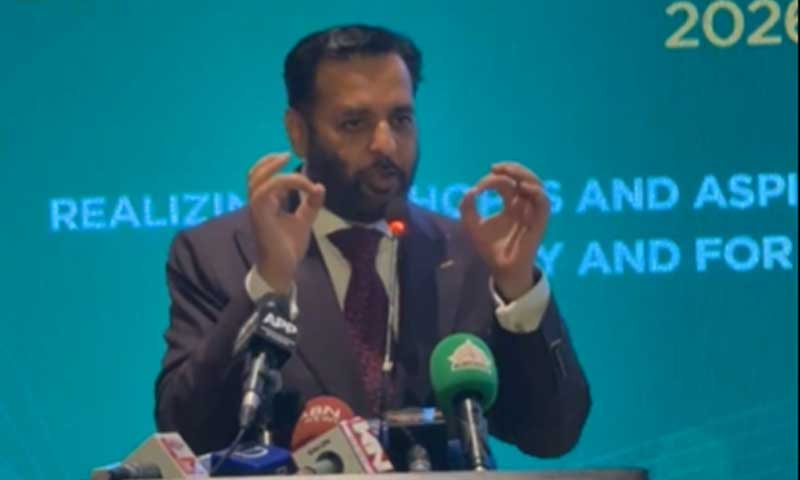
ISLAMABAD: Federal Health Minister Mustafa Kamal on Wednesday described unchecked population growth as one of Pakistan’s most pressing challenges, warning that the country adds around 5.8 million people every year, making it not only a public health issue but also a matter of national security and economic stability.
Addressing the launch of the Waqfa (Birth Spacing) awareness campaign, Kamal said Pakistan’s annual population increase exceeds the population of New Zealand, while every five years the country adds a population roughly equal to that of Australia. He noted that 26 million children remain out of school and hospitals are already under immense pressure, saying the country’s existing system could no longer cope with the growing burden.
The minister said birth spacing should not be linked to concerns over sustenance, stressing that Islam does not prohibit family planning and that Allah has promised to provide sustenance for every individual. “We need to change people’s mindset,” he said, adding that scholars and people from all schools of thought were now engaging with the issue.
Kamal said around 11,000 women die each year during pregnancy and childbirth, describing the deaths as a “silent national tragedy” that demands urgent attention. He added that about 1,300 children under the age of five die every day, amounting to nearly 400,000 child deaths annually, and stressed that appropriate spacing between births was essential for the health of both mothers and children.
He also announced that the government had abolished the 18% tax on contraceptives and proposed a 32% incentive for provinces that successfully reduce population growth. According to Kamal, greater access to contraceptives could help prevent around 1.5 million births annually.
Earlier, Mir Khalil-ur-Rahman Foundation Chief Executive Officer Shah Rukh Hassan said the birth spacing awareness campaign had been highly successful. He credited Kamal with initiating the campaign and said the Population Council Pakistan had provided the data that helped shape the initiative.
Population growth an existentialist issue: Aurangzeb
Federal Minister for Finance and Revenue Muhammad Aurangzeb termed Pakistan’s rapidly growing population an “existential issue” alongside climate change, warning that unchecked growth is placing an unsustainable burden on the country’s economy and national resources.
The finance minister emphasised that addressing demographic challenges is imperative to improve the quality of life for citizens and to ensure long-term economic stability.
The finance minister commended the Ministry of Health for maintaining its focus on the issue and taking practical steps to address the crisis. He highlighted the establishment of the National Population Council (NPC) as a landmark step toward sustainable development.
According to Aurangzeb, the council which brings together civil and military leadership, provincial authorities, and federal representatives provides a critical, institutionalised framework to transition from discussing the “what and why” of population control to executing the “how and who.”
He stressed that the council’s oversight will ensure clear targets and key performance indicators (KPIs) are monitored quarterly and annually, noting that “you can only deliver what you can measure.”
Addressing the financial aspects of population planning, Aurangzeb noted that while the government has introduced tactical measures in the federal budget such as abolishing sales tax on contraceptives and the “pink tax” broader structural reforms are needed. He pointed out that the current National Finance Commission (NFC) formula, which allocates 82pc of resources based on population weight, is fundamentally unsustainable and must be reviewed to avoid incentivizing population growth.
The minister also highlighted international support, pointing to the World Bank’s ten-year Country Partnership Framework. He revealed that approximately $600m to $700m is available annually under this framework to finance interventions, particularly targeting child stunting and female education to reduce learning poverty.
Aurangzeb concluded by praising public awareness campaigns, such as the “Waqfa” initiative, calling for collective efforts to secure Pakistan’s future development as it approaches its centenary in 2047.
You May Also Like