- Web
- 8 Hours ago
Pakistan urges UN reforms amid rising global pressures
-

- Web Desk
- Jan 23, 2026
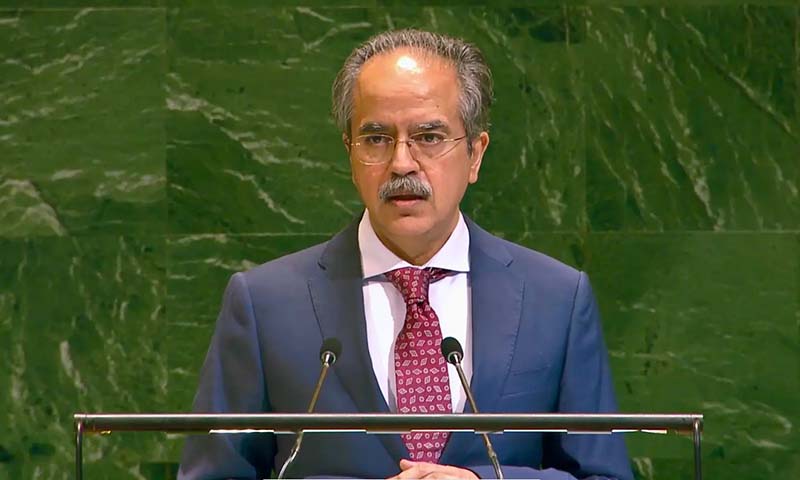
WEB DESK: Pakistan has intensified its appeal at the United Nations for reinforcing the authority of international law and reforming the Security Council, warning that selective compliance with treaties and the proliferation of parallel diplomatic initiatives could undermine the UN at a time of unprecedented global conflict.
Speaking at the International Law Year in Review 2026 Conference on Thursday, Pakistan’s Permanent Representative to the UN, Ambassador Asim Iftikhar Ahmad, highlighted the erosion of treaty obligations and inconsistent application of international law as threats to the foundations of collective security established after World War II. “There must be no space for selective compliance or legal exceptionalism,” he said, emphasising that the principles of the UN Charter should be applied “more consistently, more courageously and more faithfully” to preserve the rules-based international order.
Security Council paralysis and the need for reform
Ambassador Asim linked the discussion on international law directly to the functioning of the Security Council, noting that divisions among major powers have increasingly hindered its effectiveness. He cited Pakistan’s presidency of the Council in July last year and the unanimous adoption of Resolution 2788 as an example of what could still be achieved through consensus. The resolution “reaffirms the centrality of peaceful settlement of disputes,” he noted, demonstrating that cooperation is possible despite geopolitical rivalries.
At the same time, he cautioned that disregard for binding agreements posed a direct threat to regional and global stability. Referring to India’s unilateral suspension of the Indus Waters Treaty, the ambassador called such moves a “disturbing trend” undermining confidence in international law. On Security Council reform, he reiterated Pakistan’s opposition to expanding permanent membership or preserving veto privileges, arguing that reforms should instead strengthen the influence of elected members, who represent the broader UN membership.
Emerging challenges and the UN’s continuing relevance
He also highlighted the growing need for the UN to address emerging technological issues, including artificial intelligence, cyber operations, and autonomous weapons, and praised institutions such as the International Court of Justice and the International Law Commission for developing international legal norms.
Despite criticism of the UN’s efficiency, he stressed that the organisation retains broad legitimacy. “The vast majority of member states have deep faith in the UN and multilateralism,” he said, noting that reform and renewal, rather than marginalisation, are key to strengthening the world body.
Pakistan’s call comes as the UN faces rising challenges from conflicts in Gaza, Ukraine, and other hotspots. While the country joined 19 others in endorsing the US-led “Board of Peace” initiative, diplomats caution that such parallel mechanisms must complement, rather than undermine, the UN’s central role in maintaining international peace and security.
You May Also Like