
- Web
- 1 Hour ago
Pakistan vs India: let’s break down the T20 World Cup arsenals
-

- Web Desk
- Feb 15, 2026
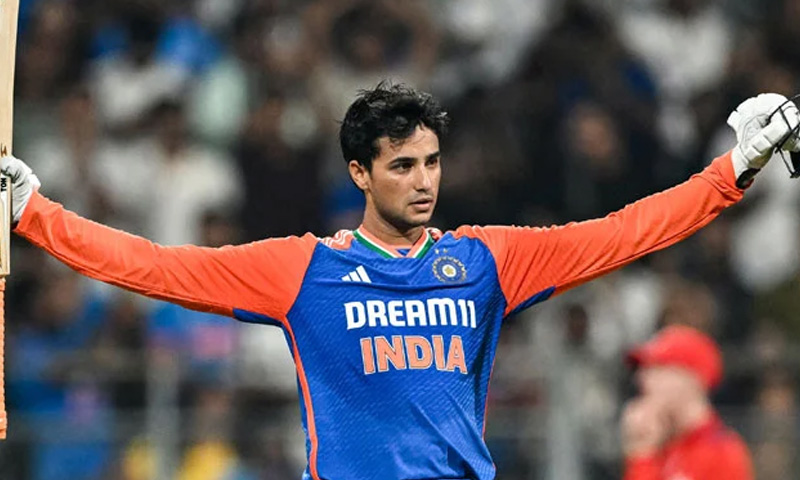
Cricket’s fiercest rivalry reignites tonight in Colombo, where Pakistan and India collide in a T20 World Cup showdown that rarely needs context, but always delivers drama.
On paper, both sides arrive armed to the teeth. But the question under the Colombo lights is simple: whose arsenal is sharper for these conditions?
THE VENUE FACTOR: COLOMBO’S SUBTLE TEST
At the R Premadasa Stadium, T20 cricket is rarely a flat-bat carnival. The surface typically slows as the match progresses. There’s grip for spinners, cutters come into play, and chasing under dew can tilt the balance late on.
Power-hitting matters. But control, variation and game awareness matter more.
With that in mind, let’s compare the arsenals.
PAKISTAN: PACE WITH TEETH, SPIN WITH BITE
The Fast-Bowling Battery: Pakistan’s greatest weapon remains their pace trio:
- Shaheen Shah Afridi – lethal with the new ball, especially against right-handers.
- Naseem Shah – skiddy pace, wicket-taker in bursts.
- Faheem Ashraf – utility overs, particularly effective with cutters on slower decks.
On a Colombo pitch that rewards variations, Shaheen’s early swing and Naseem’s hard lengths could test India’s top order before the surface eases.
Edge: Pakistan with the new ball.
Spin & All-Round Control: Pakistan’s middle-overs choke unit is built around:
- Shadab Khan
- Mohammad Nawaz
- Abrar Ahmed (mystery option)
If the pitch grips, Abrar becomes a serious X-factor. Shadab’s ability to rush batters through the air and Nawaz’s left-arm angle into right-handers could disrupt India’s rhythm.
Colombo factor: This surface suits their spin depth.
The Batting Core:
- Babar Azam – anchor, tempo controller.
- Fakhar Zaman – high-risk power.
- Saim Ayub – explosive intent.
- Salman Ali Agha – flexible middle-order stabiliser.
Pakistan’s batting isn’t always linear — it can surge or stall. But if Babar anchors and one of the aggressive openers fires, they can set or chase effectively on a slowing pitch.
Key question: Can they handle India’s spin squeeze in the middle overs?
INDIA: DEPTH, DYNAMISM, AND SPIN SUPREMACY
Explosive Batting Depth: India’s T20 firepower runs deep
- Suryakumar Yadav (c) – 360-degree stroke-maker.
- Abhishek Sharma & Tilak Varma – fearless new-gen hitters.
- Sanju Samson & Ishan Kishan – aggressive wicketkeeper options.
- Hardik Pandya – late-overs enforcer.
- Rinku Singh – ice-cold finisher.
Unlike Pakistan, India bat deep, genuinely seven or eight down. On a ground where 160-170 could be competitive, that depth is gold.
Edge: India in batting flexibility.
Spin Web: This is where India could control the game in Colombo:
- Kuldeep Yadav
- Varun Chakaravarthy
- Axar Patel
- Washington Sundar
Four distinct spin options. Left-arm orthodox, wrist spin, mystery spin, and off-spin control.
On a pitch that grips, India can rotate match-ups relentlessly.
Massive advantage: Spin variety and tactical depth.
THE DEATH-OVERS INSURANCE
- Jasprit Bumrah
- Mohammed Siraj
- Arshdeep Singh
- Hardik Pandya
Bumrah on a two-paced Colombo deck is a nightmare equation. Slower balls, yorkers, and awkward bounce make defending totals significantly easier.
Edge: India at the death.
TACTICAL MATCH-UPS TO WATCH
- Shaheen vs India’s right-hand heavy top order.
- Kuldeep vs Babar Azam in the middle overs.
- Shadab vs Suryakumar – battle of improvisation.
- Bumrah vs Pakistan’s lower middle order.
SO WHO HAS THE SHARPER ARSENAL?
Pakistan’s strengths:
New-ball pace threat
Aggressive spin options
Big-match temperament
India’s strengths:
Batting depth
Spin variety tailored for Colombo
Elite death bowling
On pure balance, India appear slightly better equipped for Colombo’s slower conditions. But Pakistan’s pace strike force can flip a T20 in three overs.
And in a Pakistan–India World Cup clash, form and forecasts often surrender to nerve.
Tonight, it’s not just bat versus ball.
It’s pace versus depth.
Mystery versus match-ups.
And two arsenals waiting to detonate under Colombo’s lights.
You May Also Like