- WEB DESK
- October 25, 2026
Pinky drug case: Court moved to send digital evidence for forensic analysis
-

- Zoya Anwer
- June 6, 2026
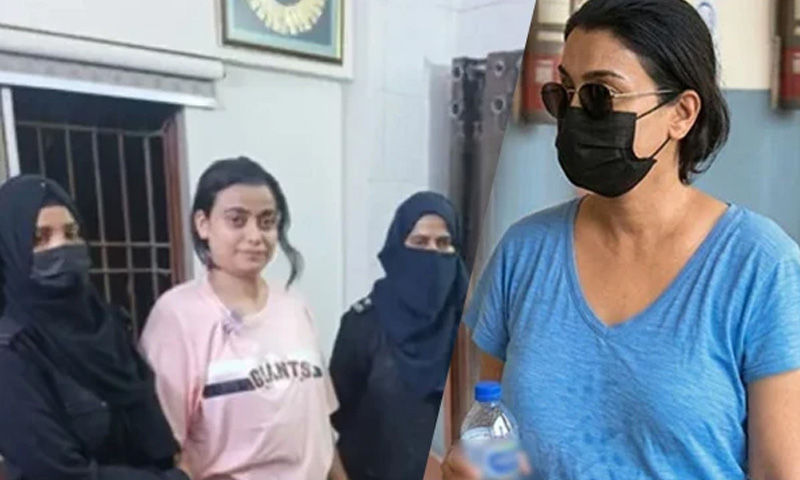
Police have approached a city court/judicial magistrate seeking permission to send digital evidence, including voice recordings and call data, related to a drugs case involving accused woman, Anmol alias Pinky, to a forensic laboratory in Punjab.
During the hearing, police informed the court that they possess multiple forms of digital evidence against the suspect, including voice recordings, voice messages, and call recordings allegedly linked to drug trafficking activities.
Investigators stated that the accused has denied that the recordings and messages belong to her, claiming that the voice in the audio evidence is not hers.
Police further argued that the authenticity of the digital material can only be verified through forensic examination and requested the court to order that all such evidence be sent to a Punjab forensic laboratory for analysis.
According to the police submission, a forensic report would help establish whether the voice in the recordings matches that of the accused, thereby strengthening the investigation in the case involving narcotics-related charges as well as other pending allegations. The court has been requested to grant permission for the transfer of all digital evidence to the forensic lab to ensure a transparent and conclusive investigation process.
From party circles to a sprawling drug network
‘Pinky’ built an extensive narcotics distribution network spanning Karachi and several other cities over nearly two decades, according to law enforcement officials investigating the case.
Authorities say Anmol, a resident of Karachi’s Naghara Goth area in Baloch Para, entered the drug trade in 2008 by supplying cocaine and other narcotics at dance parties held in affluent neighbourhoods such as Defence and Clifton. Over time, she allegedly adopted the alias “Pinky” and expanded her operations beyond elite social circles into a wider distribution network.
Investigators claim the network eventually served more than 800 clients through a coordinated supply chain involving multiple associates. According to officials, both men and women were recruited to help transport and distribute drugs across Karachi and other major cities. The network allegedly extended to educational institutions, including universities and colleges, and also relied on online channels to reach customers.
Following the emergence of the high-profile Armaghan case in Karachi last year, Anmol reportedly went into hiding and shifted her operations to Lahore and Islamabad. Despite relocating, investigators believe she continued to manage the network remotely while maintaining links with distributors in different cities.
Law enforcement sources also allege that Anmol was involved in a textile business in Lahore, which she operated alongside her alleged narcotics activities. Officials further revealed that two of her brothers had previously been arrested and jailed in separate drug trafficking cases.
The suspect was recently arrested during a police operation conducted by Garden police in Karachi. However, controversy erupted after a video surfaced on social media showing her appearing before a court without handcuffs despite facing narcotics and illegal weapons charges.
The footage prompted Sindh Inspector General of Police Javed Alam Odho to order an inquiry into the apparent violation of standard operating procedures. The police chief directed the Additional Inspector General Karachi to submit a report and ordered disciplinary action against any officials found negligent.
A senior-level inquiry committee has also been formed to investigate the circumstances surrounding the court appearance and ensure accountability, as authorities continue to probe the alleged drug network and its operations.
You May Also Like