
- WEB DESK
- September 3, 2026
Ghani rejects ‘divide Sindh’ calls, says PPP will support new province in Punjab, KP
-

- WEB DESK
- September 3, 2026
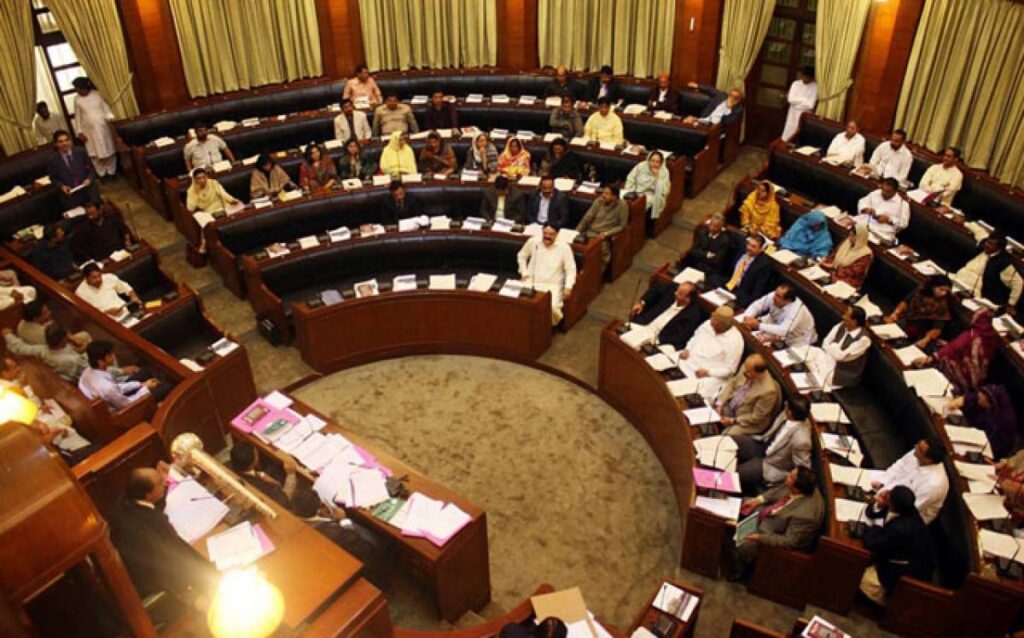
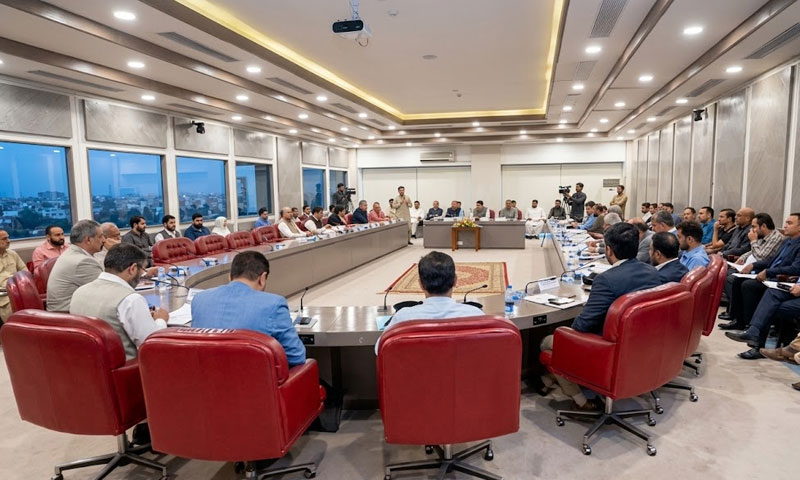
KARACHI: Sindh lawmakers on Thursday rejected calls for dividing the province, with Pakistan People’s Party leader Saeed Ghani saying his party would, however, support any decision by another provincial assembly to create a new province within its own territory.
Speaking during a Sindh Assembly session chaired by Speaker Owais Qadir Shah, Ghani said the assembly had the constitutional authority to decide only matters relating to Sindh and should not interfere in decisions concerning Punjab or Khyber Pakhtunkhwa.
“If the Punjab Assembly decides to create a new province, we will stand with it,” Ghani said, adding that the same principle would apply if the Khyber Pakhtunkhwa Assembly supported the creation of a new province.
But he made clear that the PPP opposed the creation of a new province in Sindh and said any such question should be decided on the floor of the Sindh Assembly.
Ghani said the day was of “extreme importance” for Sindh, as lawmakers debated the province’s unity and future.
He said calls for dividing Sindh had surfaced at different times in the past, but the provincial assembly had consistently rejected such proposals.
“The Sindh Assembly has responded whenever there has been talk of dividing Sindh,” he said, adding that the issue had gained renewed prominence following a speech by the federal interior minister.
Ghani said the speech was followed by several press conferences and public rallies by Muttahida Qaumi Movement leadership, while political parties in other provinces also issued statements on the creation of new provinces.
The issue was subsequently discussed at seminars and universities, where debates were held on the division of Sindh and the creation of new administrative units, he said.
Ghani said political statements, rallies, seminars and academic discussions had brought the issue into greater public focus.
He argued that if a new province was proposed in Punjab, the Punjab Assembly should decide the matter, while any such proposal in Khyber Pakhtunkhwa should be taken up by its provincial assembly.
“The Sindh Assembly has no authority to decide whether a new province should be created in Punjab or Khyber Pakhtunkhwa,” he said. “Every province’s assembly should have the authority to decide matters relating to the creation of a new province within its territory.”
Earlier, Sindh Senior Minister Qasim Siraj Soomro said the provincial assembly was the appropriate forum for debating important issues concerning the province.
“History is witness that Sindh has always rejected this agenda,” Soomro said, referring to attempts to undermine the province’s unity and autonomy.
He said provincial autonomy had repeatedly been challenged during periods of military rule, with attempts made to weaken it in the name of creating administrative units.
During the debate, MQM lawmaker Moeed Anwar said there should be no rhetoric suggesting a dispute over whether Karachi belonged to one side or another.
“Karachi is part of Sindh,” Anwar said, adding that the MQM had made its position clear on the issue.
He said the creation of administrative units could nevertheless be considered if it was aimed at improving public services and benefiting citizens.
PPP lawmaker Roma Mushtaq Mattoo rejected the possibility of Sindh being divided, saying the province would not be split because of the aspirations of a few individuals.
“Ten or twelve people may be dreaming of dividing Sindh,” she said, adding that those advocating such a move were already facing political resistance.
MQM lawmaker Sikandar Khatoon said that she had been given an opportunity to present her party’s position in the assembly following a motion moved by Nisar Khuhro.
She claimed that around 70 per cent of MQM lawmakers had already expressed their views on the issue of creating administrative units.
Khatoon also referred to Article 239 of the Constitution, which lays down the procedure for altering the boundaries of provinces and creating or changing provincial arrangements.
She said children in rural Sindh continued to lack basic facilities and argued that the debate over administrative arrangements should also take into account the delivery of public services.
Senior Sindh Minister Sharjeel Inam Memon said on Thursday that the complete debate in the Sindh Assembly on the province’s unity would be preserved and published as a historical document.
Speaking during a debate on an adjournment motion moved by PPP leader Nisar Ahmed Khuhro, Memon said every speech and statement made by lawmakers from both government and opposition benches would be included in the record.
He said the move was aimed at ensuring that the assembly’s proceedings and the positions taken by lawmakers on the issue were not distorted in the future.
Memon said the Pakistan Peoples Party’s position on Sindh was clear, adding that decisions concerning the creation of new provinces should be taken by the relevant provincial assemblies in accordance with the Constitution.
He said such decisions should not be made through television talk shows, surveys or referendums, or through protests and rallies, but through constitutional forums.
“If a decision about Sindh’s future is to be made, it should be made on the floor of the Sindh Assembly,” he said.
Memon said Article 239(4) of the Constitution defined the role of provincial assemblies in matters involving changes to provincial boundaries.
He said the Sindh Assembly had previously passed several resolutions concerning the unity of Sindh and that another resolution on the issue was expected to be brought before the house after the adjournment motion.
He said the people of Sindh had a strong attachment to their provincial identity while also being deeply committed to Pakistan.
“Pakistan’s integrity and sovereignty are our red line,” he said, adding that the country’s constitutional status, unity and stability were non-negotiable.
Memon said the historical debate would serve as an authentic record of the positions taken by lawmakers for future generations.
The debate comes amid renewed political discussion over the creation of new provinces and administrative units in Pakistan, an issue that has periodically resurfaced in national politics but remains particularly sensitive in Sindh, where proposals for dividing the province have historically faced strong opposition.
PPP leader Faryal Talpur said the people of Sindh would not allow the province to be divided, describing Sindh as their “mother” and saying no compromise would be made on its integrity.
Talpur, who said she belonged to a Baloch family, stressed that she had a deep attachment to Sindh and that the PPP was firmly committed to keeping the province united.
“The people of Sindh are united and stand together for the protection of Sindh’s unity,” she said, adding that the issue of dividing the province was deeply concerning.
She said the people of Sindh loved Pakistan as much as they loved their provincial identity and vowed that the province would not be divided.
Opposition Leader in the Sindh Assembly Ali Khursheedi also rejected any proposal to divide Sindh, saying his party had consistently opposed such moves.
Khursheedi, however, criticised the government for bringing the issue before the house, questioning the need for another resolution when the assembly had already passed five resolutions against the division of Sindh.
He said the Sindh Assembly represented the entire province and should rise above political affiliations while dealing with issues concerning Sindh.
“Our party has never talked about dividing Sindh,” he said, adding that the people living in Sindh should decide the province’s future.
Khursheedi called for a comprehensive and unanimous resolution on Sindh’s unity, urging the government to incorporate opposition proposals and make it a resolution of the entire house.
He also said the Muttahida Qaumi Movement had consistently voted against the division of Sindh.
The opposition leader argued that the real issue was not the creation of new provinces but the effective devolution of administrative and financial powers to the grassroots level.
He said Sindh already had six divisions that could be empowered as administrative units, arguing that every financial and administrative decision should not have to be taken by the chief minister or provincial cabinet.
“Without transferring powers and resources to the grassroots level, effective governance is not possible,” he said, linking the demand to the spirit of the 18th Amendment.
Khursheedi said his party was seeking empowerment of existing administrative units rather than the creation of new provinces, adding that devolving financial and administrative authority could help resolve problems from Karachi to Obaro.
The debate also triggered a walkout by MQM lawmakers from the assembly session.
Speaker Owais Qadir Shah asked the opposition leader not to walk out, while Senior Sindh Minister Sharjeel Inam Memon criticised the MQM members for leaving the house.
Memon said the MQM had used an excuse to walk out on a “historic occasion”, adding that the PPP was the only party still present in the house.
“The matter has become clear as to who stands with Sindh,” Speaker Owais Qadir Shah said.
The assembly session was subsequently adjourned for 15 minutes.
The debate comes amid renewed political discussion over the creation of new provinces and administrative units in Pakistan, an issue that has periodically resurfaced in national politics but remains particularly sensitive in Sindh, where proposals for dividing the province have historically faced strong opposition.
You May Also Like
- WEB DESK
- September 3, 2026
Hafiz Naeem says sit-ins will continue despite talks with govt
- WEB DESK
- September 3, 2026
Ahsan Iqbal urges ADB to help expand, diversify Pakistan’s exports
- WEB DESK
- September 3, 2026
