- Reuters
- November 6, 2026
Punjab proposes jail, fines for unauthorised stage dramas
-

- Shafiq Sharif
- November 6, 2026
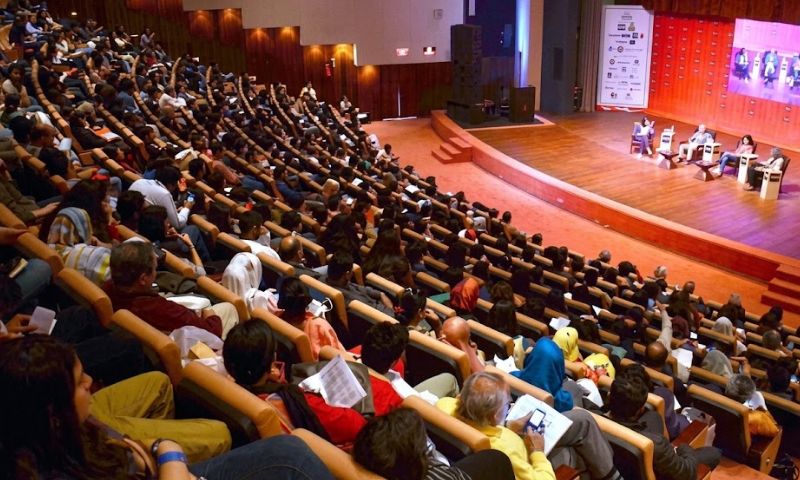
LAHORE: The Punjab government has moved to tighten its oversight of theatre and stage performances, proposing mandatory licensing for venues, prior approval of scripts and registration of everyone involved in productions, with violations punishable by up to six months in prison and fines of up to Rs1 million.
The Punjab Assembly’s Standing Committee on Information and Culture has approved the Punjab Dramatic and Theatrical Performances Bill 2026, which seeks to replace the nearly 150-year-old Dramatic Performances Act of 1876 with a new regulatory framework for theatrical activities across the province.
The proposed legislation requires anyone seeking to stage a drama or theatrical performance at a public venue to obtain a licence from the Information and Culture Department secretary. The bill proposes a licensing fee of Rs25,000.
Organisers will also have to secure prior approval for every production’s script. The complete script or details of the proposed performance must be submitted to a designated Script Review Committee at least 15 days before the show.
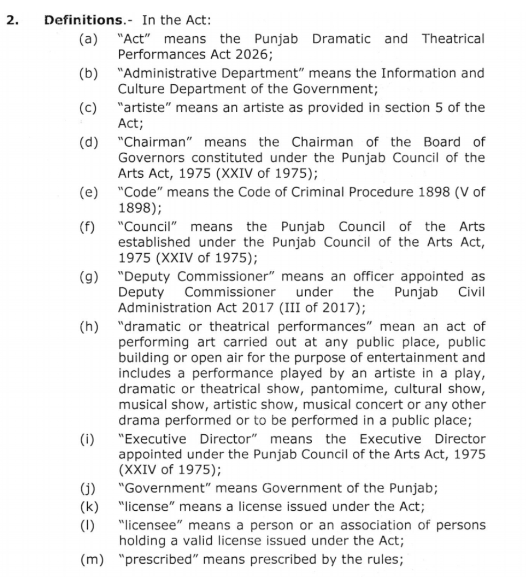
A script approval fee of Rs35,000 has been proposed. The committees will be notified by the Information and Culture Department secretary, while the of the Punjab Council Arts executive director will approve the scripts following scrutiny.
Staging a performance that deviates from the approved script will constitute an offence under the proposed law.
Artists, production staff to be registered
The bill makes registration mandatory for all professionals involved in theatrical productions, not just actors. The proposed definition of artists also covers makeup artists, costume designers, choreographers, producers, directors and other professionals associated with stage performances.
Only registered individuals will be allowed to participate in theatrical productions, with a proposed registration fee of Rs10,000.
The legislation also seeks to prohibit performances deemed obscene, immoral, insulting or objectionable, as well as those considered to hurt religious sentiments.
Organisers will be required to present rehearsals before a censoring committee at least one day before the actual performance for scrutiny and approval.
Monitoring teams, strict penalties
The proposed law provides for district-level monitoring teams to oversee theatrical activities and report violations to the executive director. The authorities will also be empowered to inspect performances and monitor them through live or recorded feeds.
Theatre organisers will have to preserve complete, unedited audio and video recordings of every performance for at least 30 days, according to the provisions reported in the bill.
The proposed framework sets out administrative penalties for violations following an inquiry and hearing. A first violation could attract a fine of up to Rs300,000, while repeat violations could result in a fine of up to Rs500,000.
A theatre’s licence may be suspended or cancelled if three violations are recorded within a year. Allowing an unregistered artist to perform could also lead to suspension or cancellation of the licence, while the venue could be sealed for employing unregistered performers.
The legislation also provides for criminal proceedings in cases involving violations of its provisions, with penalties of up to six months in prison and a fine of up to Rs1 million, or both. Such cases will be heard by a first-class judicial magistrate under a summary procedure.
The bill also provides an administrative appeals mechanism for parties affected by official decisions, extending through the relevant authorities to the Punjab chief secretary.
End of 1876 law
The proposed legislation will repeal the Dramatic Performances Act of 1876, which has governed theatrical performances for nearly a century and a half.
The new framework seeks to bring licensing, script scrutiny, artist registration and monitoring under a more comprehensive provincial regulatory system, with the Information and Culture Department and the Punjab Council of the Arts responsible for its implementation.
The bill has cleared the Punjab Assembly’s Standing Committee on Information and Culture but still requires approval by the provincial assembly to become law.