- WEB DESK
- August 24, 2026
SBP chief says Pakistan’s economy well equipped to handle Iran war risks
-

- WEB DESK
- April 19, 2026
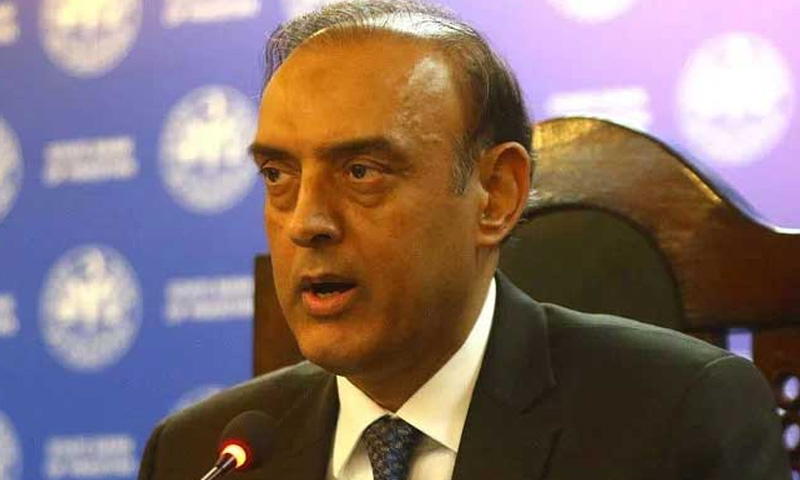
State Bank of Pakistan (SBP) Governor Jameel Ahmed has said that Pakistan’s economy is in a stronger position to cope with risks arising from tensions in the Middle East, including the ongoing Iran conflict, due to improved economic fundamentals.
He noted that key macroeconomic indicators performed better than expected at the beginning of the current fiscal year, said a report by Dawn News on Sunday. According to him, a careful combination of monetary and fiscal policies has helped bring inflation under control and improve the country’s external financial position.
Speaking during meetings with senior representatives of major international financial institutions, including global banks and credit rating agencies, Ahmed acknowledged that the Middle East situation has created fresh uncertainties. However, he emphasized that Pakistan is now more resilient than in past crises.
These discussions took place alongside the IMF-World Bank Spring Meetings held in Washington from April 13 to 18, where the SBP governor also met officials from both institutions.
Ahmed highlighted that before the recent geopolitical tensions, Pakistan had already made notable progress in stabilising its economy. He said inflation has been contained within target levels, while both fiscal and external buffers have improved.
He shared that inflation averaged 5.7 per cent during the first nine months of the fiscal year, the current account remained in surplus, and foreign exchange reserves increased to $16.4 billion, largely due to SBP’s market purchases. He expects reserves to rise further to around $18 billion by June 2026, supported by continued inflows and bilateral financing arrangements.
The governor added that improved stability has supported a gradual recovery in economic growth. Real GDP grew by 3.8 per cent in the first half of FY26, compared to 1.8 per cent during the same period last year.
He pointed out that the country is now better prepared to handle external shocks compared to previous episodes, such as the global disruptions caused by the Russia-Ukraine war in 2022.
Despite potential pressures from rising global energy prices, shipping costs, and insurance premiums due to the Middle East conflict, Ahmed maintained that Pakistan’s stronger economic base provides a buffer.
He reiterated that both the SBP and the government remain committed to maintaining price stability and will take necessary steps if needed. Monetary policy, he said, continues to remain cautious, with interest rates kept sufficiently high in real terms.
On the fiscal side, he noted that the government has achieved primary budget surpluses and has introduced targeted subsidies and austerity measures to manage demand amid current challenges.
Ahmed also referred to Pakistan’s recent staff-level agreement with the IMF under ongoing programmes, as well as a positive credit rating assessment, describing these as signs of confidence in the country’s reform efforts.
During his visit, he also met members of the Pakistani diaspora and promoted initiatives like the Roshan Digital Account (RDA). He said RDA inflows have exceeded $12.4 billion across more than 917,000 accounts. Recent regulatory changes now allow non-resident entities to participate, aiming to attract broader foreign investment and deepen Pakistan’s integration with global financial markets.
You May Also Like
- WEB DESK
- August 24, 2026