
- Reuters
- September 15, 2026
SC says Supreme Court, constitutional court equal in status, sets clear jurisdictional boundaries
-

- Zoya Anwer
- May 6, 2026
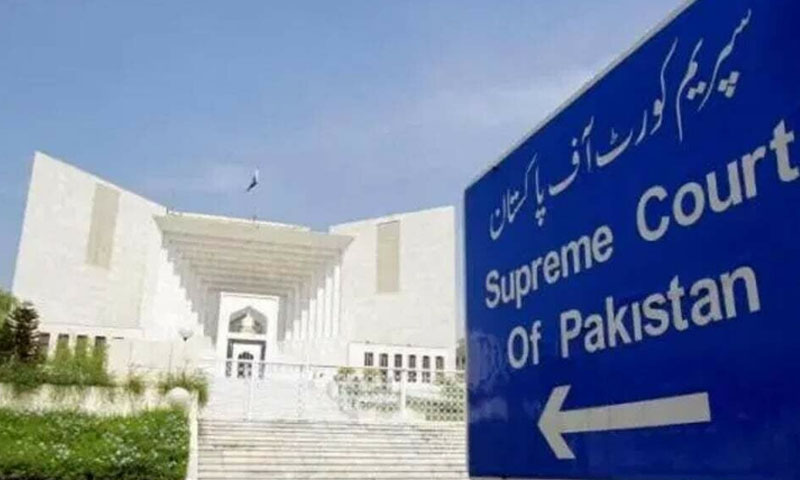
ISLAMABAD: The Supreme Court of Pakistan has ruled that it and the Federal Constitutional Court operate as parallel institutions with separate constitutional mandates, making it clear that neither court holds authority over the other.
The ruling was issued by a two-member bench comprising Chief Justice Yahya Afridi and Justice Shahid Bilal Hassan while hearing a set of petitions concerning the division of judicial powers following the 27th Constitutional Amendment.
Division of powers clarified
According to Geo, court explained that the amendment has effectively created two apex-level forums with clearly defined jurisdictions. It emphasised that constitutional cases, particularly those filed under Article 199, now fall within the exclusive domain of the Federal Constitutional Court, while the Supreme Court will continue to handle civil appeals and other regular matters under Article 185.
According to the judgement, all constitutional writ petitions, except those involving rent or family disputes, must be heard by the constitutional court. In contrast, standard civil litigation and appellate proceedings will remain with the Supreme Court.
Cases must be separated
The ruling stemmed from a matter originating in the Peshawar High Court, where constitutional and civil cases had been combined and later brought before the Supreme Court. The bench observed that such “clubbing” of cases is no longer permissible under the revised constitutional framework.
It directed that all pending matters involving mixed proceedings be separated and transferred to their respective forums in line with the new legal structure, warning that failure to do so could lead to jurisdictional confusion and conflicting verdicts.
Independent but coordinated courts
The court noted that the constitutional amendment introduced Article 175F, establishing the Federal Constitutional Court as a distinct body with its own appellate authority. Appeals arising from High Court rulings in constitutional matters are now to be routed to this court, with limited exceptions.
Importantly, the judgement underscored that both courts function independently. It clarified that Article 189, which governs binding precedents, does not place one court above the other. Instead, rulings from either court carry weight in terms of legal interpretation, but neither can review or overturn decisions made by the other.
Avoiding conflicting rulings
Addressing concerns about potential contradictions between the two courts, the bench highlighted the importance of judicial comity, a principle encouraging mutual respect and restraint among courts of equal standing. It stressed that careful case management would be essential to prevent overlapping or inconsistent judgements.
Application to current case
Applying these principles, the court ruled that civil appellate matters in the case would remain before the Supreme Court, while the constitutional petition would be transferred to the Federal Constitutional Court.
The bench also clarified that contempt proceedings related to Supreme Court orders would continue to fall under its jurisdiction, as such powers are tied directly to the authority of the court whose directives are alleged to have been violated.
The decision is seen as a significant step in defining Pakistan’s post-amendment judicial framework, setting clearer boundaries for how cases will be distributed between the country’s two highest courts.
You May Also Like


- WEB DESK
- September 15, 2026
Petrol price rises by Rs4.10, diesel by Rs6.41 per litre

- Reuters
- September 15, 2026
Samson, Reddy lead India to series-clinching win over Afghanistan

- WEB DESK
- September 15, 2026