- WEB DESK
- October 24, 2026
Senate panel questions exclusion of ex-ED from PIMS fire responsibility list
-

- Muhammad Zareef
- September 16, 2026
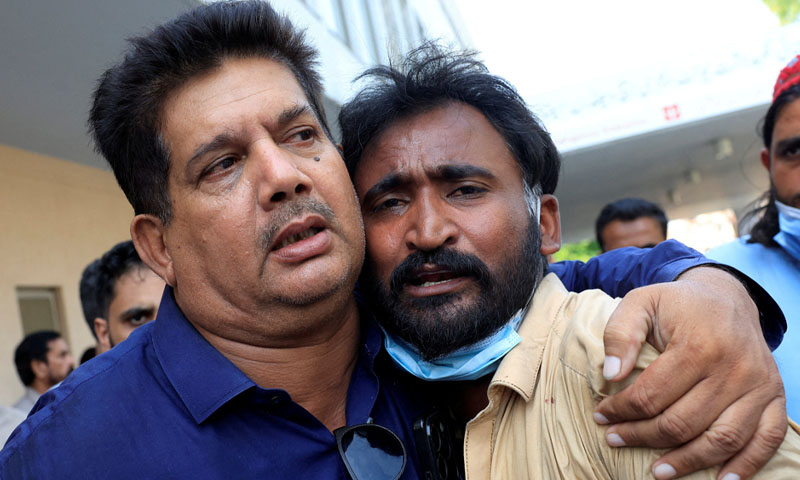
ISLAMABAD: A Senate human rights committee on Wednesday expressed serious concern over the delay in registering an FIR into the Pakistan Institute of Medical Sciences (PIMS) nursery fire that killed 14 newborns and questioned why the former executive director of the hospital was not included in the list of officials responsible for the tragedy.
The Senate Functional Committee on Human Rights, chaired by Senator Samina Mumtaz Zehri, sought explanations from health authorities and Islamabad police over the status of the criminal case and the implementation of recommendations arising from the inquiry into the August 26 fire.
The committee also sought details of the officials named in the inquiry report, including their designations, and questioned the omission of the former PIMS executive director from the list being considered for further action.
The official inquiry’s interim report had recommended suspension and departmental proceedings against eight officials, including former PIMS Executive Director Imran Sikandar, and called for criminal proceedings against those found responsible.
Prime Minister Shehbaz Sharif subsequently approved the recommendations and ordered departmental and criminal proceedings.
The committee’s latest concerns come a day after the final inquiry report into the tragedy was made public.
The report concluded that the deaths resulted from “systemic and institutional failures”, with the hospital and its senior management bearing primary institutional responsibility for failing to address known safety risks.
It identified an electrical fault involving an air-conditioner’s supply cable as the most probable source of ignition.
Committee questions delay in FIR
During Wednesday’s meeting, the committee repeatedly questioned Islamabad police over the failure to register an FIR despite the deaths of 14 newborns and the government’s earlier direction to initiate criminal proceedings.
SP Zeeshan, who appeared before the committee, said the FIR would be registered within 10 minutes. He told members that police had so far prepared a “Roznamcha” (daily diary) entry, and would proceed after reviewing it.
Committee members objected to the reliance on the daily diary, saying it could not substitute for registration of an FIR in a case involving multiple deaths.
SP Zeeshan said that police were examining the incident under Section 174 of the Code of Criminal Procedure, which deals with inquiries into certain unnatural deaths.
He indicated that recommendations arising from the investigation would determine the subsequent criminal action.
The committee chairperson rejected the suggestion that the incident should simply be treated as an accident and insisted that an FIR was necessary to set the criminal justice process in motion.
The committee had already directed authorities on September 9 to register an FIR and initiate criminal proceedings against those responsible.
At that meeting, members expressed serious concern that no case had been registered despite the prime minister’s directions for action.
Senator Syed Masroor Ahsan also sought a complete copy of the relevant daily diary record covering the 24-hour period from midnight to midnight.
Questions over former PIMS chief
A major point of contention during the meeting was the composition of the list of officials considered responsible for the tragedy.
Senator Zehri questioned why the former executive director’s name was absent from the list being discussed despite his position as the administrative head of PIMS at the time of the incident.
The committee asked health authorities to explain why other names had been added while the former ED had allegedly been left out.
An additional secretary of the Ministry of National Health Services suggested that the matter should be clarified by bringing the relevant inquiry officials before the committee and asking why the executive director’s name was not included.
The members said that the issue is crucial because the government’s interim inquiry report had explicitly named Imran Sikandar among the PIMS officials recommended for suspension and disciplinary proceedings.
The prime minister approved that recommendation on August 29.
The police had also recorded written statements from former PIMS executive director Imran Sikandar and other officials as part of their investigation into the fire.
CCTV footage from PIMS and Safe City cameras was also incorporated into the police inquiry.
The discrepancy between the earlier interim report and the list under discussion before the committee prompted the senators to demand clarification.
Zehri said that the prime minister might be satisfied with the report, but she was not satisfied with the explanation being provided to the committee.
Committee grills new PIMS administration
The senators also questioned the newly appointed PIMS Executive Director Dr Muhammad Salman about the hospital’s performance during the 15 days since he assumed charge.
The committee asked whether the new administration had investigated why doors in the affected area were closed or locked, why emergency exits were inaccessible and why the route used by firefighters to reach the nursery had been obstructed.
The questions followed earlier parliamentary scrutiny of the hospital’s fire-safety arrangements.
A Senate committee visiting the nursery shortly after the tragedy had raised concerns over the absence of fire alarms, reported closure of emergency exits and construction material obstructing access routes. It also questioned whether sufficient medical staff were present when the fire broke out.
The final inquiry report found wider failures in the hospital’s fire-safety system. It said multiple safety measures were absent, inadequate, not activated in time or had never been independently verified.
The tragedy occurred on August 26 in the Mother and Child Hospital’s nursery at PIMS.
Fourteen newborns died in the fire, while one baby was rescued by staff nurse Razia Noreen, who was subsequently recommended for a civil award and given a Rs10 million reward
Attempt to steal newborn also discussed
The committee also discussed an alleged attempt to steal a newborn from PIMS.
PIMS officials confirmed that an attempt to take a baby from the hospital at night had taken place, prompting the committee to express concern over security arrangements at the country’s largest public-sector hospital.
The issue added to the committee’s questions about security and administrative controls at PIMS, particularly following the fire and the scrutiny of the hospital’s emergency response.
Final inquiry finds systemic failures
The Senate committee’s concerns came as the government released the final inquiry report into the fire, which provided a more detailed assessment of the circumstances surrounding the deaths.
The report concluded that an electrical fault in the supply cable of air-conditioner No 2 was the most probable ignition source but said the deaths could not be attributed to the initial spark alone. The inquiry identified failures across clinical management, fire safety, emergency preparedness, maintenance and institutional oversight.
The inquiry found that the nursery housed 15 newborns despite having capacity for 10 and identified serious shortcomings in fire-safety arrangements. It also recommended criminal investigation into the maintenance chain associated with the air-conditioning system.
The report said responsibility for the tragedy had to be determined separately for individual officials on the basis of evidence establishing their duties, knowledge, omissions and the consequences of those omissions.
The initial government action following the interim report included the suspension of senior PIMS officials, including the executive director, along with officials of the Capital Emergency Service and a security company. Criminal proceedings were also ordered.
Hina Zarif murder case
The human rights committee also examined the murder of Hina Zarif and Shukria Bibi.
Hina Zarif, a 25-year-old woman from Islamabad, was allegedly shot dead after returning to the capital following a court-sanctioned khula (divorce) from her husband. Reports say she had initially been married against her wishes and later left the marriage. She obtained khula and was living in Lahore before returning to Islamabad on August 13, 2026 .
SP Zeeshan told the committee that Hina’s FIR did not mention that she was pregnant. Police said she had initially gone missing from her home and that her husband had registered a kidnapping case.
According to the police briefing, Hina travelled to Lahore, where investigators suspected she became a victim of a “honey trap”.
She subsequently reached a shelter home before her father and husband brought her back.
Police alleged that she was later killed and shot six times.
Four people — her father, brother, husband and cousin — have been named in the case, according to the briefing.
Police said the brother was allegedly responsible for the shooting, while efforts were under way to arrest the fourth nominated suspect.
Zehri cautioned against drawing conclusions about women who leave their homes, saying that a woman leaving home should not automatically be interpreted as having gone away with someone.
Shukria Bibi murder case
The committee was also briefed on the death of Shukria Bibi, a teenage girl from Kuchlak on the outskirts of Quetta, who was allegedly beaten to death by her husband in September.
Police said her age was between 14 and 15, while other accounts put it at around 15. She had reportedly been married at a young age and was the accused man’s second wife
The SSP Investigation Crime Branch told the committee that Shukria was allegedly beaten to death by her husband with an iron rod. Police said marks of violence were found on her body and injuries were visible on her lips.
The suspect has been arrested and the alleged murder weapon recovered, according to police.
Initial investigations suggested that the suspect became angry after Shukria looked outside through a door. Police said she was the man’s second wife.
The committee expressed concern over the case and sought a detailed report from Balochistan authorities.