- AFP
- November 19, 2026
Sindh approves Rs16.9bn wheat support package, retains provincial control over minerals
-

- WEB DESK
- November 19, 2026
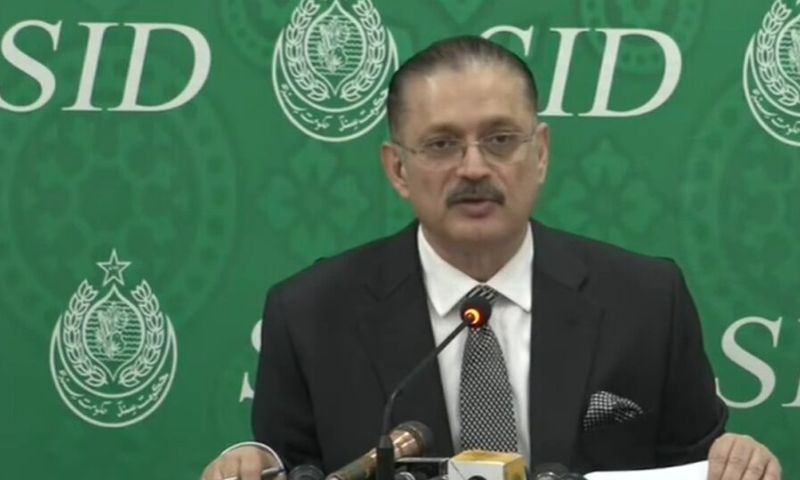
KARACHI: The Sindh cabinet on Thursday approved a Rs16.9 billion support programme for wheat growers, decided to retain provincial control over mineral resources and granted industrial status to the gems and jewellery sector, as it also cleared a series of healthcare, transport and development initiatives.
The decisions were taken at a cabinet meeting chaired by Sindh Chief Minister Murad Ali Shah, according to a statement issued after the meeting.
The cabinet also approved the import of 300,000 metric tonnes of wheat, while directing the relevant authorities to prepare legal amendments within three weeks to ensure transparent allocation of government land.
Under the decisions, the gems and jewellery sector will be granted the status of an industry, while the provincial government will retain its authority over mineral resources.
The cabinet also approved an additional Rs1.5 billion for the oncology complex of the Sindh Institute of Urology and Transplantation (SIUT), and sanctioned the construction of a 200-bed urology hospital in Larkana at an estimated cost of more than Rs13.5 billion.
It further decided to extend the operation of nine maternal and child health centres in Tharparkar for another three years.
The cabinet approved the nomination of doctors to the Sindh Healthcare Commission’s nomination committee and a relief package for 273,666 drought-affected families in Tharparkar and Umerkot districts.
The Rs16.9 billion wheat support programme is aimed at providing assistance to growers, although further details of its implementation were not immediately available.
Sindh urges political parties to avoid rallies over new provinces
Speaking at a post-meeting press conference, Sindh Senior Minister Sharjeel Inam Memon also addressed the growing political debate over the creation of new provinces, urging political parties to avoid demonstrations that could trigger tensions in Karachi.
He said a nationalist party had announced a rally against the creation of new provinces for November 29, while the Muttahida Qaumi Movement (MQM) had also planned a demonstration in support of the idea.
Memon said the provincial government would approach both parties and request them to refrain from holding rallies for the time being, stressing that decisions on the issue should be made in parliament rather than on the streets.
“Everyone has the right to express their opinion, but no one should issue fatwas of disbelief against others,” he said, adding that the Sindh government did not want tensions to escalate in the city.
The minister also defended PPP Chairman Bilawal Bhutto Zardari’s recent remarks on the political debate, saying his statement had been given a misleading interpretation.
He said Bilawal had not issued a threat but had referred to Karachi’s ground realities and the city’s troubled past.
Memon criticised the MQM’s ministers and political approach, saying their statements required serious consideration. He also questioned the federal government’s response to Bilawal’s remarks, particularly a statement by Information Minister Attaullah Tarar.
Describing Tarar’s response as “foolish”, Memon said the PPP was being recognised as a stakeholder in the country’s political system but was simultaneously being discouraged from expressing its views on important national issues.
He argued that a party represented in parliament and part of the coalition government should be included in consultations and decisions affecting the country.
“How can a party be recognised as an equal stakeholder but kept out of decisions and consultations?” he asked, calling on the federal government to take all stakeholders into confidence instead of making unilateral decisions.
Memon recalls Karachi’s violent past
Defending Bilawal’s remarks, Memon recalled Karachi’s history of political violence and referred to past allegations and public statements involving senior MQM figures.
He said the city had witnessed widespread violence during the tenure of the party’s founding leadership, claiming that 30 to 40 people were killed daily in Karachi when the MQM founder called for strikes.
The minister also referred to previous public exchanges between Mustafa Kamal and Khalid Maqbool Siddiqui, saying Kamal had previously levelled serious allegations against Siddiqui, including accusing him of being an agent of a hostile country.
Memon further alleged that Siddiqui had desecrated a Pakistani passport, questioning how political figures who had exchanged such accusations were now working together under the MQM leadership.
He said he was not making new allegations and that the statements he had referred to were already part of the public record.
Memon also rejected any suggestion that the PPP supported violence, saying the party had consistently advocated democracy and made sacrifices for the country.
He recalled the assassination of former prime minister Zulfikar Ali Bhutto, describing it as a judicial killing, and said the party had played a historic role in establishing a democratic system and securing people’s rights.
The minister also referred to the bombing in Karachi that killed hundreds of PPP supporters and recalled the late prime minister Benazir Bhutto’s opposition to terrorism.
He said Benazir had vowed to hoist the Pakistani flag in Swat despite the area being under the control of terrorists at the time, describing the move as a major challenge.
Karachi to get 500 more buses
Separately, the cabinet approved the addition of 500 buses to Karachi’s public transport system.
Memon said several phases of the Karachi Safe City project had been completed and that more than 1,000 buses would be provided to the city over the next year.
The latest approvals come as the provincial government seeks to expand public transport and healthcare facilities while addressing the political debate over the distribution of powers and the proposed creation of new provinces.
You May Also Like