Bilawal urges renewed govt-PTI talks, calls KP emergency a ‘temporary measure’
-

- WEB DESK
- October 14, 2026
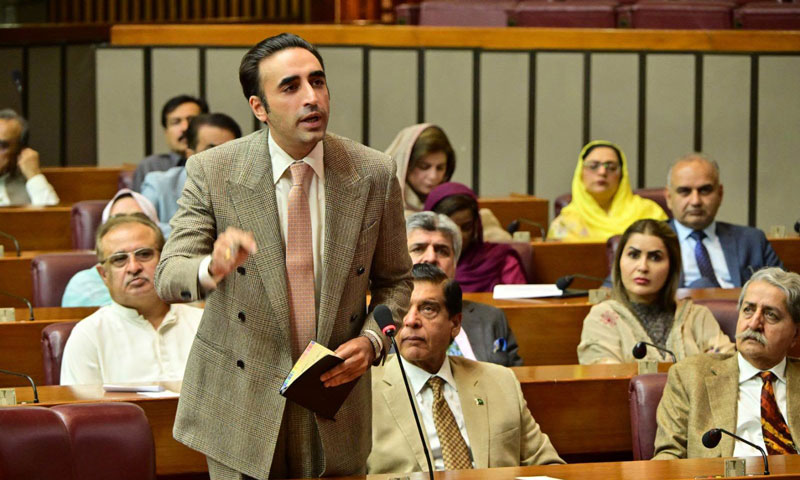

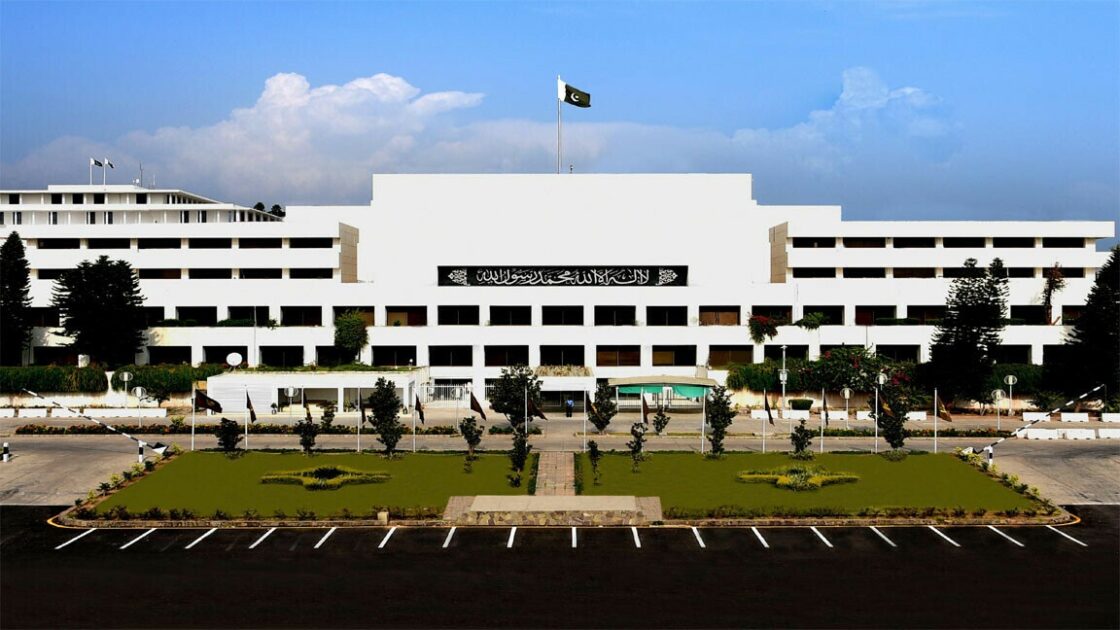
ISLAMABAD: Pakistan Peoples Party (PPP) Chairman Bilawal Bhutto-Zardari urged on Wednesday the federal government and opposition to resume negotiations over Khyber Pakhtunkhwa, describing the imposition of emergency and governor’s rule in the province as a “temporary measure” while defending the decision as necessary to combat terrorism.
Addressing the National Assembly during a debate on the emergency proclamation, Bilawal said political dialogue remained essential to finding a lasting solution to the province’s security crisis and proposed an agreement between the federal government, the KP government and the provincial chief minister on a joint counterterrorism strategy.
He said the government should continue reaching out to opposition parties despite the constitutional measures already taken.
“Even today, my suggestion to the federal government would be that we extend our hand once again to the opposition leadership and political parties for negotiations, political dialogue and a way out of this problem,” Bilawal said.
The PPP chairman acknowledged that the emergency measures had been taken but stressed they could not remain in place indefinitely. He argued that defeating militancy required a united national response rather than leaving the fight to individual political parties or the security forces alone.
Law Minister Azam Nazeer Tarar, who opened the debate, defended the federal government’s decision, citing a sharp increase in terrorist incidents, cross-border infiltration and what he described as the provincial administration’s inadequate response to the security situation.
The federal government announced emergency under Article 232 and governor’s rule under Article 234 of the Constitution on October 11, following approval by President Asif Ali Zardari on the advice of Prime Minister Shehbaz Sharif.
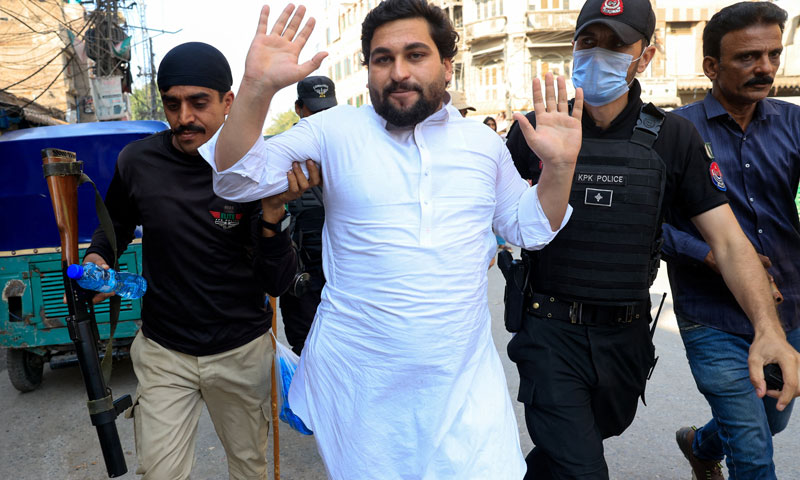
The move has intensified tensions between the federal government and the Pakistan Tehreek-e-Insaf (PTI), which leads the provincial administration in KP. The PTI has rejected the measures as politically motivated and vowed to challenge them.
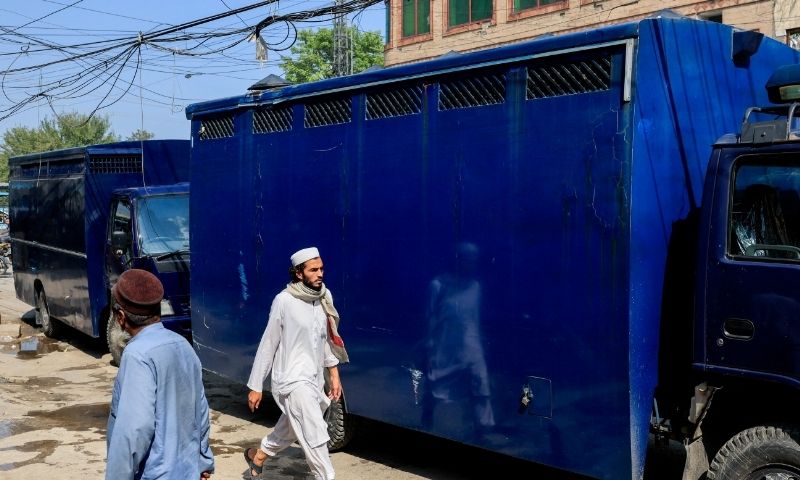
Bilawal calls emergency a ‘temporary measure’
Bilawal said the federal government, provincial administration and KP chief minister should agree on a framework for jointly combating terrorism.
He said negotiations had initially appeared to be progressing towards a significant political breakthrough, with government and opposition representatives discussing ways to address the security situation.
However, he accused the PTI’s provincial leadership of contributing to the circumstances that led to the emergency.
“PTI has carried out a political suicide attack on itself,” Bilawal said, arguing that the party’s actions had undermined its own provincial government.
He said the Constitution empowered the president to proclaim an emergency in circumstances involving war, external aggression or internal disturbances beyond a provincial government’s capacity to control.
Bilawal said the PPP and the president had initially favoured engaging the opposition before proceeding with the constitutional measure, seeking to address the federal government’s concerns about the provincial administration’s cooperation in counterterrorism efforts.
He said representatives of the PPP had participated in negotiations with the opposition and that he had received a late-night briefing indicating that the talks were progressing towards an agreement.
The PPP chairman also acknowledged that political space had narrowed in Pakistan, saying both the government and opposition bore responsibility for the situation. He argued that restrictions on political activity affected political parties, workers and ordinary citizens.
Despite defending the emergency, Bilawal said it should not be treated as a permanent solution.
“If we really want to rid this land of terrorism, from Khyber to Khuzdar, we need an all-of-society response, an all-of-country response,” he said.
He argued that the fight against militancy could not be left to a single political party or the security forces alone, adding that Pakistan had previously demonstrated its ability to defeat terrorism when the nation acted collectively.
Tarar cites surge in terrorist incidents
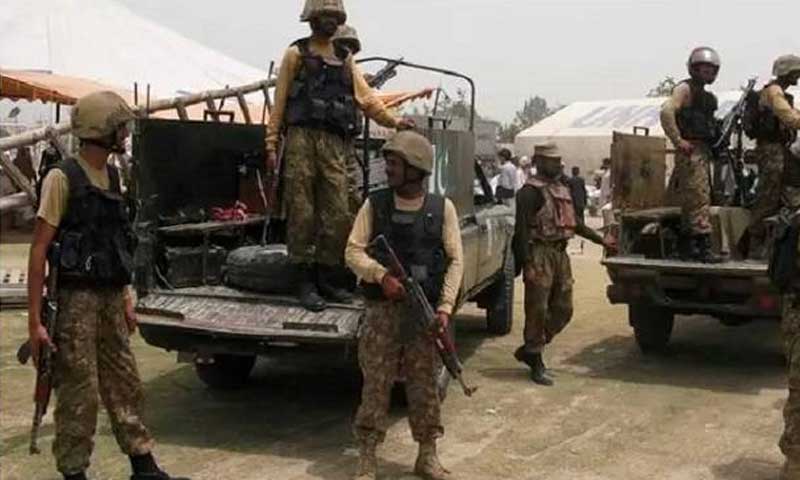
Earlier, Tarar told the National Assembly that the security situation in KP had become an alarming threat to national security, citing internal disturbances, cross-border infiltration and the provincial government’s handling of counterterrorism.
He said the federal cabinet had examined security reports during its October 11 meeting before advising the prime minister to recommend emergency measures.
The law minister cited 3,787 recorded terrorist incidents in the province between October 15, 2025, and October 9, 2026, compared with 2,911 incidents reported during the three years from 2021 to 2024.
According to Tarar, the number of incidents recorded in the preceding year had exceeded the combined total for the earlier three-year period. He added that casualties among security personnel and civilians had also increased.
Tarar said the cabinet had deliberated for two-and-a-half hours before concluding that internal disturbances, cross-border infiltration and the provincial government’s approach to counterterrorism warranted emergency measures.
He accused the provincial leadership of prioritising political activities over responding to attacks and supporting the families of security personnel and civilians killed in violence. He also criticised calls for marching on the federal capital amid what he described as a deteriorating security and law and order situation.
The minister argued that counterterrorism required the federal and provincial governments to work together, saying political differences should not undermine efforts to tackle militancy.
Law minister details failed negotiations
Tarar said the federal government had prioritised dialogue over the use of force to address political tensions and had made efforts to reach an agreement with the opposition.
He thanked the National Assembly speaker for facilitating mediation involving government and opposition representatives. The government delegation included Interior Minister Mohsin Naqvi, Rana Sanaullah and Amir Muqam, while the PPP nominated Naveed Qamar, Sherry Rehman and Ejaz Jakhrani.
The opposition delegation was led by PTI Chairman Barrister Gohar Ali Khan and Senate Opposition Leader Allama Raja Nasir Abbas.
Tarar said the negotiations continued late into the night, with the sides exchanging several draft proposals. However, he claimed that discussions on counterterrorism were overtaken by demands concerning facilities and meetings for PTI founder Imran Khan, who is in prison.
He argued that decisions about the release of an arrested person or a convicted prisoner generally fell within the courts’ jurisdiction, while the president had a separate power to grant a pardon under Article 45 of the Constitution.
The minister also referred to earlier political negotiations in 2023 over holding elections simultaneously across the country following the dissolution of the Punjab and KP assemblies. He said a proposed understanding had included passing the federal budget, dissolving certain assemblies and holding nationwide elections in September, but the arrangement had not proceeded.
Invoking the events of May 9, 2023, Tarar urged political parties to learn from past confrontations and pursue dialogue and reconciliation.
Bilawal alleges foreign backing for militancy
Bilawal said the current security challenge was more complicated than in the past and called on the opposition to play what he described as a responsible role in counterterrorism efforts.
He alleged that India was supporting militant activity in Pakistan, including through the Tehreek-e-Taliban Pakistan and separatist organisations. He linked these allegations to regional tensions following the recent conflict between Pakistan and India, claiming that New Delhi would continue trying to destabilise Pakistan.
Bilawal also alleged that foreign forces were interfering in Pakistan’s internal affairs and supporting militant groups operating in KP and Balochistan.
He referred to Pakistan’s efforts to promote peace between Iran and the United States, saying the country had taken on a significant responsibility in pursuing regional peace.
The PPP chairman reiterated that political differences should not prevent a united response to terrorism, warning that his party would continue fighting militancy even if other political forces refused to cooperate.
“If two parties have to fight, two parties will fight. We will not retreat,” he said.
Constitutional provisions cited
Tarar said the KP governor had repeatedly raised concerns about worsening security in several districts and had informed the president and prime minister of the situation through a letter.
He said the federal cabinet had also reviewed reports from different agencies, including figures indicating an increase in terrorist incidents and casualties.
The law minister said Article 232 provided for emergency measures in circumstances involving internal disturbances or external aggression, subject to constitutional requirements. He also referred to Article 234, which concerns a failure of constitutional machinery in a province.
Tarar maintained that the circumstances described in the reports warranted the measures taken by the federal government.
The emergency proclamation must be considered by both the National Assembly and the Senate for approval under the constitutional procedure.
Bilawal urged the government and opposition to set aside their political differences on key national issues, warning that failure to reach a consensus would harm the entire country.
“This is not just my country; it belongs to the opposition and PTI as well,” he said, adding that political disagreements would continue but some fundamental issues required agreement.
He said Pakistan should not have to confront multiple security threats while also dealing with political confrontation at home. He urged lawmakers to begin building consensus in parliament, including through an inclusive committee to develop a national strategy against terrorism.
Bilawal cited the National Action Plan, developed through political consensus under former prime minister Nawaz Sharif, as an example of how the government and opposition could work together on national security.
He also called for opposition representation on a proposed parliamentary committee on electoral reforms, arguing that broader participation could help improve the process even if complete agreement proved impossible.
Bilawal again invited PTI and other opposition parties to engage with the federal government and work towards conditions in which emergency rule in Khyber Pakhtunkhwa would no longer be necessary.
“If you create those political conditions, I will personally stand in this House and request the prime minister to end the emergency,” he said.
He said the PPP would support the federal government’s decision to impose emergency rule in Khyber Pakhtunkhwa while continuing efforts to counter terrorism and secure relief for the province’s residents.
“We will work day and night to confront these terrorists and ensure Pakistan wins and Khyber Pakhtunkhwa wins,” he said.
Bilawal urged the government and opposition to set aside their political differences on key national issues, warning that failure to reach a consensus would harm the entire country.
“This is not just my country; it belongs to the opposition and PTI as well,” he said, adding that political disagreements would continue but some fundamental issues required agreement.
He said Pakistan should not have to confront multiple security threats while also dealing with political confrontation at home. He urged lawmakers to begin building consensus in parliament, including through an inclusive committee to develop a national strategy against terrorism.
Bilawal cited the National Action Plan, developed through political consensus under former prime minister Nawaz Sharif, as an example of how the government and opposition could work together on national security.
He also called for opposition representation on a proposed parliamentary committee on electoral reforms, arguing that broader participation could help improve the process even if complete agreement proved impossible.
Bilawal again invited PTI and other opposition parties to engage with the federal government and work towards conditions in which emergency rule in Khyber Pakhtunkhwa would no longer be necessary.
“If you create those political conditions, I will personally stand in this House and request the prime minister to end the emergency,” he said.
He said the PPP would support the federal government’s decision to impose emergency rule in Khyber Pakhtunkhwa while continuing efforts to counter terrorism and secure relief for the province’s residents.
“We will work day and night to confront these terrorists and ensure Pakistan wins and Khyber Pakhtunkhwa wins,” he said.
Khawaja Asif recalls PTI’s past, criticises its stance on political prisoners
Addressing the National Assembly, Defence Minister Khawaja Asif recalled meetings during the PTI government in which, he said, the party’s lawmakers had supported bringing militants back to Pakistan, arguing that it would benefit the country.
He said senior military officials, including former army chief General (retd) Qamar Javed Bajwa and former intelligence chief General Faiz Hameed, had attended meetings in parliament during that period.
Asif also recalled discussions over the return of Indian pilot Abhinandan Varthaman to India after his capture by Pakistan in 2019. The defence minister accused Imran Khan of repeatedly praising Bajwa and the military during his time in office, arguing that the PTI founder’s past statements contradicted the party’s current political position.
“While pleading your case, look back at the past as well,” Asif said, urging opposition lawmakers to reflect on their previous actions and positions.
He also challenged criticism of Imran Khan’s treatment in prison by recounting his own experience of incarceration, saying he had spent days without adequate bedding during a period of cold weather.
Asif said Prime Minister Shehbaz Sharif had secretly arranged for a blanket to be sent to him while he was imprisoned. He added that a water heater had later been removed from his cell on orders.
He also recalled the conditions faced by former prime minister Nawaz Sharif and his daughter, Maryam Nawaz, in Adiala jail, saying Maryam had used a damp scarf to cope with the heat.
The minister said political prisoners should regard the hardships they endured for their beliefs and political principles as a matter of pride rather than use them to seek sympathy.
Recalling his own imprisonment under former military ruler Pervez Musharraf, Asif said he had been held in a small cell at Attock jail, with a solid steel door.
He said politicians should consider their own past conduct before criticising others, adding that the country’s political environment would not improve while there remained a contradiction between politicians’ words and actions.
‘KP emergency was a last resort’
Asif said the government had not made the release of former prime minister Nawaz Sharif, Shehbaz Sharif or Maryam Nawaz a condition for political negotiations when they were imprisoned, despite protesting their detention and pursuing legal remedies.
He said negotiations between the government and opposition had continued over the preceding week, with agreement reached on several points before the process collapsed. He challenged National Assembly Speaker Sardar Ayaz Sadiq to correct him if his account was inaccurate, adding that PTI leader Asad Qaiser had also proposed additions during the talks.
Asif said the government’s primary concern was terrorism, claiming that 2,700 people had been killed over three years, compared with 3,900 deaths in 14 months. He blamed the deterioration in security on the Khyber Pakhtunkhwa Chief Minister Sohail Afridi’s focus on political interests rather than counterterrorism.
The defence minister also questioned PTI’s political alliances, alleging that the provincial leadership had taken instructions from a person based in Afghanistan.
He said Pakistan needed a united response to terrorism, arguing that Khyber Pakhtunkhwa’s people were suffering both from militant violence and from failures of governance.
Asif criticised the PTI-led provincial government’s performance over its years in power, raising questions about contracts involving the mining and health sectors. He also alleged that a relative of Imran Khan based in the United States controlled aspects of the health system. These claims were made by the minister during his address.
He accused PTI of seeking equal treatment while refusing to acknowledge its own past, arguing that political parties needed to demonstrate good conduct before claiming the moral high ground.
He added that the government had exhausted other options before deciding to impose emergency rule in the province.
Asif said Interior Minister Mohsin Naqvi had outlined in the Senate the extent of the government’s efforts to negotiate and the reasons the talks had failed. Given the security situation, he argued, the emergency had been a measure of last resort.
Asif concluded by criticising what he described as the influence of a person operating from a hideout in Afghanistan over the Khyber Pakhtunkhwa government, linking that alleged influence to the province’s political and security problems.
You May Also Like