
- Ameem Lutfi | Kevin Schwartz
- September 11, 2026
The budget in your kitchen: What FY2026-27 actually changes for ordinary Pakistanis
-

- Ali Hasanain
- June 13, 2026
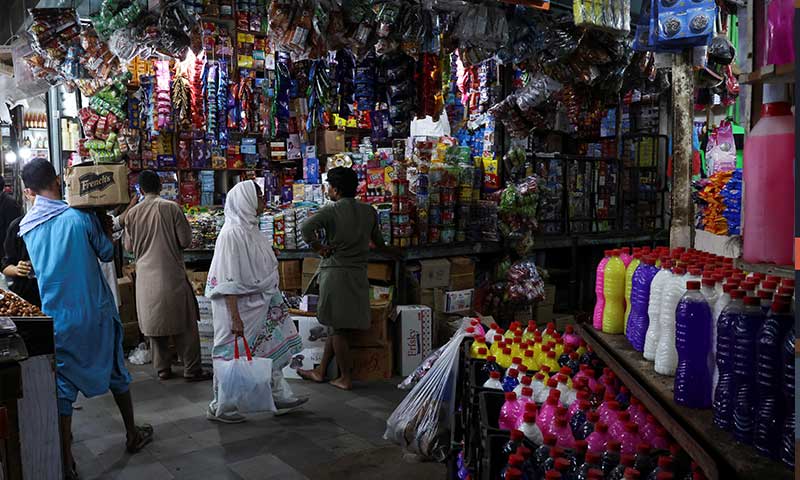
Every June, people tune into the Finance Minister’s budget speech looking for “relief”, while official budgets are written for parliament and TV tickers, real budgets are written at kitchen tables.
Now that the federal budget for 2026-27 is before the National Assembly, the useful question is not what the finance minister Aurangzeb said but what changes in the daily arithmetic of an ordinary family.
Start where every Pakistani household meets the federal government most often: the petrol pump.
The notorious pump
The budget expects Rs 1,676 billion next year from the Petroleum Development Levy, the per-litre tax on petrol and diesel that the federal government keeps in full. That is about twelve percent more than it will collect this year. But we consume only around twenty billion litres of petrol and diesel a year, and consumption is growing slowly. Divide the target by the litres and the arithmetic speaks plainly: the levy has to rise from roughly Rs78 per litre today to somewhere between Rs84 and Rs87. Six to nine rupees more on every litre, before world oil prices move at all, and petrol has already crossed Rs 320 this year after the disruption in the Gulf.
No minister announced this, and none needs to.
View this post on Instagram
The levy’s rate is set by government notification, the statutory ceiling that once capped it was removed last year, so the increase will arrive not in a speech but in a circular, sometime after July 1. The budget’s revenue arithmetic has already assumed it. Fuel duties are the most far-reaching of taxes: they ride into bus fares, freight, flour, and vegetables. When the notification comes, that is the budget reaching your kitchen.
The pay packet
For government employees, salaries and pensions rise by seven per cent and the minimum wage goes up ten per cent, to about Rs 40,700 a month. Hold those against the budget’s own inflation assumption, a little over eight per cent, and the picture is honest but uncomfortable: a government salary will buy slightly less next year than it does today, and the minimum wage roughly keeps pace where it is actually enforced, which in much of the informal economy it is not. The majority of Pakistanis, who work for private or informal employers, get no wage announcement at all. Their protection against inflation is whatever the labour market gives them.
This is by design, not neglect. We are inside an International Monetary Fund (IMF) programme that requires the government to spend less than it collects before interest, a primary surplus of two per cent of national income, and restraint on the public wage bill is part of how that target is met.
Two winners, many losers
Strip away the speech-making and compare this budget with last year’s, line by line, after inflation.
Only two significant allocations grow in real terms. The Benazir Income Support Programme (BISP), the cash transfer that reaches the country’s poorest households, rises about 17 per cent, to roughly Rs 850 billion: a real increase of about eight per cent, and the most progressive line in the budget. Defence rises at almost exactly the same pace, to Rs 3,000 billion.
Nearly everything else shrinks.
The comparable federal budget grows only about five per cent in rupee terms, a real cut of roughly three per cent. Development spending, the dams, roads, schools and hospital projects, falls about nine per cent before inflation, roughly 16 per cent after it. And the squeeze does not stop at the federal line. Under the IMF programme the provinces are required to bank enormous surpluses: 15 to 17 per cent of their revenue, when in recorded history they have never managed to save more than ten. To get there, the National Economic Council has frozen provincial development programmes at what was actually spent last year. Schools, clinics, and local roads are provincial subjects. If your town was waiting for one, it will likely wait longer.
What the austerity buys
There is a defensible logic here, and it deserves to be stated as plainly as the costs. For years debt servicing was eating the budget alive: at the worst, two years ago, sixty-one paisa of every rupee of government revenue went to interest. That fell to forty-nine paisa last year and is budgeted near forty for the year ahead, as interest rates have come down and the government has, unusually, held the line on spending, last year was the first in at least 16 years in which it spent less than it had budgeted, on both the running of government and on development. The room created by the falling interest bill is precisely what paid for the BISP expansion and the defence increase without a wider deficit.
We are buying back a budget that had been mortgaged.
The kitchen-table summary
The bill for that buy-back is not evenly shared. The petrol levy and the development freeze reach everyone; the protections, the cash transfer for the poorest, the salary increase for state employees, reach some. The family in between, in private work, with no BISP card and no pay commission, is asked for patience and offered two things in return: inflation that keeps falling, and a state that is finally living closer to its means. Whether the bargain holds turns on one number, the tax target. It is ambitious; if collection falls short, the adjustment will come, as it always does, from the only line that moves quickly: development.
Watch the levy notification in July, and watch the provincial budgets later this month. That is where this budget will tell you the truth about itself.