- WEB DESK
- November 17, 2026
Three PTI leaders detained under MPO despite securing bail from PHC
-

- Anwar Zeb
- November 17, 2026
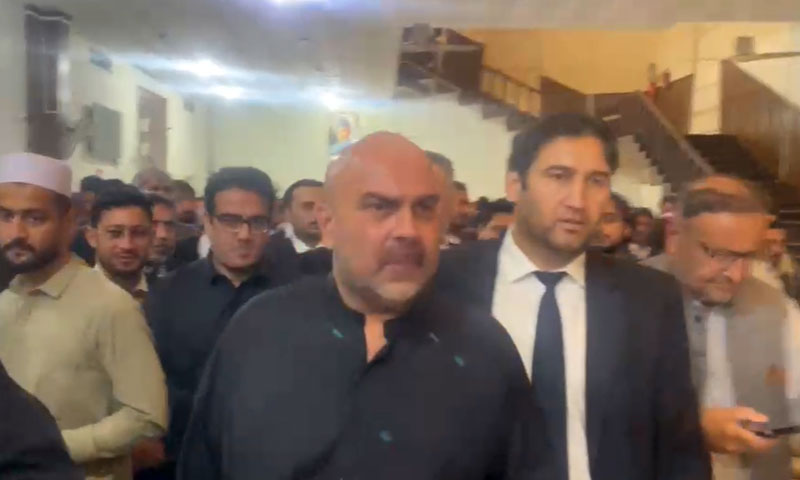
PESHAWAR: Khyber Pakhtunkhwa Police on Tuesday detained three Pakistan Tehreek-e-Insaf (PTI) leaders, Taimur Saleem Jhagra, Kamran Bangash and Irfan Saleem, under Section 3 of the Maintenance of Public Order (MPO), despite they secured interim bail from the Peshawar High Court (PHC) in the May 9 Radio Pakistan attack case.
The case relates to the attack on the historic Radio Pakistan building in Peshawar during violent protests on May 9 and 10, 2023, following the arrest of former prime minister and PTI founder Imran Khan.
An anti-terrorism court (ATC) has been conducting the trial of around 75 accused in the case, including serving and former PTI lawmakers. The accused were indicted on multiple charges in June last year and pleaded not guilty.
Deposed Khyber Pakhtunkhwa Chief Minister Sohail Afridi, along with PTI leaders Jhagra, Bangash and Saleem, was also nominated as an accused in the case following forensic examination of video footage and identity verification reports.
Police relied on findings from the Punjab Forensic Science Agency (PFSA) and the National Database and Registration Authority (Nadra) to identify the suspects in the footage.
In a relevant development today, the three leaders voluntarily surrendered to police outside the PHC following prolonged negotiations with the police and consultations with their lawyers. Senior Superintendent of Police (SSP) Operations Farhan Khan was also present when they were taken into custody.
The development came after the high court granted interim bail to the three leaders until November 23 against surety bonds of Rs2 million each.
The court also directed the petitioners to join the probe and appear before the investigating officer.
According to the written order, the case was registered at Peshawar’s East Cantonment Police Station on May 10, 2023, under the provisions of the Anti-Terrorism Act (ATA) and other relevant laws.
The petitioners’ counsel argued that the case had been registered with mala fide intentions and on the basis of their political affiliation.
ATC rejects bail applications
Earlier, a Peshawar ATC dismissed the interim bail applications of Jhagra, Bangash and Saleem in the Radio Pakistan attack case.
ATC Judge Wali Mohammad heard the applications filed by the former provincial ministers and the PTI Peshawar president.
During the hearing, the defence counsel argued that the case had been revived in 2025, nearly three years after the May 9 incidents, maintaining that merely appearing in video footage did not constitute a criminal offence.
On the other hand, Radio Pakistan’s counsel argued that the suspects had been nominated in the challan after their identities were verified through Nadra and the PFSA.
The prosecution maintained that the leaders were accused of inciting people to create unrest.
After hearing arguments from both sides, the ATC dismissed their bail applications. The decision triggered a dispute between police personnel and lawyers over the leaders’ arrest, prompting authorities to close the court premises’ gates.
The three leaders subsequently approached the high court, which granted them interim bail before police detained them under the MPO.
Afridi’s arrest warrants
In the same case, the ATC issued arrest warrants for Afridi on October 28 after the prosecution submitted the supplementary challan.
The ATC also reissued arrest warrants for Afridi on November 11 over his continued absence from court proceedings. On November 14, the court initiated proceedings to declare him a proclaimed offender.
Afridi was taken into custody on October 11 while leading a PTI march towards Islamabad, amid the imposition of emergency and governor’s rule in KP.
Emergency, governor’s rule in KP
President Asif Ali Zardari proclaimed an emergency in Khyber Pakhtunkhwa on October 11, 2026, on the advice of Prime Minister Shehbaz Sharif, under Articles 232 and 234 of the Constitution.
The federal government cited the deteriorating law and order situation and a lack of cooperation from the provincial administration in the fight against terrorism as reasons for the decision.
Under the emergency arrangement, Governor Faisal Karim Kundi was assigned responsibility for provincial affairs with the assistance of an advisory council, while the provincial government’s administrative and legislative authority was taken over under the constitutional provisions.
The move effectively brought an end to PTI’s provincial government, triggering a fresh political confrontation between the ruling coalition and the opposition alliance.
The Imran Khan-founded party and other opposition parties have challenged the constitutional basis of the emergency and governor’s rule, calling for judicial review and the recovery of detained party leaders.
You May Also Like
- WEB DESK
- November 17, 2026