
- WEB DESK
- September 14, 2026
Top US general says Iran attacked five ships, defends blockade of Hormuz
-

- Zafar Ali
- April 24, 2026
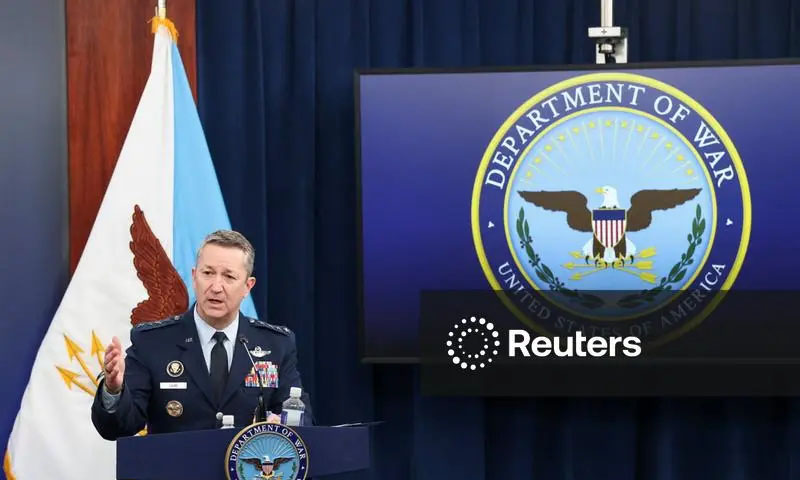
WASHINGTON: Chairman of US Joint Chiefs of Staff General Dan Caine said on Friday that Iran has attacked five merchant vessels as he defended expanded US naval operations targeting Iranian shipping in international waters.
Speaking during a Pentagon briefing along with Defence Secretary Pete Hegseth, Caine said that US forces were continuing interdictions of Iranian-linked vessels in the Pacific and Indian Oceans amid heightened tensions and an ongoing ceasefire between the United States and Iran.
“Iran has attacked five merchant vessels,” Caine said, without providing further details on the incidents or identifying the ships involved.
He said that the United States is enforcing restrictions on maritime movement through the Strait of Hormuz “across the board” and would continue operations against Iranian vessels at sea.
The briefing comes as Washington steps up maritime enforcement measures it says are aimed at countering Iranian activity in key shipping lanes.
Pete Hegseth said the US blockade on Iran was expanding globally and warned Tehran that it still had an opportunity to reach an agreement with Washington.
“Our blockade is growing and going global,” Hegseth told reporters at the Pentagon. “No one sails from the Strait of Hormuz to anywhere in the world without the permission of the United States Navy.”
He said US naval forces had turned back 34 vessels attempting to transit the Strait of Hormuz.
Hegseth described Iran’s position as a “historic chance” to strike a deal with Washington, adding that “the ball is in their court.”
Hegseth said that the United States has seized two vessels from a so-called “dark fleet” departing Iranian ports.
Hegseth said that the US was enforcing broad control over global shipping routes linked to Iran and would continue operations for as long as necessary.
“The blockade will remain in place as long as needed,” he told reporters, adding that “time is not on Iran’s side.”
He urged Tehran to make what he called a “wise decision” at the negotiating table, amid ongoing tensions despite a ceasefire framework.
Hegseth said U.S. forces had been ordered to destroy any ships or boats laying naval mines in the Strait of Hormuz, a key global oil shipping route.
He warned that any further attempt by Iran to deploy mines would constitute a violation of the ceasefire.
The defence secretary also played down the US reliance on the strategic waterway.
“As a country, we use the Strait of Hormuz less. Our energy does not depend on it,” he said, adding that Europe was more exposed to disruptions in the route.
“This is more Europe’s issue than ours,” Hegseth said. “They need the Strait of Hormuz for energy.”
He said Washington would welcome “serious efforts” by European countries to address the situation in the waterway, while stressing that alliances should be “a two-way street.”
“Europe and Asia have benefited from US protection. That era of free-riding is over,” he said.
The Strait of Hormuz, through which a large portion of global oil exports passes, has become a flashpoint in escalating tensions between Washington and Tehran, raising concerns in global energy markets.
Iran has not yet publicly responded to the latest US statements.