- WEB DESK
- September 16, 2026
Tribal chiefs cannot verify CNICs, domiciles, FCC rules
-

- Zafar Ali
- May 1, 2026
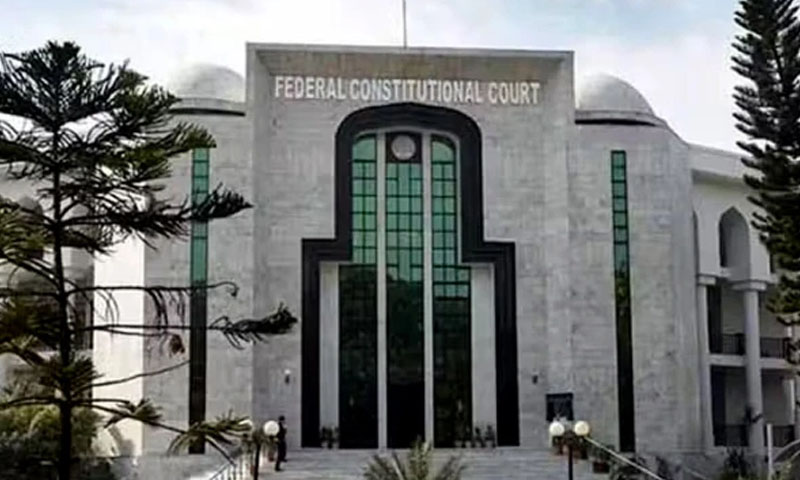
ISLAMABAD: The Federal Constitutional Court (FCC) has ruled that tribal chiefs are not authorised to verify national identity cards (CNICs) or domicile certificates and only legally designated state officials can validate official identity documents.
A two-member FCC bench headed by Justice Aamer Farooq issued a 12-page verdict, stating that the issuance and verification of identity cards and domiciles are strictly governed by law and must be carried out by competent authorities empowered under relevant legislation.
The court said that no tribal or customary authority, including a tribal chief, could be granted powers that fall outside the legal framework governing civil documentation.
It observed that Pakistan’s formal abolition of the sardari system in 1976 rendered such traditional structures without legal standing, noting that while tribal customs may exist as local traditions, they cannot override statutory law or be recognised for official administrative functions.
“Legal authority for verification of identity documents rests solely with designated state institutions,” the judgment said, adding that recognition of parallel systems would undermine the integrity of the national documentation process.
The court also ruled the petition inadmissible, holding that the petitioner was not an aggrieved party in the matter.
The court announced the verdict on a petition filed by Ghulam Ali, a tribal chief from the Kharoti tribe in Balochistan, who had challenged a lower court ruling.
He had argued that members of his tribe faced difficulties in obtaining verification for identity documents and they were being deprived of access to official records.
However, the court said that only an affected individual has the legal standing to approach the judiciary in such matters.
The decision underscores ongoing tensions between customary tribal structures and Pakistan’s formal administrative and legal systems, particularly in remote and tribal regions where traditional authority continues to play a social role.
You May Also Like


- WEB DESK
- September 16, 2026