
- WEB DESK
- September 14, 2026
UK-US unity tested as ‘Two Kings’ meet amid Iran tensions
-

- Reuters
- April 29, 2026
Britain’s King Charles III used a rare address to the US Congress to reiterate unity between the United Kingdom and the United States, even as serious disagreements, especially over the conflict involving Iran, continue to strain the alliance.
Speaking in Washington, DC during a high-profile state visit, Charles highlighted the long history of cooperation between the two nations, stressing that shared democratic values should outweigh political differences. His remarks came at a time when tensions have risen over the ongoing war linked to Iran, with divisions emerging over military strategy and international support.
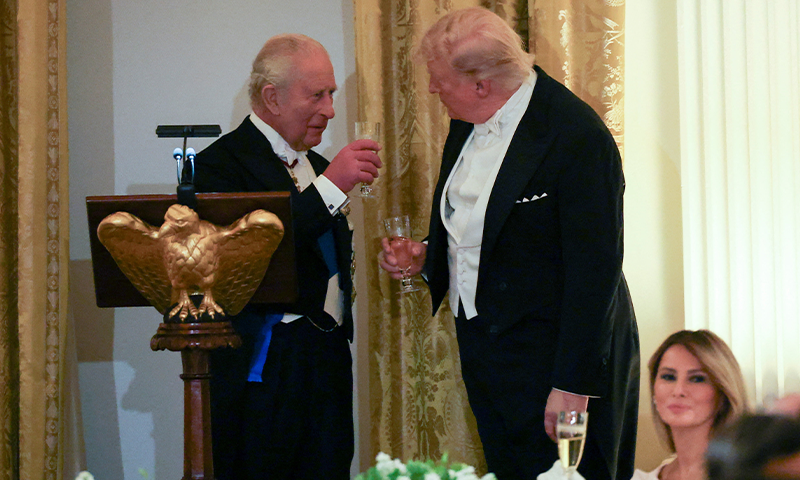
While the king avoided directly mentioning Iran in his congressional speech, the issue quickly surfaced later at a formal White House dinner hosted by US President Donald Trump. Trump asserted that both he and Charles opposed Iran obtaining nuclear weapons, framing the conflict as a critical security priority. Tehran, however, continues to deny seeking nuclear arms, maintaining that its nuclear program is for civilian purposes under international agreements.
The Iran issue has become a central fault line in US-UK relations. Trump has openly criticised British Prime Minister Keir Starmer for what he termed as insufficient British support in the military campaign tied to Iran. This disagreement underscores broader uncertainty about how Western allies should respond to escalating tensions in the Middle East.
Despite these strains, Charles used his speech to caution against isolationism and reaffirm the importance of alliances such as NATO, indirectly addressing Trump’s skepticism toward multinational cooperation. He also called for continued backing of Ukraine in its war with Russia, linking global security challenges across Europe and the Middle East.
The symbolism of the visit drew attention as well. A White House social media post referring to Trump and Charles as “TWO KINGS” sparked debate about presidential power and democratic traditions, especially given America’s historical rejection of monarchy dating back to its independence from British rule.
Beyond geopolitics, Charles’ visit included meetings with major US technology leaders and discussions on economic cooperation. Still, it was the shadow of Iran that loomed largest, shaping both public messaging and private tensions throughout the trip.
As the conflict involving Iran continues to evolve, it is testing not only regional stability but also the resilience of long-standing alliances. Charles’ visit ultimately underscored a delicate balancing act: reinforcing historic ties while navigating deep and growing disagreements over one of the world’s most volatile geopolitical challenges.