- WEB DESK
- 56 Minutes ago
US expected to not extend USMCA, starting a decade-long countdown for trade pact
-

- Reuters
- 7 Hours ago
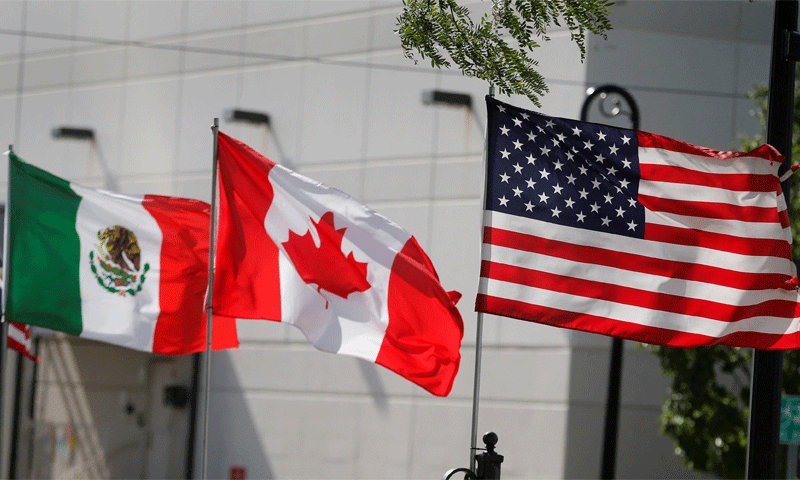
WASHINGTON: The administration of U.S. President Donald Trump is expected to formally declare on Wednesday that it will not extend the United States-Mexico-Canada Agreement (USMCA), initiating a decade-long timeline to wind down the 32-year-old North American free trade zone amid ongoing negotiations over proposed changes.
The decision will trigger a six-year review mechanism under a “sunset clause” negotiated during Trump’s first presidential term. Trade chiefs from the U.S., Mexico, and Canada are scheduled to meet virtually on Wednesday to declare whether they intend to extend the pact for an additional 16 years. U.S.
Trade Representative Jamieson Greer has not made a formal public announcement, though he has scheduled a third round of bilateral negotiations with Mexico for the week of July 20.
Mexican President Claudia Sheinbaum stated on Tuesday that she had signed a letter calling for the agreement to be extended for 16 years. Canadian Prime Minister Mark Carney expressed expectations for a constructive exchange, noting that Canada remains ready to negotiate improvements to the deal.
Bilateral talks and automotive tariffs
Trump has already unilaterally altered the agreement’s terms by imposing 25pc tariffs on Canadian and Mexican automobiles and parts, along with 50pc tariffs on steel and aluminium from both countries. While Canada has not yet joined formal negotiating sessions, technical discussions regarding steel, aluminium, autos, and softwood lumber have continued.
Washington is currently conducting formal negotiating rounds with Mexico alone, leaving Canada on the sidelines due to several bilateral trade disputes, including access to Canada’s restricted dairy market and provincial policies on American liquor sales.
Stricter rules of origin and industry concerns
In negotiations with Mexico, U.S. officials have demanded that all North American-built vehicles contain 50pc U.S.-specific content. This requirement would raise total regional content rules to 82pc for vehicles to qualify for tariff benefits. Discussions between the U.S. and Mexico have also addressed a potential 15pc universal global tariff on vehicles, with lower rates offered to regional partners that agree to stricter origin guidelines.
If the three nations fail to agree on revisions, the trade agreement will enter annual review sessions for the next decade until its final expiration on July 1, 2036. The sunset review process remains distinct from a separate termination clause, which allows any member country to withdraw within six months.
North American vehicle manufacturers have called for a swift resolution to protect supply chains. Matt Blunt, president of the American Automotive Policy Council representing Ford, General Motors, and Stellantis urged officials to maintain a trilateral pact to safeguard regional economic integration and investment certainty.