- Web Desk
- 47 Minutes ago
US feared Israeli assassination attempts on Iranian negotiators during talks: NYT
-

- Web Desk
- 1 Hour ago
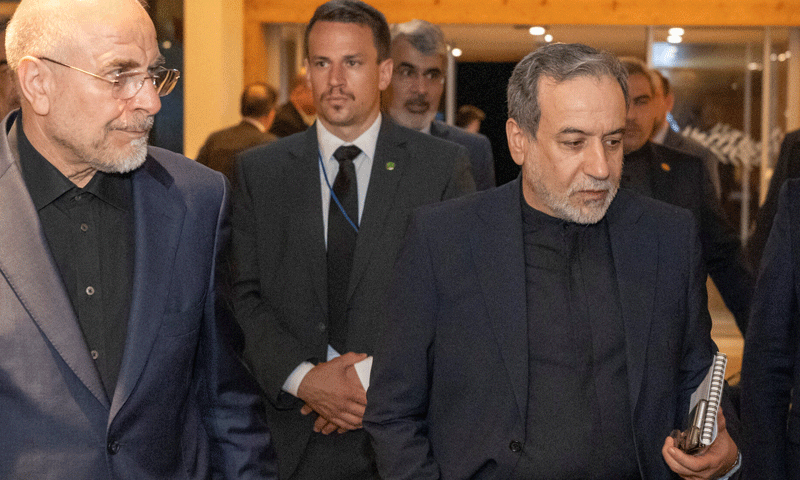
WEB DESK: The United States feared Israel could target Iranian Parliament Speaker Mohammad Bagher Ghalibaf and Foreign Minister Abbas Araghchi during the recent diplomatic negotiations that begun in April this year, according to a report by the New York Times citing American officials.
The report highlighted that Washington viewed the prospect of an Israeli assassination attempt on the senior Iranian leaders as a grave threat to ongoing diplomatic efforts aimed at easing regional tensions and reviving dialogue between the two nations.
Direct warnings issued
In a bid to safeguard the diplomatic channel, US officials reportedly took the unusual step of urging third-party regional intermediaries to warn Tehran about potential Israeli threats targeting the two officials.
American intelligence and diplomatic channels reportedly worked behind the scenes to convey the severity of the threat, stressing that any kinetic action against the negotiators would immediately collapse the delicate diplomatic framework.
The specific nature of the Israeli intelligence or operational movement that triggered Washington’s panic was not fully disclosed, but officials described the threat as both credible and imminent.
Risk of wider conflict
Washington believed that a targeted strike against either Ghalibaf or Araghchi would not only derail the active negotiations but also risk reigniting a large-scale regional conflict. Officials drew parallels to the recent 40-day war, warning that such a provocation would inevitably trigger a catastrophic cycle of escalation across the Middle East.
Diplomatic sources noted that the US intervention underscores the sharp divergence between Washington and Tel Aviv regarding strategic engagements with Tehran.
While Israel has historically favoured maximum military pressure and targeted operations to neutralise what it perceives as existential threats, the current US administration has prioritised structured diplomacy to contain Iran’s nuclear ambitions and regional influence. Neither the Israeli government nor the Iranian foreign ministry has officially commented on the report.
You May Also Like