- WEB DESK
- October 27, 2026
US house passes war powers resolution to curb Trump’s military action against Iran
-

- Sadia Basharat
- June 4, 2026
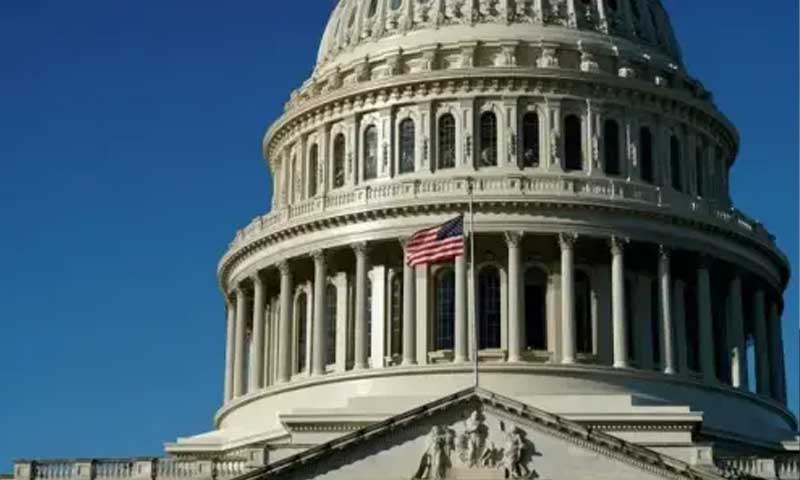
WEB DESK: The United States House of Representatives has passed a War Powers Resolution directing President Donald Trump to either halt ongoing US military operations against Iran or formalise explicit approval from Congress to maintain them.
The legislative measure, engineered primarily by congressional Democrats to reassert authority over the executive branch, cleared the lower chamber on a narrow 215–208 vote, according to Al Jazeera.
Despite the highly polarised environment on Capitol Hill, the vote reflected a rare display of cross-party alignment as four Republicans broke ranks with the White House to endorse the directive.
Proponents of the resolution argued that the executive branch had systematically sidestepped constitutional oversight since hostilities intensified in the Middle East.
The legislative action underscores the mounting domestic unease within Washington over potential escalation and the long-term strategic objectives of the current administration in the region.
Bipartisan friction and statutory timelines
Under the framework of the 1973 War Powers Act, the executive is legally constrained from maintaining military operations beyond a strict 60-day window without direct congressional authorisation.
Observers note that active hostilities under Operation Epic Fury, which commenced on February 28, have now comfortably exceeded this statutory limit, creating the immediate trigger for legislative intervention.
The White House has previously sought to defend its stance, asserting that a temporary ceasefire observed in April effectively reset the legal countdown mechanism.
However, legal experts and opposition lawmakers rejected this interpretation, branding it a procedural loophole designed to marginalise Capitol Hill’s role in committing American troops abroad.
The inclusion of Republican congressmen Thomas Massie, Brian Fitzpatrick, Tom Barrett, and Warren Davidson in the supporting column provided the measure with vital bipartisan credentials.
Their votes highlighted deeper institutional anxieties regarding the expansion of unilateral presidential war-making powers, independent of conventional party fealty.
Constitutional limits and legislative hurdles
Despite the symbolic and political weight of the House vote, the path toward enforceable legal restrictions remains fraught with institutional hurdles.
Because the measure was introduced as a concurrent resolution, it functions primarily as a formal declaration of congressional intent and does not require the president’s signature to take effect.
Furthermore, the Republican-led Senate has yet to match the lower chamber’s finality. While the upper house advanced a comparable procedural measure last month, a unified legislative front remains absent, meaning the administration is unlikely to face immediate operational disruption on the ground.
Nonetheless, the resolution signals a profound institutional challenge to the administration’s regional posture.
By demanding either a cessation of hostilities or a formal request for an Authorization for Use of Military Force (AUMF), the House has forced a public debate on the constitutional checks and balances governing foreign intervention.
You May Also Like