- WEB DESK
- October 6, 2026
US indicts Raúl Castro in 1996 civilian plane shootdown
-

- Sadia Basharat
- May 21, 2026
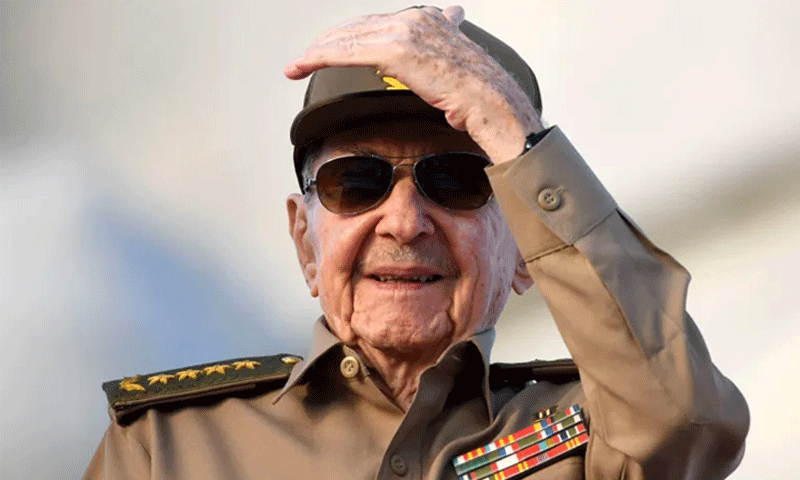
WEB DESK: The United States has formally indicted Cuba’s former President, Raúl Castro, in connection with the 1996 downing of two unarmed civilian aircraft operated by an anti-Castro exile group, standardising a long-simmering diplomatic dispute between Washington and Havana.
Federal prosecutors in Miami unveiled charges against the 94-year-old former leader, alleging his direct involvement in the decision-making process that led to the fatal shootdown of the planes operated by the Brothers to the Rescue organisation, according to Al Jazeera.
The incident, which took place over international waters on 24 February 1996, resulted in the deaths of four volunteer pilots who routinely flew missions to assist Cuban migrants stranded at sea.
Legal experts note that whilst the indictment carries immense symbolic weight, the likelihood of the elderly former president standing trial in an American court remains virtually non-existent due to the absence of an extradition treaty between the two nations.
A decades-old aerial confrontation revisited
The indictment focuses on the actions of the Cuban air force on that afternoon thirty years ago, when MiG fighter jets intercepted three Cessna aircraft flown by the Miami-based exile group.
Two of the three planes were obliterated by air-to-air missiles within minutes of interception, sparking immediate international condemnation and a swift tightening of the United States trade embargo against the communist-led island.
American prosecutors contend that Castro, who served as Cuba’s Minister of the Revolutionary Armed Forces at the time, explicitly authorised the use of lethal force against the civilian aircraft despite knowing they posed no military threat.
The indictment asserts that the operation was meticulously planned to neutralise the prominent exile group, which Havana had repeatedly accused of violating its sovereign airspace to drop anti-regime propaganda pamphlets over the capital.
Havana denounces political motivations
The announcement from Washington has provoked a furious reaction from the upper echelons of the Cuban state administration.
Cuban President Miguel Díaz-Canel strongly condemned the legal move, publicly characterising the indictment as a calculated “political action with no legal basis” aimed at placating hardline exile factions in Florida ahead of domestic political cycles.
Government officials in Havana maintain that the actions taken in 1996 were a legitimate defence of territorial sovereignty, arguing that the civilian aircraft had ignored multiple warnings and penetrated restricted military airspace on provocative missions.
This sudden escalation in judicial hostility is expected to freeze any remaining channels of diplomatic dialogue between the two nations, deepening the historic geopolitical divide that has characterised their bilateral relations for more than six decades.