- Alishba Khattak | Waqas Buneri
- October 7, 2026
Why has the Iran-US ceasefire memorandum frayed?
-

- Reuters
- July 14, 2026
WEB DESK: The interim agreement reached in June between the United States and Iran to halt their direct conflict is rapidly unravelling, with both sides accusing each other of violations and clashes resuming in key areas.
The 14-point Islamabad Memorandum of Understanding had set out to end hostilities that began with US-Israeli strikes on Iran on 28 February and to reopen the Strait of Hormuz, a critical chokepoint for global energy supplies. Yet its vague language on core issues has allowed differing interpretations to surface, leading to fresh violence and diplomatic recriminations.
Vague framework opens door to clashes
Analysts had warned from the start that the MoU’s broad and imprecise terms would create problems. Thomas Juneau, associate fellow at the Middle East and North Africa Programme at Chatham House, explained in recent comments that the agreement had two immediate goals stopping the fighting and reopening the Strait of Hormuz. It also outlined parameters for future talks on more complex matters but deferred resolution of deep disagreements.
“The challenge is that because of the vagueness of the terms of the MoU, it was largely inevitable that there would be disagreements between the two sides on the interpretation of the vague terms, and that what was meant to be a ceasefire would not lead to a cessation of the violence,” Juneau said.
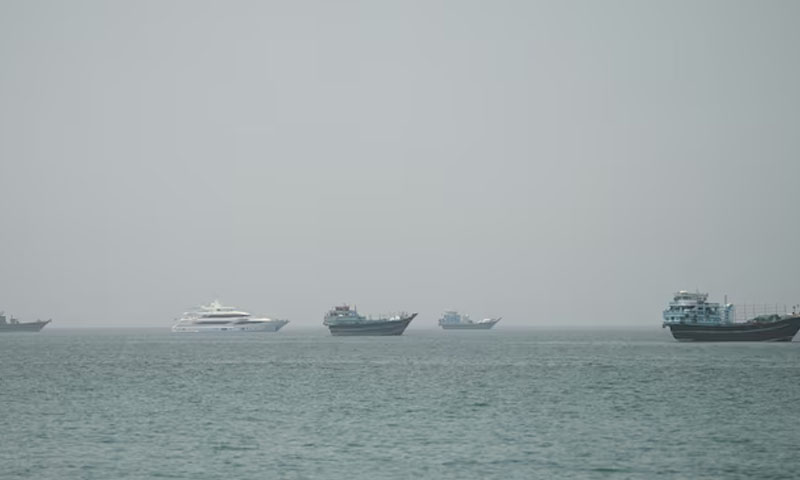
Recent footage and reports show the results. Videos from Musandam, Oman, captured vessels around the Strait of Hormuz on 12 July. US Central Command released night-time images of jets taking off, projectiles being fired, and targets hit. Iranian sources showed missiles launched by Revolutionary Guard personnel. Explosions and smoke were reported near Bandar Abbas in Hormozgan Province on 8 July, with verification linking the incident to an area near Haqani port where satellite data detected heat signatures.
A tanker incident added to the tensions. Audio from the LNG vessel Al Rekayyat, hit on its port side, captured crew members reporting smoke, damage to the engine room, and requests for assistance at coordinates off the coast of Limah, Oman. UKMTO reported a tanker struck by an unknown projectile causing fire.
Competing views on control of the strait
Control and access to the Strait of Hormuz lie at the heart of the current breakdown. After the war started, Iran effectively closed the waterway, through which a fifth of the world’s oil and liquefied natural gas passes. Article 5 of the MoU stated that commercial vessel traffic would resume immediately, with Iran using its best efforts to ensure safe passage without charge for 60 days.
Tehran views this as affirming its role in managing the entire strait. The United States and Gulf states reject that reading, seeing it instead as a requirement for Iran to allow freedom of navigation without imposing force-based restrictions. The US has maintained that the strait must remain toll-free.
In practice, Iran has fired on vessels attempting what it called unapproved routes and redeclared the strait closed. The US Navy’s Joint Maritime Information Center countered that a southern route remains open and has been expanded for two-way traffic. Timelapse data from MarineTraffic between 12 and 13 July illustrated shifts in vessel movements.
Juneau highlighted how these differences played out: “Iran interprets the framework as implying that it can exercise a serious degree of control over shipping in the strait, whereas the US is interpreting the agreement as implying that Iran must allow for the freedom of navigation.”
Oil sales, assets and regional linkages
Other provisions of the MoU have also come under strain. Article 10 committed Washington to issuing waivers for Iranian crude oil, petroleum products and associated services, including banking, insurance and transport a significant economic relief for sanctions-hit Iran. On 7 July, the US revoked a key licence, citing Iranian actions in the strait as “wholly unacceptable.”
Iran condemned the revocation as a breach. Article 11 addressed frozen assets, including $6 billion held in Qatari accounts. Qatar reported on 30 June that the funds had not been transferred. US Vice President JD Vance stated that the US and Qatar would retain control over spending, suggesting use on American agricultural goods. Iran’s ambassador to the UN in Geneva, Ali Bahreini, insisted that Tehran alone would decide usage.
Developments in Lebanon have further complicated matters. Iran-backed Hezbollah’s actions drew Israel into the conflict, and Iranian officials, including parliament speaker and chief negotiator Mohammad Baqer Qalibaf, cited ongoing Israeli operations there as a violation of the MoU, which required a ceasefire in Lebanon.
Leaders signal frustration while keeping channels open
US President Donald Trump has taken a blunt line. During a press conference in Ankara with NATO Secretary General Mark Rutte, Trump said: “To me, I think it’s over. I don’t want to deal with them anymore. They’re scum… And if they had a nuclear weapon, they’d use it. As far as I’m concerned, it’s over.” Yet Juneau noted that Trump’s statements often leave room for manoeuvre, pointing to indications of openness to indirect talks.
On the Iranian side, Foreign Ministry spokesperson Esmaeil Baghaei said on 13 July: “If we look at the 14 provisions of the memorandum of understanding, the Americans have, in one way or another, mutilated various parts of it… We will fulfil our obligations only as long as the other side abides by its commitments.”
Qalibaf posted on social media: “The era of one-sided deals is OVER. We told you: keep your word or pay the price.”
Juneau observed that both sides maintain aggressive rhetoric but have not fully abandoned the framework. “The Islamic Republic has also signaled that, like the US, it is not willing yet to completely abandon the ceasefire and not to continue indirect talks with the US,” he said.
Longer-term challenges cast shadow
The MoU set a 60-day timeline, extendable by consent, for negotiating a final deal covering Iran’s nuclear programme, missile and drone capabilities, support for regional groups, and broader security arrangements. No new talks date has been set amid the current tensions.
Juneau pointed to the deeper roots: “What remains significant… goes beyond the vagueness… and is explained more by the much more serious disagreements between the two sides on Iran’s nuclear program, on regional security in the Middle East, on Iran’s missile program, on its drone program, and on Iran’s support for violent and terrorist groups throughout the region. And these are all issues that the framework agreement of June simply kicked down the road.”
He added that spikes in violence were predictable and that without addressing fundamentals, calm would prove temporary: “If or when there is a reduction in the violence… that violence will simply return at a later point in the future.”
The situation carries implications for global energy markets, shipping safety and stability across the Middle East. Pakistan, which mediated the original deal, has called on all parties to honour commitments. As one analyst from the Carnegie Middle East Center noted, the MoU now requires a secondary agreement to serve as a foundation for de-escalation.