- Reuters
- 16 Minutes ago
World Bank approves USD1.1b financing for Bangladesh
-

- Reuters
- 11 Minutes ago
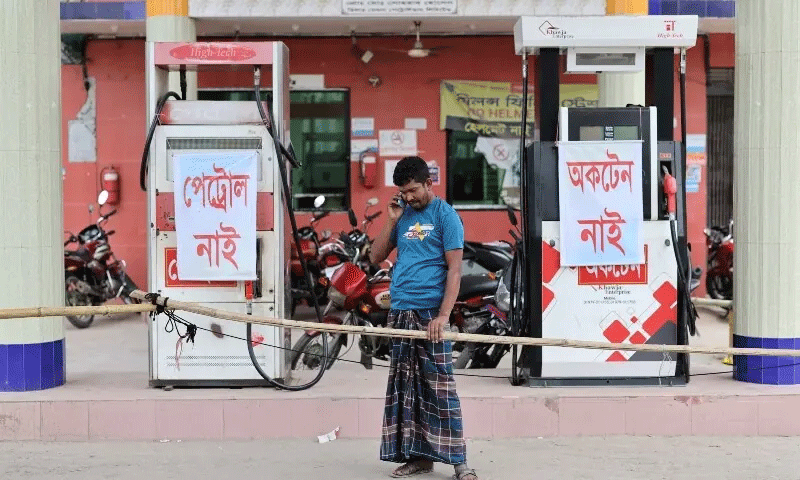
DHAKA: The World Bank (WB) has approved an emergency financing package worth $1.1 billion for Bangladesh to help the country cope with rising food, fertiliser and fuel costs triggered by the conflict in the Middle East.
The funding is aimed at protecting vulnerable households, supporting businesses and ensuring food security as Bangladesh grapples with mounting import costs and broader economic challenges.
The South Asian nation is also pursuing additional financial assistance from international development partners, including the International Monetary Fund (IMF), to bolster its foreign exchange reserves and ease pressure on public finances.
Support for agriculture and food security
Of the total package, $300 million has been allocated to the Emergency Support for Food Security Project, which will finance the import of around 600,000 metric tonnes of fertiliser for upcoming rice-growing seasons.
Bangladesh relies on imports for more than 85 per cent of its fertiliser needs, leaving its agricultural sector highly exposed to global supply disruptions and price volatility.
Jean Pesme, the World Bank’s division director for Bangladesh and Bhutan, said higher prices for food, fertiliser and fuel resulting from the Middle East conflict had placed significant strain on the country’s economy, with smallholder farmers and low-income households bearing the brunt of the impact.
The project is expected to support rice cultivation across approximately 1.4 million hectares of farmland.
Assistance for households and essential services
The remaining $713 million will be provided through the Contingent Emergency Response Project to help Bangladesh respond to economic shocks.
The financing will be used for emergency expenditures, including cash assistance and livelihood support for vulnerable families and small businesses affected by rising living costs.
It will also help finance fuel and energy imports needed to maintain critical public services, including electricity generation, healthcare, water supply and food distribution.
According to the World Bank, the package is intended to strengthen Bangladesh’s ability to respond quickly to external economic pressures while safeguarding jobs, livelihoods and essential services.
You May Also Like