
- Javed Soomro
- September 15, 2026
WWF-Pakistan raises alarm over development near Margalla Hills National Park
-

- Zoya Anwer
- April 24, 2026
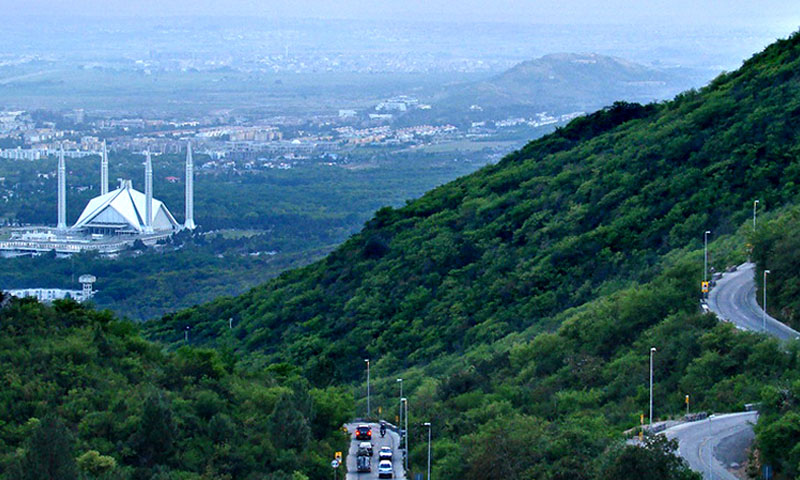
Environmental group WWF-Pakistan has voiced growing concern over ongoing and planned development activities in areas adjoining the Margalla Hills National Park, warning of serious ecological consequences if unchecked expansion continues in sensitive foothill zones.
In a statement issued recently, the organisation pointed to recent assessments conducted earlier this year that highlighted widespread tree removal and land clearing across parts of the Islamabad Capital Territory (ICT). According to WWF-Pakistan, these findings, alongside media reports, have triggered concern among environmental experts, civil society groups and the public.
The Margalla Hills ecosystem, the group emphasised, plays a vital role in sustaining biodiversity and environmental stability in the capital. The park and its surrounding habitats support a range of plant and animal species, including key bird and mammal populations, while also acting as a natural air purifier and water filtration system for Islamabad.
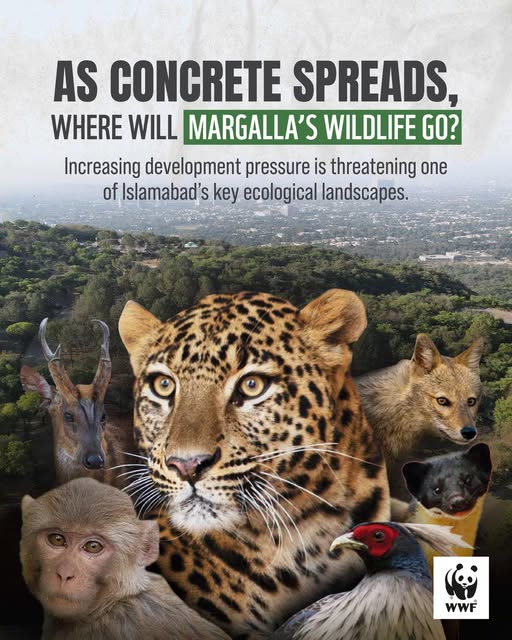
WWF-Pakistan cautioned that development activities in close proximity to the park, regardless of whether they fall within designated buffer zones, risk causing long-term and potentially irreversible damage. Among the key threats identified are habitat fragmentation, disruption of wildlife corridors and the weakening of ecosystem services such as groundwater recharge and local climate regulation.
The organisation said its field observations indicate that the cumulative impact of road construction, land clearing and infrastructure expansion is already visible in certain areas. In particular, development along corridors such as the Margalla Enclave Link Road and adjoining foothills has contributed to measurable environmental degradation.
While acknowledging that some tree removal may be linked to efforts to eliminate invasive species, WWF-Pakistan maintained that the scale and pattern of clearing suggest broader, development-driven pressures on the landscape.
Concerns have also intensified following recent official statements hinting at large-scale projects in the Margalla foothills, including the construction of hotels, sports facilities and associated infrastructure. WWF-Pakistan noted the limited availability of publicly disclosed Environmental Impact Assessments (EIAs) for such projects, as well as a lack of clarity regarding stakeholder consultation and mitigation plans.
The organisation urged authorities, including the Capital Development Authority and the Islamabad Wildlife Management Board, to take immediate steps to safeguard the area. These include designating strict “no-go” zones in ecologically critical habitats, ensuring all proposed developments undergo independent environmental review, and temporarily halting ongoing projects in sensitive foothill regions until transparent assessments are carried out.
WWF-Pakistan said it remains open to working with authorities to promote environmentally responsible development grounded in scientific evidence.
You May Also Like

- Reuters
- September 15, 2026
‘Widow’s Bay’ dominates Emmys as ‘The Pitt’ repeats drama win
- WEB DESK
- September 15, 2026
