
- Reuters
- September 16, 2026
EU wildfires burnt 2.5m acres in 2025, an area larger than Cyprus
-

- AFP
- August 21, 2025
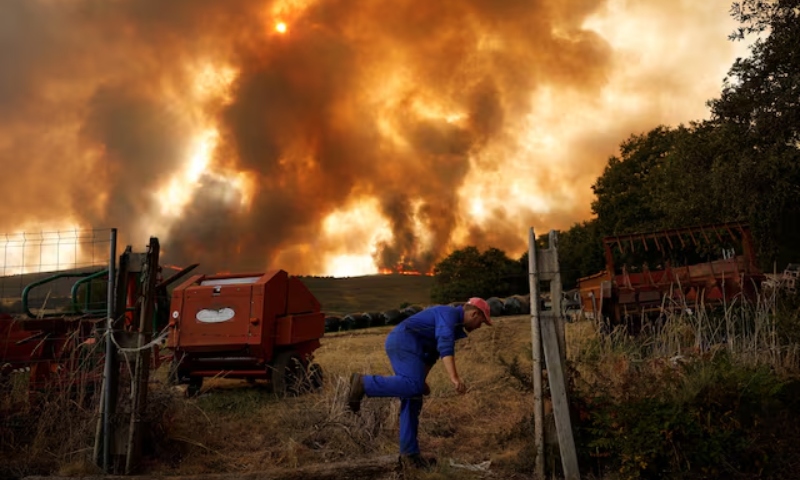
PARIS: Wildfires have so far ravaged more than one million hectares (2.5 million acres) in the European Union in 2025, a record since statistics began in 2006, according to an AFP analysis of data from the European Forest Fire Information System (EFFIS).
Surpassing the record of 988,524 hectares burnt in 2017, the figure reached 1,015,731 hectares by midday Thursday, representing an area larger than Cyprus.
Meanwhile, this calculation is based on a total compiled by AFP from estimates by country by EFFIS, at a time when Spain and Portugal are still battling wildfires.
Read more: Spain battles 20 major wildfires, hundreds flee Gallipoli
The latest alarming data comes after scientists warned on Wednesday that abrupt and potentially irreversible changes in Antarctica driven by climate change could lift global oceans by metres and lead to “catastrophic consequences for generations”.
Read more: Study shows how changes in Antarctica are fuelling global warming
“Antarctica is showing worrying signs of rapid change across its ice, ocean and ecosystems,” lead author and Australian National University professor Nerilie Abram told AFP.
After increasing slightly during the first 35 years that satellite data was available, Antarctic sea ice cover plunged dramatically over the last decade.
Read more: Firefighter among four killed in Portugal wildfires
Since 2014, sea ice has retreated on average 120 kilometres (75 miles) from the continent’s shoreline. That contraction has happened about three times faster in 10 years than the decline in Arctic sea ice over nearly 50.
Read more: Climate change: Over half of Europe, Mediterranean basin hit by drought
WERE THERE ANY PREVENTION PLANS?
Spain’s environmental prosecutor has ordered officials to verify whether municipalities affected by wildfires complied with their legal obligation to adopt prevention plans, according to a document seen Thursday by AFP.
The move comes as tensions mount between Socialist Prime Minister Pedro Sanchez’s government and conservative-led regional authorities over how to manage the fires that have scorched record amounts of land.
Under Spain’s decentralised system, regional governments lead the response to disasters, though the central state can intervene when emergencies escalate.
The northwestern regions of Galicia and Castile and Leon, along with Extremadura in the west, have been hit hardest by the fires raging since early August in the scorching heat.
Read more: Third-hottest July generates heatwaves, floods, droughts
Regional governments are required to draw up prevention strategies, but the newspaper El Pais reported the national government has yet to issue a decree establishing common criteria for such plans.
In his letter to local justice officials across the country, Spain’s environmental prosecutor Antonio Vercher argued it was “evident” that the scale of the wildfires stemmed from the absence or poor implementation of prevention measures.
He urged local prosecutors to consider pressing criminal responsibility charges in the most serious cases.
SOCIALISTS vs CONSERVATIVES
Spain faced similar controversy in October 2024, when deadly floods in the eastern region of Valencia sparked clashes between Sanchez’s government and conservative regional leaders over accountability for disaster preparedness.
Virginia Barcones, director general of emergency services, said Thursday that improved weather conditions should allow firefighters to make “significant progress” in containing the flames.
More than 403,000 hectares (996,000 acres) have been burnt in Spain this year, according to the European Forest Fire Information System.
Read more: Climate change batters agriculture. Hungary is an example
That surpasses the previous record of 306,000 hectares in 2022, the worst season since records began in 2006.
Scientists say climate change is driving longer, more intense and more frequent heatwaves worldwide.
Lower humidity in the air, vegetation and soil makes wildfires easier to ignite and harder to control once they spread.
It’s a developing story. Details to follow