- WEB DESK
- September 15, 2026
Dar says Pakistan, China share ‘converging vision’ as Senate passes resolution
-

- Zafar Ali
- May 20, 2026
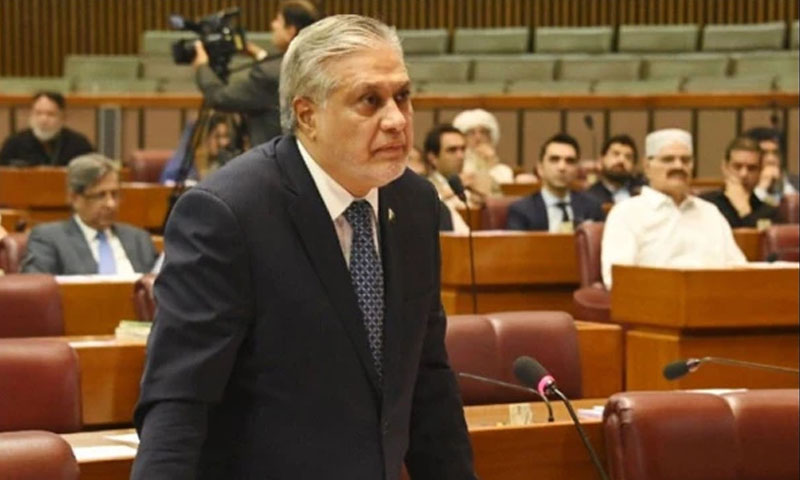
ISLAMABAD: Pakistan’s Senate on Wednesday unanimously adopted a resolution reaffirming “brotherly” ties with China as both countries marked 75 years of diplomatic relations, with senior officials highlighting deepening cooperation in political, economic and strategic areas.
Deputy Prime Minister and Foreign Minister Ishaq Dar, in his capacity as Leader of the House, presented the resolution titled “Re-affirming China-Pakistan Friendship and Brotherhood” before the upper house, which was later passed without opposition.
A Chinese delegation attended the session from the visitors’ gallery to mark the anniversary, receiving a formal welcome from lawmakers.
In remarks to the Senate, Dar said that Pakistan and China shared a “converging vision” on regional and global issues, adding that both countries remained committed to upholding the principles of the United Nations Charter amid a “complex” global environment.
He said cooperation between the two countries at the United Nations, the Shanghai Cooperation Organisation (SCO) and other multilateral platforms had been “vital in defending the interests of developing countries and promoting global peace”.
Dar said he would accompany Prime Minister Shehbaz Sharif on a state visit to China from May 23 to 26, during which both leaders would participate in events marking the 75th anniversary of diplomatic ties.
Meetings with President Xi Jinping and Premier Li Qiang are also scheduled, alongside business-to-business engagements and institutional dialogues, he added.
He said discussions would include meetings under the Pakistan-China Political Forum and the CPEC Joint Consultative Mechanism, with a multi-party parliamentary delegation also participating.
Highlighting regional diplomacy, Dar said Pakistan and China had jointly taken initiatives to promote peace and stability in the Middle East and Gulf region, reflecting what he called a shared responsibility for global stability.
Recalling his visit to China in March, he said both sides had proposed a five-point peace initiative on regional conflicts, which he said had been endorsed by several countries.
Dar said he had remained in contact with Chinese Foreign Minister Wang Yi and other regional counterparts during recent tensions in the Middle East following US-Israeli strikes on Iran.
The deputy prime minister said the Pakistan-China relationship had evolved over 75 years into a “robust economic and strategic partnership”, citing projects such as the Karakoram Highway and Gwadar Port as enduring symbols of bilateral cooperation.
He said the China-Pakistan Economic Corridor (CPEC) remained a flagship project under China’s Belt and Road Initiative, adding that its next phase — CPEC 2.0 — would focus on industrialisation, agriculture, information technology and socio-economic development.
Dar said Pakistan expected the partnership to deliver broader economic benefits to its population, recalling Chinese support in addressing the country’s power shortages in previous years.
Law Minister Azam Nazeer Tarar also addressed the House, saying the relationship between Pakistan and China had been “tested by time and circumstances” and had remained stable throughout.
He said the partnership was based on mutual trust, respect for sovereignty and alignment on core interests.
A delegation led by Cai Dafeng, vice chairman of the Standing Committee of China’s National People’s Congress, arrived in Islamabad earlier in the day to attend commemorative events marking the anniversary, according to the Foreign Office.
The delegation will remain in Pakistan from May 20–21, state media reported.
—
You May Also Like