- Farah Mehjabeen
- October 26, 2026
End of an era: Urdu Poet Bashir Badr passes away at 91
-

- Zoya Anwer
- May 29, 2026
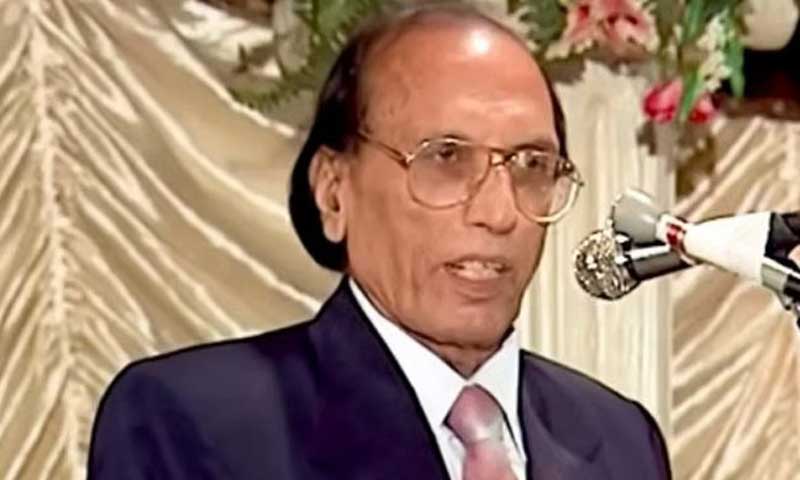
Renowned Urdu poet and Padma Shri awardee Dr Bashir Badr passed away on Thursday, May 28, 2026, at his residence in Bhopal. He was 91 and had been suffering from prolonged health complications, including dementia, for several years. His son, Taiyeb Badr, confirmed that he died at around 12:15 pm.
Widely regarded as one of the most influential modern Urdu poets, Badr transformed the ghazal tradition by introducing simplicity, clarity, and everyday language that resonated deeply with general readers. His contribution to Urdu literature earned him some of India’s highest civilian and literary honours, including the Padma Shri and the Sahitya Akademi Award in 1999. Over decades, his poetry helped bridge classical expression with modern sensibilities, making ghazals more accessible to wider audiences.
Born Syed Muhammad Bashir on February 15, 1935, in Ayodhya (formerly Faizabad), he later completed his PhD at Aligarh Muslim University (AMU), where he also taught Urdu literature before serving at Meerut College. He began writing poetry at the age of seven and quickly developed a distinctive style marked by emotional depth and simplicity. His published collections, including “Imkaan,” “Aahatein,” and “Ujale Apni Yaadon Ke,” remain widely read and continue to shape contemporary Urdu literary thought.
Badr’s life and work were deeply influenced by the social and political upheavals of the subcontinent, including the Partition and subsequent waves of conflict and reconciliation between India and Pakistan. His poetry consistently emphasised humanism, love, and shared cultural identity, often transcending political divides. One of his couplets was famously quoted during the historic Simla Agreement, when then Indian Prime Minister Indira Gandhi reportedly recited his verse to Pakistan’s Zulfikar Ali Bhutto, highlighting the cross-border resonance of his work.
Tributes pour in
Meerut riots and impact on personal life
His personal life, however, was marked by tragedy. During the 1987 Meerut riots, his home was destroyed and several unpublished manuscripts were lost in the fire, a devastating blow to his literary archive. Following this incident, he shifted permanently to Bhopal. In his later years, his health deteriorated due to dementia, but his literary legacy remained intact and widely celebrated.
Despite personal and historical hardships, Badr’s poetry continued to inspire generations. His couplets, often revolving around love, memory, and longing, became part of everyday cultural expression. Lines such as “Musafir hain hum bhi, musafir ho tum bhi…” and “Zindagi tu ne mujhe qabr se kam di hai zameen…” are still frequently quoted and remembered for their emotional clarity.
With his passing, Urdu literature has lost one of its most cherished voices. His death marks the end of a remarkable era in modern ghazal poetry, though his words are expected to endure far beyond his lifetime.
You May Also Like