- WEB DESK
- November 13, 2026
Experts call for affordable genetic screening to detect inherited diseases
-

- Asma Kundi
- November 13, 2026
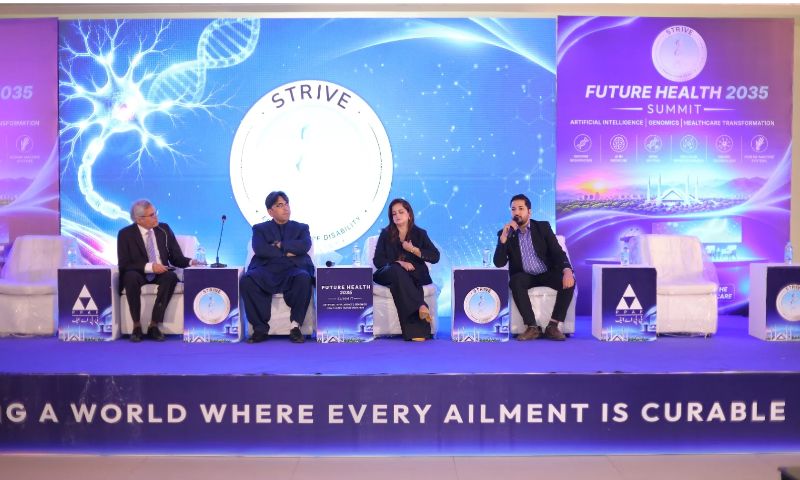
ISLAMABAD: Experts on Friday called for greater access to genetic screening, early diagnosis and specialised healthcare in Pakistan, warning that high testing costs and inadequate public support leave many patients with inherited disorders without proper treatment.
Speakers at a one-day summit in Islamabad said genetic and rare diseases often went undiagnosed, while families were left to bear the financial and emotional burden of caring for children with progressive conditions such as spinal muscular atrophy (SMA).
The summit, titled Future Health 2035, was organised by the Strive Eradication of Disability Foundation in collaboration with the Pakistan Poverty Alleviation Fund.
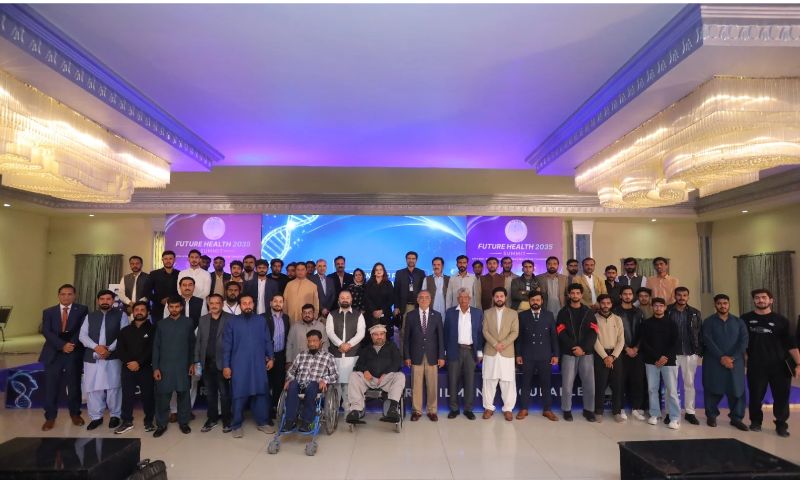
It brought together medical specialists, scientists, healthcare professionals and families to discuss inherited disorders and developments in genomic science. An accompanying expo showcased advances in healthcare.
Dr Salman Kirmani, a medical geneticist at Aga Khan University Hospital in Karachi, said Pakistan lacked a national-level institution or community support system for families of children with SMA, leaving many parents dependent on relatives and private assistance.
He said the government allocated substantial resources to polio eradication but paid insufficient attention to conditions such as SMA, which he described as more common in Pakistan than polio.
“Rare diseases are not rare in Pakistan,” Kirmani said, citing the country’s large population and high prevalence of marriages between close relatives as factors contributing to inherited disorders.
Dr Fizza Akbar, a genetic counsellor at Aga Khan University Hospital, said around 60 per cent of marriages in Pakistan were within families, a rate she said was among the highest in Muslim-majority countries.
She said a child had a 25 per cent chance of inheriting a genetic disorder when both parents were carriers of the relevant genetic mutation.
Genetic screening and prenatal diagnosis could help identify certain inherited conditions early, allowing families and doctors to make informed decisions, she said. While some conditions could be managed with medication, treatment could not necessarily cure the underlying disorder or prevent its transmission to future generations.
Kirmani said prenatal testing could detect certain genetic conditions within the first 120 days of pregnancy. He added that, in cases involving life-threatening diseases, pregnancy termination was permitted under a religious decree issued by Al-Azhar and a consensus among religious scholars.
Dr Jawad Hassan, a molecular geneticist at Shifa International Hospital, said genetic disorders were often accompanied by disabilities and required specialised, multidisciplinary care.
Such services, however, were available only at a limited number of tertiary-care hospitals in Pakistan, he said, leaving many patients without access to the range of medical support they needed.
Dr Isaac John, who has 40 years of international experience in healthcare, said health and education were treated as fundamental rights in Europe, while Pakistan’s limited resources had made it difficult to tackle even major infectious diseases.
“The challenges are huge,” he said, pointing to budgetary constraints and gaps in healthcare provision.
Dr Farhan Ali, a consultant paediatric neurologist at Frontier Corps Teaching Hospital in Peshawar, said he was seeing more children with SMA than in previous years.
He said he had earlier encountered one or two patients a month, but now saw three to four, adding that many cases remained undetected because of inadequate diagnosis.
Ali recounted the case of a woman who told him that three of her children had died of pneumonia. Further examination, he said, indicated that the children had in fact suffered from SMA, highlighting how the disorder could go unrecognised.
Families also described the financial and social difficulties of caring for children with rare genetic conditions.
Haris Tariq, whose four-year-old child has SMA, said raising funds for treatment was difficult because of limited public awareness of the disease and its long-term consequences.
He said families were sometimes criticised for seeking donations, with people failing to understand the cost of treatment.
“Even a few doses of medicine cost millions, and treatment is a lifelong cycle,” he said.
Strive Chief Executive Yasir Khan said genetic testing remained beyond the reach of most Pakistanis because of its high cost, estimating that 99 per cent of the population could not afford it.
He said access to healthcare was a right, regardless of how uncommon a disease might be, and questioned why the government could not provide support when a small organisation such as Strive was helping affected children.
Khan praised a previous Khyber Pakhtunkhwa government for showing willingness to arrange healthcare services for residents, and urged people to demand better access to treatment.
SMA and Duchenne muscular dystrophy (DMD) are inherited, progressive neuromuscular disorders that cause muscle weakness and can affect mobility. They have different genetic causes and require specialised diagnosis and care.
The speakers called for stronger public-sector involvement, affordable genetic testing, improved diagnostic facilities and a coordinated national response to inherited and rare diseases.
You May Also Like


- WEB DESK
- November 13, 2026