- WEB DESK
- October 6, 2026
Iran condemns US sanctions on Lebanese ambassador amid fragile peace efforts
-

- Sadia Basharat
- May 22, 2026
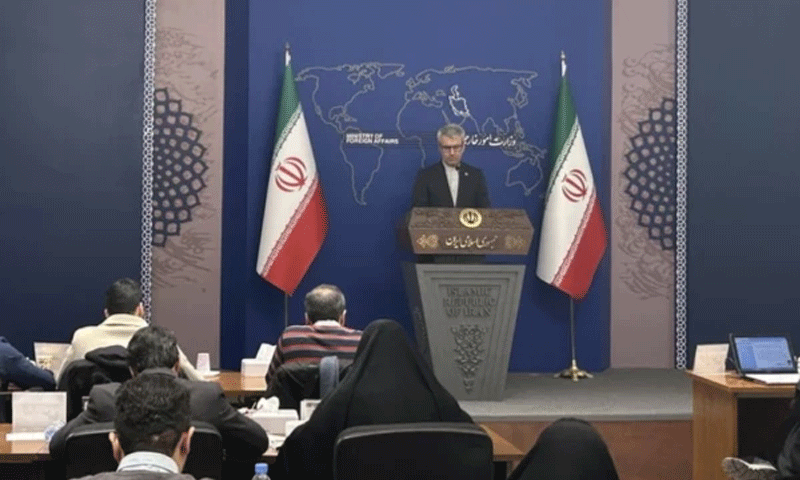
WEB DESK: Iran has fiercely condemned a new wave of United States sanctions targeting its ambassador to Lebanon alongside several senior Lebanese officials, branding the move an “incitement to sedition.”
The diplomatic flare-up comes at a critical juncture, as Pakistan intensifies its efforts to broker a breakthrough in high-stakes peace talks aimed at ending the broader US-Israeli war.
Despite intense behind-the-scenes diplomacy, massive friction remains between Washington and Tehran. The global economy continues to reel from the 12-week conflict, which began on 28 February and effectively choked off shipping through the vital Strait of Hormuz, according to The Express Tribune.
With the US dollar hovering near a six-week high and oil prices climbing on market skepticism, investors remain highly anxious over the prospects of a diplomatic resolution.
Sanctions spark fury amid frantic peace talks
The diplomatic spat erupted after the US Treasury Department sanctioned nine individuals linked to Hezbollah, including Iran’s Ambassador to Beirut, accusing them of obstructing peace efforts despite an active six-week-old ceasefire in southern Lebanon.
US Treasury Secretary Scott Bessent reiterated Washington’s firm stance, declaring that Hezbollah must be fully disarmed and promising continued action against officials “enabling Hezbollah to wage its senseless campaign of violence.”
In response, Iran’s Ministry of Foreign Affairs issued a stinging statement on X, claiming the sanctions against its ambassador and representatives of Hezbollah and the Amal Movement were designed to destabilize Lebanon.
The escalating rhetoric coincided with a crucial diplomatic mission by Pakistani Interior Minister Syed Mohsin Naqvi.
Meeting with Iranian Foreign Minister Abbas Araqchi in Tehran on Friday, Naqvi facilitated communication to develop a framework to end the war.
US Secretary of State Marco Rubio acknowledged “some good signs” in the negotiations, and a senior Iranian source confirmed that gaps had narrowed, though immense sticking points remain.
Nuclear stockpiles and shipping lanes deadlock negotiations
The primary obstacles to a standby agreement center on Iran’s uranium stockpile and control over the Strait of Hormuz.
US President Donald Trump escalated the rhetoric on Thursday, asserting that the US would eventually forcibly seize and likely destroy Iran’s stockpile of moderately enriched uranium.
However, Iranian sources revealed that Supreme Leader Ayatollah Mojtaba Khamenei has strictly directed that the uranium must not be sent abroad.
Furthermore, shipping rights through the Strait of Hormuz where daily traffic has slowed to a mere trickle compared to the 125 to 140 passages recorded daily before the war remain a major battleground.
President Trump and Secretary Rubio have firmly rejected Tehran’s proposals to levy tolls on ships passing through the international waterway, with Rubio calling the plan “completely illegal.”
As Iran demands the lifting of sanctions, the release of frozen assets, and the withdrawal of US troops from regional bases in exchange for peace, President Trump faces mounting domestic pressure ahead of the November midterm elections.
With the International Energy Agency warning that the global economy faces its worst energy shock in history threatening to push fuel markets into a dangerous “red zone” by July and August the pressure on all sides to secure a breakthrough over the coming days is immense.