
- WEB DESK
- October 6, 2026
Iran warns US to end blockade or ‘Sea of Oman becomes your graveyard’
-

- Zafar Ali
- May 18, 2026
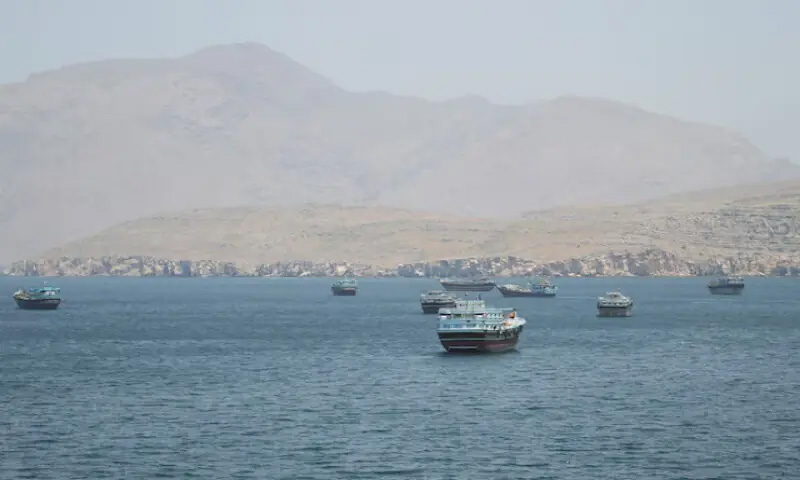
TEHRAN/WASHINGTON: Iran said on Monday it would no longer allow military equipment belonging to what it called “enemy countries” to pass through the Strait of Hormuz, signalling a tougher stance amid escalating tensions with the United States and Israel over regional security and maritime access.
Iranian Vice President Mohammad Reza Aref said that Tehran had previously shown restraint regarding its sovereignty rights over the strategic waterway but would now adopt stricter measures to safeguard national security interests.
“In the past, Iran showed flexibility regarding its sovereign rights in the Strait of Hormuz and allowed the passage of military equipment that was later used against Iran,” Aref said, according to Iranian state media.
“This will no longer be allowed to happen again,” he added, warning that Tehran would take firmer action in future to protect its national interests and security.
The Strait of Hormuz, located between Iran and Oman, is one of the world’s most critical energy chokepoints, handling nearly one-fifth of global oil shipments. Any disruption to traffic through the narrow waterway is closely watched by global energy markets and Western governments.
The Iranian comments came amid heightened confrontation between Tehran and Washington following reports of naval restrictions affecting Iranian ports and shipping routes.
Mohsen Rezaei, a member of Iran’s Expediency Council and former commander of the Islamic Revolutionary Guard Corps (IRGC), accused the United States of imposing a naval blockade on Iran and warned Washington against further escalation.
“We advise the US military to end the siege before the Sea of Oman becomes your graveyard,” Rezaei said during remarks broadcast on Iranian state television.
He described the alleged blockade as an “act of war” and said Iran had the right to confront it.
“The longer they prolong the naval blockade of Iran, the greater the damage to countries around the world will be,” he said.
The latest rhetoric added to fears of a broader regional confrontation involving the United States, Iran and Israel, prompting renewed concern in financial and energy markets over possible disruption to Gulf shipping lanes and oil exports.
U.S. President Donald Trump further fuelled speculation after posting a cryptic image on Truth Social showing a map of the Middle East covered with a U.S. flag and red arrows pointing towards Iran.
The image carried no caption but quickly attracted widespread attention online amid reports of military preparations in the region.
At the same time, Trump signalled that diplomatic efforts with Tehran had not completely collapsed.
According to journalist Barak Ravid, Trump said he believed Iran still wanted a deal and that Washington was waiting for a revised proposal from Tehran.
“Trump told me he still thinks Iran wants a deal and said he is waiting for an updated Iranian proposal,” Ravid wrote on social media, adding that the U.S. president hoped the new offer would improve on an earlier proposal submitted several days ago.
Trump reportedly declined to provide a timeline for negotiations.
Meanwhile, Israeli media reported that Israel’s military had been placed on heightened alert amid expectations of possible renewed hostilities involving Iran.
Public broadcaster Kan, citing an unnamed security official, reported that Israel would join any future U.S. military action against Iran and could target Iranian energy infrastructure if fighting resumes.
The reports followed a phone conversation lasting more than 30 minutes between Trump and Israeli Prime Minister Benjamin Netanyahu on Sunday, during which the two leaders reportedly discussed the possibility of renewed conflict involving Iran.
Israeli broadcaster Channel 12 said the discussion took place “in the shadow of preparations for renewed fighting in Iran” and reported that the Israeli military was preparing for multiple scenarios.
According to the reports, Israel expects advance notification from Washington before any potential strike, although officials reportedly do not know the timing of any possible decision.
The developments have intensified concerns about a widening regional conflict that could threaten global energy supplies, international shipping routes and already fragile diplomatic efforts between Tehran and Washington.