- WEB DESK
- September 16, 2026
Journalists demand withdrawal of PECA cases, implementation of Wage Board Award
-

- Sadiq Khan
- May 23, 2026
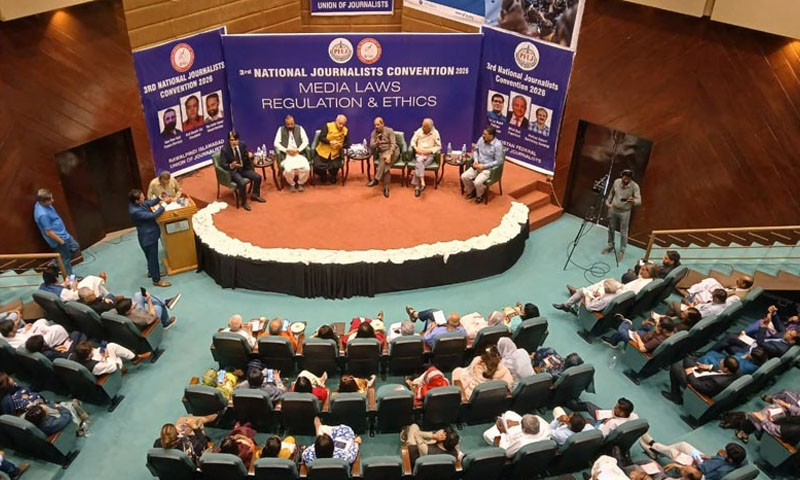
ISLAMABAD: Journalists and media workers at a convention on media laws, regulations and ethics strongly rejected the PECA 2025 amendments, terming them a “black law” aimed at silencing journalists and tightening control over the media in Pakistan.
According to a press release issued after the convention at the National Press Club, participants urged Parliament to review all media-related laws that contradict Article 19 of the Constitution, which guarantees freedom of expression.
The convention criticised the government for allegedly backtracking on its assurance that such laws would not be used against the media. Participants expressed concern over what they described as growing judicial harassment of journalists, including offloading reporters from flights and restricting foreign travel, creating an atmosphere of fear and intimidation.
Journalists also raised alarm over increasing layoffs in the media industry, especially in the electronic media sector, where hundreds of workers have reportedly lost jobs amid rising inflation. The convention described the retrenchments as an attempt to bring media organisations under institutional control.
Participants strongly opposed the use of third-party hiring practices, saying such measures were being used to bypass wage board obligations and labour laws for the benefit of media owners, referred to during the convention as the “Seth Mafia”.
The gathering also condemned the denial of basic employment rights, including health insurance, gratuity and EOBI registration, calling it a violation of journalists’ legal and professional rights.
The convention demanded a parliamentary framework for electronic and digital media workers to ensure job security for journalists, technicians and media employees across all platforms.
Concerns were also raised over the alleged use of government advertisements as a tool to influence editorial policies and impose indirect censorship through “press advice”. Participants claimed that Dawn had particularly faced reduced public-sector advertisements and pressure on private companies to withhold advertising support.
The convention further alleged that some media houses were being pressured to terminate specific journalists in exchange for advertisement funding and official patronage.
Journalists demanded the immediate withdrawal of all cases registered against media workers under PECA and called for a transparent review of the law to prevent political victimisation.
The participants also called for the immediate clearance of pending salaries and dues, saying financial pressure was being used as a tactic to curb media independence.
The convention urged the implementation of the 8th Wage Board Award and demanded the formation of the 9th Wage Board Award to cover print, electronic and digital media workers.
It also stressed that all media organisations must provide journalists and workers with health insurance, gratuity and EOBI benefits without discrimination or delay.
Participants urged media owners to prioritise the rights of lower-paid employees instead of laying off workers while retaining highly paid anchors.
The convention welcomed the appointment of the chairman of ITNE and expressed hope that the institution would help ensure justice and speed up pending cases involving journalists and media workers.
Concluding the convention, participants declared that journalism was not a crime and vowed that truth could not be suppressed through intimidation, coercion or imprisonment.
You May Also Like