- Reuters
- November 22, 2026
Mustafa Kamal says MQM-P will support federal takeover of Karachi
-

- WEB DESK
- November 22, 2026
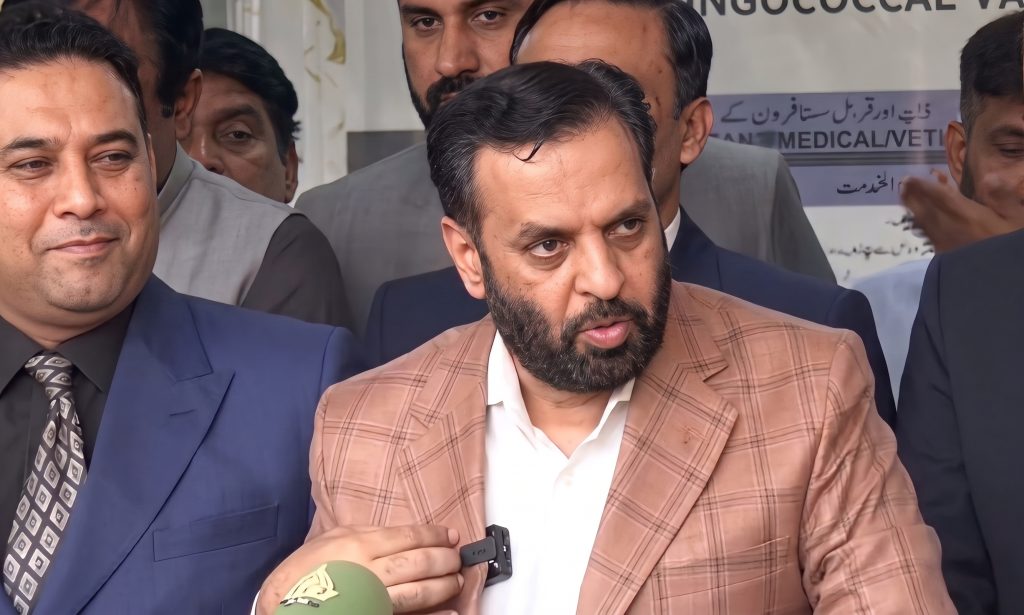
KARACHI: Federal Health Minister and Muttahida Qaumi Movement-Pakistan (MQM-P) leader Mustafa Kamal has said his party would fully support a move to bring Karachi under federal administrative control, while insisting that no political pressure would force it to abandon its demand for the creation of new provinces.
Kamal renewed his demand for the creation of new provinces, saying they were essential for Pakistan’s development and security, drawing a sharp response from the Sindh government, which accused him of pursuing a political agenda.
Addressing a youth convention in Gulistan-e-Jauhar and public gatherings organised by the Pashtun Tribes Movement in North Nazimabad Town, Kamal said rapid population growth and the lack of basic facilities were paralysing Pakistan administratively and economically.
“The creation of new provinces is indispensable for Pakistan’s development and security,” he said, adding that new administrative units would provide young people in different regions with better access to education and employment opportunities.
His remarks come amid an intensifying debate over a proposed “system reset” and the creation of new provinces, following a strong speech by Pakistan Peoples Party (PPP) Chairman Bilawal Bhutto Zardari, who questioned growing calls for restructuring the country’s political and administrative system.
Addressing a “Meet the Press” event in Karachi last week, Bilawal challenged proponents of a system reset to explain why they were not addressing the reasons behind what he described as the collapse of the existing system.
Acknowledging his own share of responsibility, the PPP chairman said: “I am also responsible. I have also made mistakes.”
He argued that restoring public legitimacy and trust in national institutions, including parliament, the Election Commission of Pakistan (ECP), the judiciary and the media, should be the first step towards addressing the country’s governance crisis.
Bilawal maintained that any restructuring of the system must be driven by a political process rather than a non-political intervention.
“If we want to reset the system, it will have to be a political reset,” he said, adding that elected representatives had to play their part in addressing the country’s fundamental challenges.
Speaking in an interview with HUM News programme “Faisla Aap Ka“, Bilawal also defended his right to question the proposed political reset, saying he was a stakeholder in the country’s governance system and should have a say in any reforms.
He said the debate over governance could not exclude him or other political stakeholders, adding that the reaction to his remarks suggested his critics had decided to confront him rather than listen to what he described as uncomfortable truths.
“I spoke a little too much truth yesterday, and they are finding it difficult to digest,” he said.
Earlier, Interior Minister Mohsin Naqvi weighed in on the debate over new administrative units, saying no individual or political party could block their creation if they reflected the public will.
“If this is the voice of the public’s heart, then it will happen in any case,” Naqvi said, expressing hope that the new administrative units would eventually be created.
He called for the debate to continue so that a better proposal could emerge, saying Pakistan’s administrative structure needed a “reset”.
Comparing the state to an underperforming company, Naqvi said its management needed to sit together and identify areas requiring improvement.
Earlier, President Asif Ali Zardari and Prime Minister Shehbaz Sharif agreed to resolve outstanding matters through mutual consultations amid growing political differences between the coalition partners.
The understanding was reached during a meeting at Aiwan-e-Sadr, attended by Naqvi, according to a statement issued by the President’s Media Wing.
Returning to the debate, Kamal said the MQM-P would not retreat from its struggle for new provinces under any circumstances, describing their creation as a matter of survival and a necessity for the future of coming generations.
Describing December as a crucial month for the issue, Kamal said progress towards creating new provinces should be made before the next federal budget, warning that further delays would jeopardise the future of coming generations.
Kamal said that if discussions on the creation of new provinces were not taking place at the official level, some force would have already intervened to stop them.
He urged political parties to focus on saving and strengthening the state rather than protecting their individual political interests.
He also called on the Pakistan Tehreek-e-Insaf (PTI) to support the creation of new provinces without imposing any preconditions, saying this could provide the party with an opportunity to improve its relationship with the state.
Kamal said Prime Minister Shehbaz Sharif could convene a joint sitting of parliament and seek approval for holding a referendum on the creation of new provinces.
Referring to President Zardari, he described him as a sensible politician who understood the importance of timing in moving political matters forward.
Kamal accused the PPP, which has governed Sindh for the past 16 years, of depriving young people of employment opportunities through what he described as fake domicile certificates.
He also claimed that Karachi had been freed from the influence of India’s Research and Analysis Wing (RAW), saying the next task was to secure the rights of all marginalised people in Pakistan.
“No one can intimidate us through threats, nor can anyone trigger ethnic violence while we are here,” he said, adding that protecting the lives, property and dignity of people belonging to all linguistic communities was his party’s responsibility.
The Pashtun Tribes Movement announced its ‘unconditional support’ for Kamal’s demand for the creation of new provinces.
Meanwhile, Sindh government spokesperson Saadia Javed rejected the Mustafa Kamal’s demand, saying those dreaming of dividing the province should first find political ground for themselves.
“Enjoying the benefits of a federal ministry while floating proposals to divide provinces is old politics that will no longer work,” she said in a statement.
Javed also questioned Kamal’s political record, recalling that he had previously described the MQM as a “rental party” in an interview.
She cited his reported remarks that “anyone can get any work done by paying the MQM”, and said Karachi had not forgotten allegations of target killings, land grabbing and bodies found in gunny bags associated with the party’s past.
“Preaching peace to the city without answering questions about the MQM’s past is inappropriate,” she said.
Javed also rejected Kamal’s allegations of fake domiciles, asking him to examine the record of government jobs awarded on merit in Sindh.
She described the demand for new provinces as an attempt to revive the party’s political fortunes, and accused its leaders of hiding behind the issue after losing ground in local government politics.
“Those advocating new provinces will not be able to win even a single seat in local government by-elections,” she said.
Javed said the Sindh Assembly’s decision on the province’s territorial integrity was final, adding that attempts to disrupt peace through ethnic politics would be thwarted.
In September, the Sindh Assembly passed by a resolution with a majority vote opposing the creation of new provinces and administrative units in Sindh.
You May Also Like