NCSW, COPAIR call for women’s inclusion in climate policymaking ahead of COP31
-

- WEB DESK
- October 29, 2026
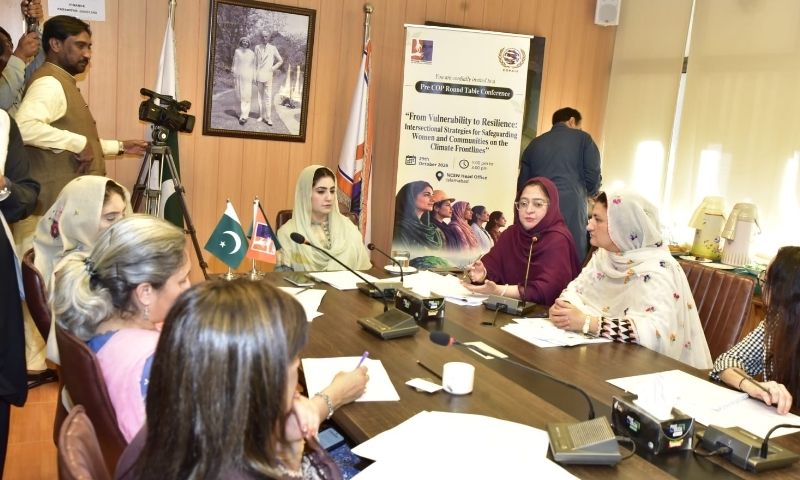

ISLAMABAD: The National Commission on the Status of Women (NCSW) and the Centre of Pakistan and International Relations (COPAIR) on Thursday held a roundtable conference to develop gender-responsive climate policy recommendations for Pakistan’s engagement at COP31, with a focus on climate finance, disaster preparedness and women’s role in decision-making.
The conference, titled “From Vulnerability to Resilience: Intersectional Strategies for Safeguarding Women and Communities on the Climate Frontlines”, brought together policymakers, international organisations, civil society representatives, academics and youth to discuss the disproportionate impact of climate change on women, particularly in agricultural and disaster-prone areas.
Participants called for greater integration of gender considerations into climate policy, international diplomacy and disaster management, according to a press release.
NCSW Chairperson Noureen Bano Lari stressed the need for institutional accountability and gender-inclusive disaster preparedness, saying climate resilience required women’s participation at every level of decision-making, from local adaptation initiatives to national policymaking.
“Climate resilience cannot be achieved by viewing environmental shocks in isolation. We must integrate women into every tier of decision-making, from grassroots adaptation to national policy formulation,” she said.
COPAIR President Amna Munawwar Awan called for gender concerns to be mainstreamed into Pakistan’s foreign policy and international climate diplomacy, while Senator Sana Jamali highlighted the need for robust, gender-sensitive legislation to protect communities on the front lines of climate change.
The roundtable also examined the links between gender, climate security, food security and governance. Zulekha from the National Disaster Management Authority’s Gender Unit outlined the practical application of the authority’s Gender Toolkit.
Dr Salma Malik discussed the intersection of gender, climate change and food security, while Dr Samrana spoke about governance and leadership for inclusive climate policies. Dr Saima Azhar outlined ways to integrate gender considerations into international climate negotiations.
A subsequent stakeholder consultation brought together representatives of international agencies, civil society, academia, youth and the media. Discussions produced recommendations on improving access to climate finance, strengthening grassroots capacity and developing institutional mechanisms to inform Pakistan’s engagement at COP31.
Dr Usman Mustafa, chairman of COPAIR’s Centre for Climate Diplomacy and the Climate Research Institute, summarised the key policy recommendations and priorities at the conclusion of the event.
The organisers said the consultation aimed to advance climate justice and gender equality by ensuring women’s concerns were reflected in climate policy and international negotiations.
You May Also Like

- WEB DESK
- October 29, 2026
Naqvi promises fresh probe into Hina Javed murder case
- AFP
- October 29, 2026
Iran Guards says three tankers on fire after hitting mines in Hormuz

- AFP
- October 29, 2026
