
- WEB DESK
- September 14, 2026
No sanctions relief for Iran while strait of hormuz remains blocked, declares France
-

- Sadia Basharat
- May 7, 2026
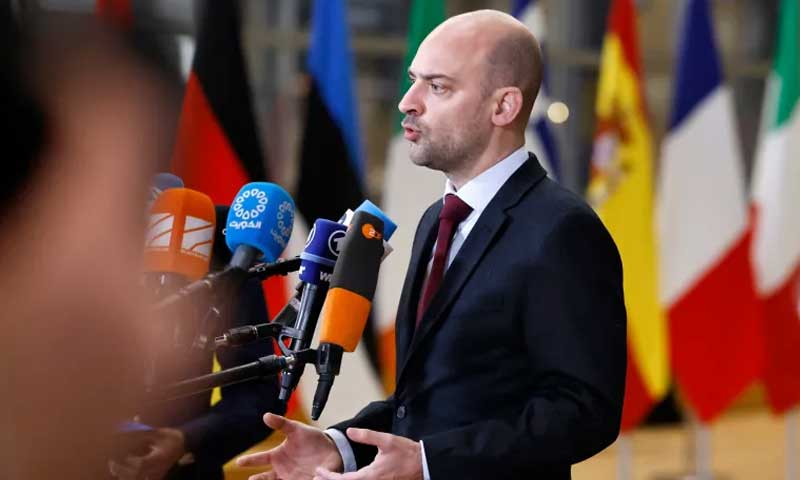
WEB DESK: France has issued a firm rebuff to any suggestions of easing pressure on Tehran, with Foreign Minister Jean-Noël Barrot insisting that sanctions will remain firmly in place so long as Iranian forces obstruct the Strait of Hormuz.
Speaking to the French broadcaster RTL, Barrot emphasised that the vital shipping lane must not be used as a tool for “blackmail” or geopolitical leverage.
The minister’s comments signal a hardening of the European stance amidst ongoing maritime tensions, asserting that the international community will not tolerate the imposition of tolls or blockades on one of the world’s most critical energy arteries, according to Al Jazeera.
A stand against ‘Geopolitical Blackmail’
The Foreign Minister was unequivocal in his assessment of the current naval standoff, noting that France has already implemented “significant sanctions” against the Iranian regime.
Barrot told listeners that it remains “out of the question” for any of these measures to be rescinded while the waterway is compromised. “It cannot be blocked, subjected to tolls, or used as leverage or blackmail,” Barrot stated.
The Strait of Hormuz, a narrow passage between the Persian Gulf and the Gulf of Oman, is responsible for the transit of approximately one-fifth of the world’s total oil consumption.
By framing the obstruction as a form of extortion, Paris is highlighting the risk to global economic stability and reinforcing the principle of freedom of navigation in international waters.
Ending the cycle of dependency
Beyond the immediate maritime crisis, Barrot outlined a broader strategic vision for French and European sovereignty.
He argued that France must insulate itself from the “price for wars it didn’t choose to launch,” suggesting that the current energy crisis is a direct symptom of over-reliance on foreign resources.
To avoid being drawn into “conflicts, disasters, and crises” where Europe is not a primary participant, the minister called for a radical shift in industrial and energy policy.
This proposed “de-risking” strategy involves ridding the continent of its hydrocarbon dependencies and strengthening domestic digital technologies.
By decoupling the European economy from foreign oil and external digital infrastructure, Barrot believes the West can better resist the ripple effects of Middle Eastern instability and maintain a more independent foreign policy.
You May Also Like
- WEB DESK
- September 14, 2026
Petrol price rises by Rs4.42, diesel by Rs6.10 per litre
- WEB DESK
- September 14, 2026