Pakistan eyes joint defence production, technology transfer under Badr MoU: Khawaja Asif
-

- WEB DESK
- October 22, 2026
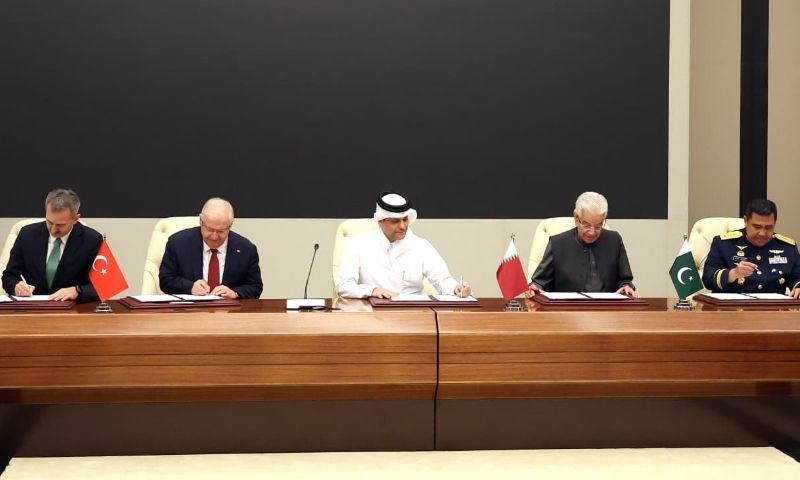

Defence Minister Khawaja Asif has said Pakistan will seek greater self-reliance, joint production and technology transfer under the newly signed Badr Memorandum of Understanding with Turkiye, Qatar and Indonesia, describing the agreement as a step towards strengthening cooperation among trusted defence partners.
In remarks shared on X on October 21, Asif said Pakistan placed “great importance” on strengthening defence cooperation with trusted partners and that the memorandum reflected a shared commitment to regional peace and stability.
“We look forward to exploring opportunities for strengthening self-reliance, industrial collaboration, joint production and technology transfer while drawing on the complementary strengths of our respective defence industries,” the defence minister said.
He added that such cooperation would be pursued in accordance with relevant domestic and international laws and regulations.
Asif said the four countries also aimed to expand cooperation in joint research and development, training exchanges and building industrial capabilities through the new partnership.
His comments provide Pakistan’s perspective on the Badr Memorandum of Understanding, signed by Pakistan, Turkiye, Qatar and Indonesia in Doha on Wednesday.
The Turkish Defence Ministry had earlier said the agreement was intended to deepen defence cooperation and strengthen the participating countries’ defensive capabilities. It includes cooperation in military exercises and training, research and development and defence industries.
According to the Turkish ministry, the agreement also carries an economic component by seeking closer cooperation in military production and allowing the participating countries to draw on their respective defence manufacturing capabilities.
The ministry said collaboration under the framework could help strengthen defence industrial capacities while enabling the countries to meet the requirements of allied and friendly states.
Asif’s remarks place particular emphasis on industrial cooperation and reducing external dependence, with joint production and technology transfer identified among the areas Pakistan wants to explore under the agreement.
The Badr MoU comes amid a broader expansion of Pakistan’s defence partnerships in the region.
Pakistan, Saudi Arabia and Turkiye signed the Makkah Joint Defence Agreement (MJDA) in August, establishing a collective defence mechanism under which an armed attack on one member is treated as an attack against all. The three countries have since taken steps towards implementing the pact, including closer military coordination and arrangements aimed at facilitating the rapid deployment of forces and capabilities when required.
Unlike the Makkah agreement’s collective defence provisions, the details released so far on the Badr MoU have focused primarily on defence-industrial cooperation, training, research and development and strengthening the military capabilities of the four participating countries.