
- Alishba Khattak
- October 12, 2026
Pakistan targets B+ sovereign credit rating by next fiscal year, says Aurangzeb
-

- WEB DESK
- October 12, 2026
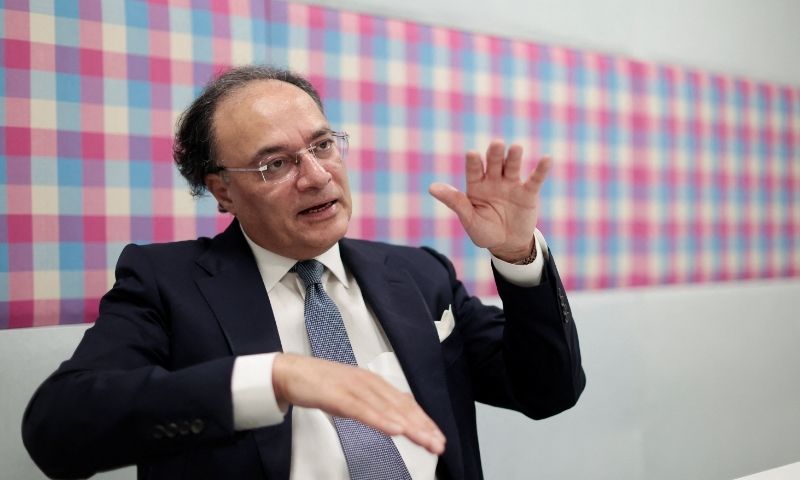
Pakistan is targeting a B+ sovereign credit rating by the next fiscal year and plans to diversify its borrowing sources as economic conditions improve, Finance Minister Muhammad Aurangzeb has told Bloomberg.
In an interview with Bloomberg TV, Aurangzeb said Pakistan had secured three credit rating upgrades since last year and was seeking to strengthen its position in international debt markets.
Moody’s Ratings upgraded Pakistan to B3 from Caa1 in August, citing improvements in the country’s public finances and foreign exchange position. S&P Global Ratings raised Pakistan’s rating to B from B- in July, pointing to stronger economic conditions.
Pakistan has recovered from the brink of default in 2022, supported by funding from the International Monetary Fund (IMF), Bloomberg reported. The country has also raised USD3 billion through its first Eurobond issuance in four years, while its foreign exchange reserves have reached a record high, according to the report.
Pakistan plans further borrowing
Aurangzeb said Pakistan was in no rush to issue bonds during the current fiscal year but had appointed banks for future Islamic sukuk offerings and, for the first time, dollar-settled bonds denominated in rupees.
The government also plans to invite bids soon for the remaining portion of its panda bond programme, which involves issuing bonds in China’s domestic market. It is also exploring the tokenisation of existing Eurobonds.
Pakistan aims to replace some short-term foreign debt with longer-term borrowing over the next two to three years to reduce refinancing risks.
“Pakistan as a country does not have to go into this rollover risk on sort of short term debt, because quite frankly, it is not helpful to us from the rating agencies’ perspective as well,” Aurangzeb told Bloomberg.
He said the government wanted to keep overall external debt, which he put at about $100 billion, broadly stable while focusing on refinancing existing obligations, diversifying funding sources and extending maturities.
Islamabad discusses US10bn facility with US
Aurangzeb said Pakistan was in active talks with the United States for a proposed $10 billion facility intended to provide liquidity support rather than a loan or credit line. Discussions on trade tariffs were in their final phase, he added.
The two countries were also discussing potential US support for investment in Pakistan’s agriculture, minerals and mining sectors through the US Export-Import Bank and the US International Development Finance Corporation.
Aurangzeb said US Export-Import Bank Chairman John Jovanovic had shown interest in investing in Pakistan’s refinery sector, which is seeking to upgrade its infrastructure. Pakistan’s new automobile policy was also expected to be approved within weeks, he said.
Reuters reported in July that Pakistan had asked US Treasury Secretary Scott Bessent for a Bilateral Exchange Stabilisation Support Facility with a maturity of up to five years. The request was for a $10 billion facility as Islamabad sought to build on improved ties with the Trump administration.