
- Reuters
- September 15, 2026
SC directs IHC to decide Imaan Mazari, Hadi Ali’s appeals against sentence in two weeks
-

- Javed Soomro
- May 12, 2026
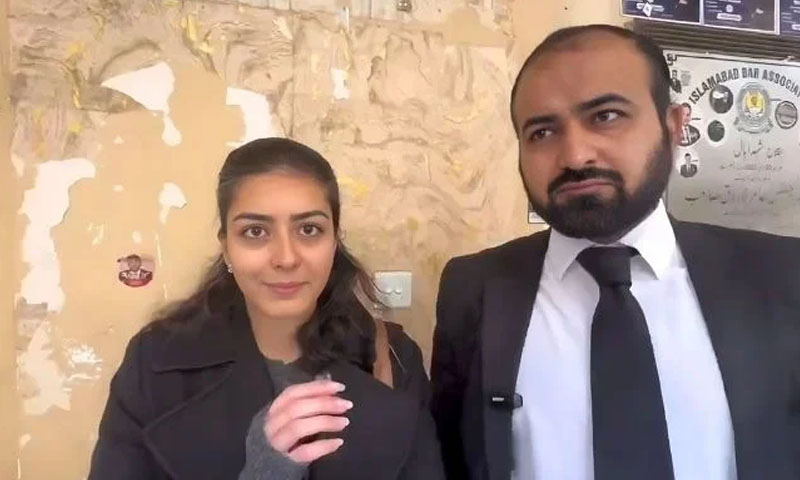
ISLAMABAD: The Supreme Court on Tuesday directed the Islamabad High Court (IHC) to decide within two weeks pleas filed by human rights lawyer Imaan Zainab Mazari-Hazir and her husband Hadi Ali Chattha seeking suspension of their sentences in a case related to controversial social media posts.
A three-member bench of the apex court, comprising Justice Shahid Waheed, Justice Naeem Akhtar Afghan and Justice Shafi Siddiqui, ordered that the matter would remain pending before the Supreme Court until the IHC rules on the pleas.
During the hearing, counsel for the couple, Faisal Siddiqi, argued that mandatory legal requirements had not been fulfilled during the trial proceedings. He told the court that the accused had not been given an opportunity for cross-examination and that their statements under Section 342 of the Criminal Procedure Code had not been recorded.
The lawyer also complained that the IHC had kept the petitions seeking the suspension of the sentnce pending for nearly two months.
“Which court should the accused go to if the high court denies relief or if the Supreme Court chooses not to go into the merits of the case,” he argued before the bench.
“Imaan Mazari is the daughter of this country,” Justice Shahid Waheed remarked during the hearing.
The court noted that the high court had only issued notices on the appeals so far and had not decided the matter on merits.
“We have not received any relief from the Islamabad High Court,” Mazari’s counsel Faisal Siddiqi told the bench, adding that the appeals had not been heard for over two months.
Justice Naeem Akhtar Afghan observed that no adverse order had been passed against the petitioners by the high court.
“There is no order against you from the high court,” he remarked, noting that the request for suspension of sentence had not been dismissed.
At one point, Justice Shahid Waheed suggested the IHC be directed to decide the matter within two weeks, observing that the appeals should be taken up expeditiously.
The court also questioned the legal parameters for suspension of sentence and under what circumstances such relief is granted.
“If the high court had rejected the suspension plea, we could have gone into the merits,” Justice Afghan observed.
The bench subsequently directed the IHC to decide the appeals within two weeks, while ordering that the matter would remain pending before the Supreme Court until then.
On January 24, an Islamabad court sentenced Mazari and Chattha to 17 years of rigorous imprisonment each under multiple provisions of the Prevention of Electronic Crimes Act (PECA).
Additional District and Sessions Judge Afzal Majoka sentenced the couple on charges of promoting the agenda of banned organisations and spreading material deemed hostile to state institutions.
According to the detailed verdict, the court found the prosecution had proved charges under Sections 9, 10 and 26-A of PECA, relating respectively to glorification of offences, cyberterrorism and dissemination of false information.
The court sentenced both convicts to five years in prison and fined them Rs5 million each under Section 9. Under Section 10, they were awarded 10 years of rigorous imprisonment along with fines of Rs30 million each. They were also sentenced to two years imprisonment and fined Rs1 million each under Section 26-A. The court ordered that all sentences would run concurrently.
The judgment stated that the couple, who are already in custody in another case, attended proceedings through a video link after boycotting the hearing.
Judge Majoka, in the written order, referred to a complaint filed in August 2025 by Sub-Inspector Sharooz Riaz, alleging that Mazari had “consistently disseminated highly offensive, misleading and anti-state content on social media” with the active involvement of her husband.
The court held that posts shared between 2021 and 2025 promoted narratives aligned with banned organisations, including the Balochistan Liberation Army and Tehreek-i-Taliban Pakistan.
The judgment also cited posts concerning activist Mahrang Baloch, Pashtun politician Ali Wazir and rights activist Manzoor Pashteen, saying the content amounted to support for proscribed organisations and individuals.
According to the order, the accused portrayed state institutions, particularly the armed forces, as being involved in terrorism and enforced disappearances, undermining public trust in state institutions and inciting ethnic hatred.
The court rejected the defence argument that the posts merely reflected personal opinions, observing that PECA defines glorification as “any form of praise or celebration” of banned organisations or individuals.
The verdict further stated that Mazari’s allegations that the state operated torture cells and used violence against peaceful Baloch activists constituted offences under cyberterrorism provisions of the law.
On charges relating to false information, the court held that the accused failed to provide evidence supporting allegations of enforced disappearances despite repeatedly attributing responsibility to the state in social media posts.
The prosecution relied on testimony from five witnesses, including National Cyber Crime Investigation Agency assistant director Imran Haider and complainant Sub-Inspector Sharooz Riaz.
The case has drawn attention from legal and rights circles in Pakistan, where critics have raised concerns over the use of cybercrime laws against dissenting voices and activists.
You May Also Like

- WEB DESK
- September 15, 2026
Petrol price rises by Rs4.10, diesel by Rs6.41 per litre

- Reuters
- September 15, 2026
Samson, Reddy lead India to series-clinching win over Afghanistan

- WEB DESK
- September 15, 2026