Senate recommends tighter PSDP oversight, digital tax relief, stronger social protections
-

- Zafar Ali
- June 18, 2026
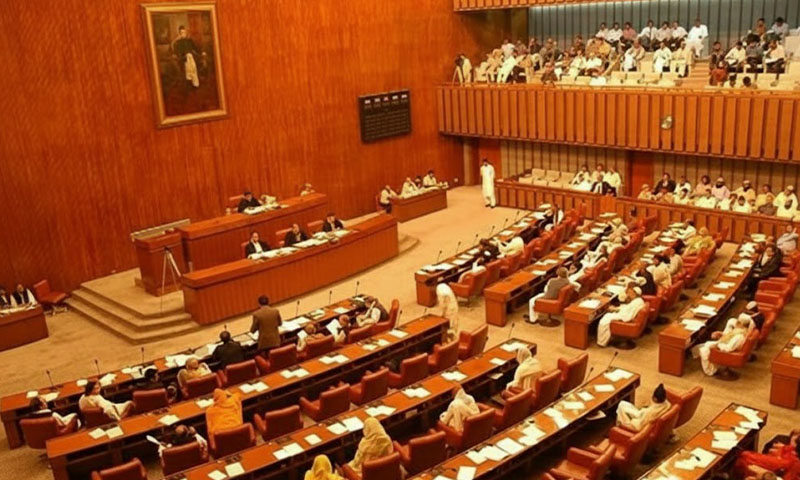

ISLAMABAD: The Senate on Thursday proposed a sweeping set of budgetary recommendations for the 2026-27 fiscal year, heavily prioritising the completion of near-ready infrastructure over new one, demanding deeper gender-focused spending, and targeted tax relief for low-income digital content creators.
The recommendations, put forward following an extensive parliamentary debate on the federal budget, serve as the upper house’s formal policy guidelines to the National Assembly.
While the Senate’s budget proposals are non-binding, they carry substantial political weight and frequently shape the final finance bill.
Infrastructure Priorities and Security Re-routing
As the government is faced with a tightening fiscal space and an escalating “throw-forward” development burden, the Senate has recommended a strict reprioritisation of the Public Sector Development Programme (PSDP).
The upper house has urged the government to prioritise projects nearing completion to ensure the efficient use of state resources and to alleviate long-term funding backlogs.
The Senate urged the government to declare the 103-kilometer Nokundi-Mashkhel Road and the Kuchlak-Zhob N-50 dualization project as an integrated strategic corridor.
Citing their vital role in boosting inter-provincial connectivity and regional development across three provinces, the Senate has demanded priority funding for their swift completion.
CASA-1000 Transmission Project
Expressing concern over mounting delays, the Senate has recommended comprehensively rerouting the multi-national CASA-1000 power transmission line through more secure territories, noting that its current path traverses low-security areas.
In line with the federal policy prohibiting new state-funded schemes during financial crises, the Senate has recommended entirely deleting the Prime Minister’s E-Sports Arenas and Training Centres project from the 2026-27 PSDP, declaring it ineligible for funding.
Foreign Debt Transparency
The upper house has demanded that the Power Division disclosed complete granular details of all financial obligations and foreign currency liabilities tied to foreign-funded projects directly within the budget documents to ensure strict parliamentary oversight.
Digital Content Creator Tax Relief
Addressing the growing digital economy, the Senate has proposed major tweaks to the withholding tax regime to protect small-scale tech entrepreneurs and freelancers.
The upper house has recommended that no withholding tax be levied on low-income digital content creators.
Furthermore, it has proposed that any tax deducted from the digital content income of resident individuals be treated as “adjustable” rather than a final tax liability, allowing creators to claim deductions against their actual annual income.
Gender Budgeting and Healthcare Reforms
The Senate has laid heavy emphasis on institutionalising gender-responsive financing to support women’s economic empowerment and public health.
The upper house has recommended establishing a mandatory minimum threshold for funds allocated to women in the federal budget, specifically calling for ironclad protections for budgets dedicated to maternal and child health, safe public transport, and women’s financial independence.
To ensure accountability, the Senate has demanded that the executive branch present a formal ‘gender budget statement’ before parliament every year.
In a significant public health move, the Senate has recommended expanding the abolition of the so-called “tampon tax” to cover sanitary pads, menstrual cups, and all other menstrual hygiene products.
The Senate has emphasised that the government must establish a strict monitoring mechanism to guarantee that the benefits of these tax relief measures are passed directly down to female consumers rather than absorbed by manufacturers.
Regulatory and Local Allocations
Among other administrative recommendations, the Senate proposed shifting a regulatory mandate away from the Engineering Development Board (EDB), asking that the authority to issue fitness certifications for used commercial vehicles be transferred back to the Pakistan Standards and Quality Co-ordination Authority (PSQCA) as the central regulatory body.
Financially, the upper house has also called for the immediate transfer of approximately Rs1.4 billion in outstanding liabilities under an umbrella programme to the Privatization Division.
Conversely, it has urged the government to allocate additional resources to the nearly finished Pakistan Raises Revenue Project to guarantee it hits its execution targets within the 2026-27 fiscal window.
On local infrastructure, the Senate has recommended the allocation of dedicated federal funds to construct a proper approach road from the Old Shujabad Road to the Multan Cadet College.